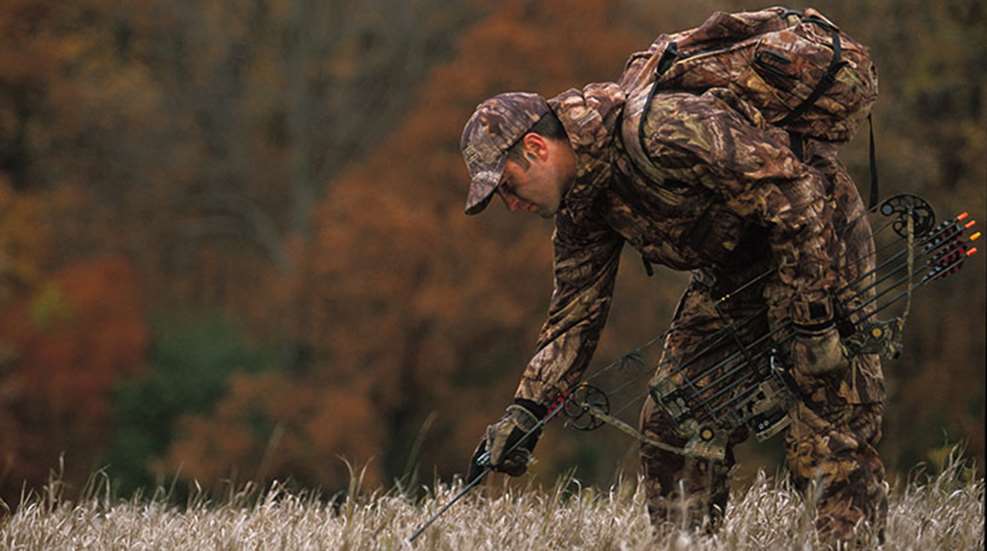
There are few things worse than mortally wounding an animal and failing to find it, and sometimes no amount of preparation can guard against the proverbial “stuff” that happens. Employ a strategy based on facts, clues and conditions to increase your odds of recovering your game. Knowing when to go after arrowed game greatly impacts the odds of recovering it. Most times a patient approach is best—but not always.
Observe and Calculate
If, after the shot, the animal ran off out of sight, wait 30 minutes before doing anything. Use this time to determine the facts as your adrenaline subsides. Where exactly was the animal when you shot? Where did your arrow strike? Where did you last hear the animal? Mentally note or take photos of landmarks now, because they’ll be tough to find later.
If you ambushed the animal, it usually has no idea what happened; it just knows it must get away from the immediate area. Often it won’t run more than a couple hundred yards before lying down to either recover or die. It’s at this critical juncture that you mustn’t spook the animal, because it will recognize you as the threat and get a surge of adrenaline that will enable it to travel much longer than it otherwise could. When the adrenaline wears off, it might die, but not without putting enough distance between you and it to make recovery extremely difficult.
It’s also possible to be too patient when following up. If, for example, the meat spoils and/or predators or scavengers find it first, the whole hunting experience will be tainted.
When to Follow
Last year in a hunting camp a guy shot an 8-point buck. He said the shot “felt good” and found what he described as “good blood,” but because the deer ran into a thicket and failed to die within sight, he became unsure and decided to wait overnight. The next morning we found his buck, or what was left of it, only 40 yards in. All except the rack and legs had been devoured by coyotes. The whole situation turned my stomach, because that deer should have never been left overnight. Hunters’ opinions differ, but I don’t view a trophy rack as a trophy at all if it wasn’t attached to good venison.
If, after 30 minutes, you find pink, bubbly blood, look for blood coming from the animal’s mouth and nose. It’s normally found as mist on tall grass or foliage above the ground. If you find it, it means the animal is lung-hit. Follow it immediately. Your animal awaits pickup.
If the shot was in the chest area or the hip, and you find buckets of bright crimson blood indicating an artery hit, pursue—but only if the blood remains consistently heavy. (By heavy, you’ll be thinking to yourself, “Nothing can survive this.”) While an animal that’s hit in a major artery will pile up within minutes, it’s easy to mistake it for a deep muscle wound without experience. If you are unsure or if you trail it more than 200 yards and still haven’t found the animal, back off and wait three hours before pursuing.
If it’s raining or there’s a high chance of precipitation, follow up immediately regardless of the hit. The blood trail will vanish after a rain. Unless the animal is dead within sight of your stand, you’ll return the next morning with hope as your only guide. Use the rain to sneak along the blood trail so you can try to shoot the animal again if it’s alive. Unless you have a dog to use the next day, it’s your best chance. Have a buddy bird-dog the blood trail while you look ahead for the animal. Wounded animals often try to hide, rather than running. Be very careful not to shoot without first being sure it’s the wounded animal.
When to Wait
If you believe you hit the animal too far back, wait three hours. If after taking up the track you find deep crimson blood—possibly indicating a liver hit, continue on the trail. If it’s smelly blood laced with food bits and/or green slime, wait an additional three hours before pursuing this gut-shot animal.
Or, if you shot it in the evening, the temperature is below 45 degrees, your area isn’t notorious for predators and you have evidence that indicates you made a marginal hit, leave the animal overnight and resume the track at daylight. If you make this decision, it’s best to leave the trail as early as possible to avoid spooking the animal.
Regardless of when you follow up, bring a quiver of arrows and keep one ready at all times. Heed subtle clues like tracks and broken branches. An animal that’s been hit often races through the woods in a panic, disrupting earth. Subtle sign can pull a hunter through a lapse in a blood trail.
Do everything that’s legal to recover a wounded animal, and don’t give up easy. This could mean following up the animal with a rifle (even if it forfeits it as a bow trophy), using technology or employing blood-tracking dogs. I’ve found animals after days of searching by following random trails, grid searching and getting lucky. You owe it to the animal to give it your all.