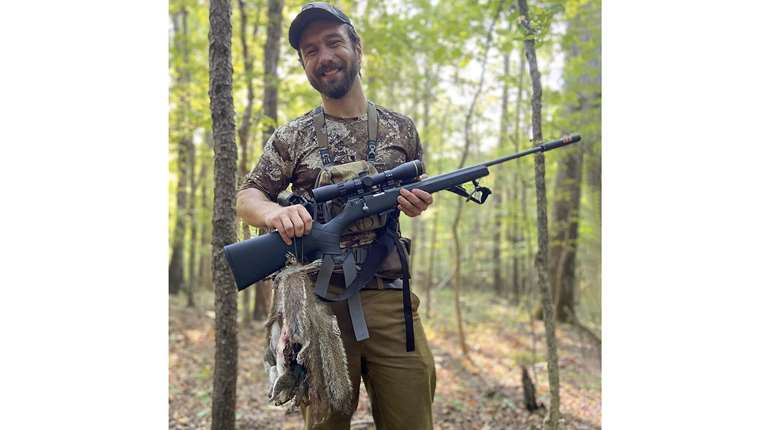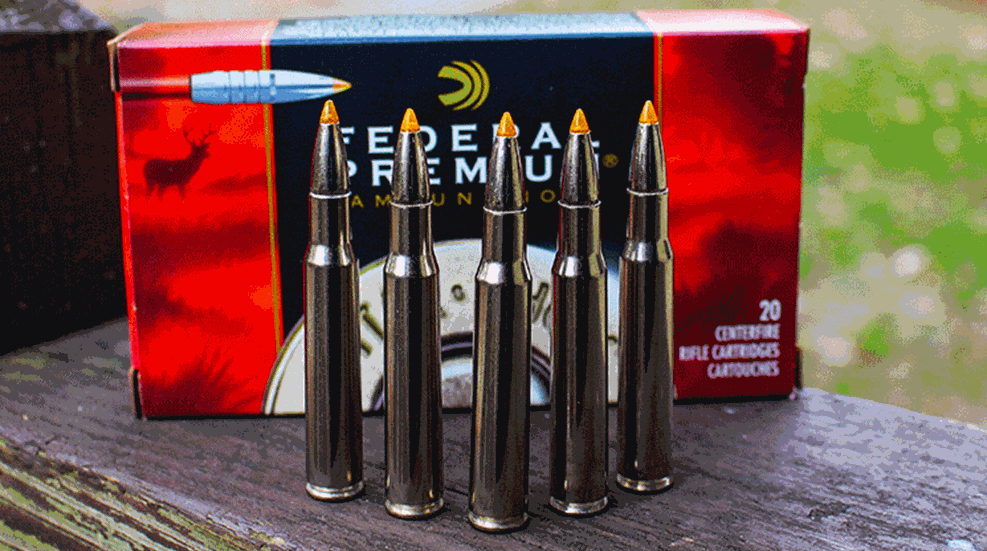
I was laying prone, soaked to the skin, behind what the Scottish call a ‘bump’—a little hill in the Highlands—watching the herd of red deer slowly feed toward us. The midgies were terrible, but I didn’t care, as I was affixed on the stag with the coat that was black from rolling in the peat. In my hands was a Rigby Highland Stalker, a fine bolt action rifle, chambered for the .30-’06 Springfield. When the stag came clear of the herd, a single 165-grain Hornady at 225 meters put him down quickly.
I’m absolutely certain this scenario has played out in a similar fashion thousands of times before, but that’s only serves as a testimonial to the longevity and effectiveness of the .30-’06 Springfield, a cartridge bred for war, but who found its niche in the hunting fields around the world. It has been declared both washed-up and timeless, pronounced dead and hailed as immortal. One thing is for certain: the .30-’06 works.
 The first quarter of the 20th century saw some amazing developments in cartridge technology—it was ushered in by classics like the .30-30 Winchester and 7x57 Mauser, and went on to define what we consider excellent hunting cartridges. The Spanish-American War showed the advantages of the 7x57 Mauser over the U.S. Army’s .30-40 Krag, and set the Army to the drawing board to design a cartridge for the times. The first attempt was a sort of love-child of the Krag and the Mauser, using the same .30 caliber, 220-grain round nose bullet, in a case with the same head diameter as the Mauser cartridge, albeit a bit longer. The .30-03 was close, but the round nose bullet didn’t give the down range performance the government was after.
Three years later, they released the cartridge that would change the shooting world—the .30-’06 Springfield. They had shortened the ’03 case from 2.540" to 2.494", and topped it with a 150-grain flat base bullet at 2,700 fps. For the soldier’s purposes, it was a dream come true. President Theodore Roosevelt—on his 1909-1910 safari across East Africa—used the .30-03 while his son Kermit used the .30-’06. Ernest Hemingway used his Griffin & Howe .30-’06 sporter, in both Africa and North America. Both hunter/authors documented their exploits well, in African Game Trails and Green Hills of Africa, respectively, and this is only the tip of the iceberg regarding the success of the Springfield. Dr. J.Y. Jones has successfully taken all the North American game species with the same Remington rifle in .30-’06. That alone is a huge testament to the cartridge.
Its design is simple, yet effective. Being rimless, it feeds well in just about any action, and has been housed in just about every conceivable action. The 17˚-30" shoulder provides adequate headspacing, yet aids in smooth feeding. It’s the benchmark for a standard long-action receiver, and provides a versatile selection of bullet weights, for just about any hunting situation with the exception of the true African heavyweights. In all sincerity, while it has been a father to many successful cartridges, it remains the cartridge by which all other are measured.
It will drive the 220-grain round nose slugs to 2,400 fps, making an excellent choice for large animals at close ranges. It will also drive the 150-grain bullets to over 3,000 fps, with the 165, 180 and 200-grain bullets falling in between the two extremes. This makes for a perfectly viable deer, sheep and antelope gun, as well as a moose, elk and bear gun, in addition to animals all over the globe. Modern bonded core and monometal designs have only enhanced the performance of the Aught-Six, making it even more potent than it was a century ago.
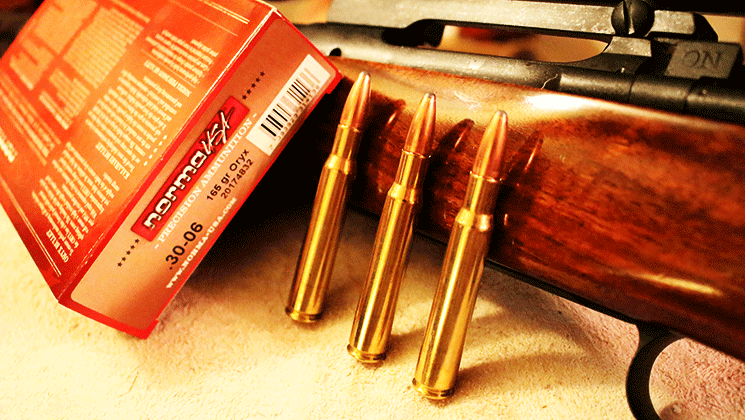
Yes, there have been designs that have threatened the .30-‘06’s position at the top of the heap, either in the form of shorter, more efficient designs, or those cavernous cases that develop much higher velocities. However, when you have the impeccable reputation of the .30-’06—a reputation that continues to be reaffirmed with each hunting season—there’s really no holding you down. The Springfield is so popular, and its performance so dependable, that when a new rifle is introduced, almost invariably a .30-’06 model is thrust into the hands of the gun writers to evaluate the rifle’s performance.
The 1906 design has a recoil level that most people can master rather easily. Yes, the .308 Winchester does have a bit less recoil, but not so much that one is a pleasure and the other a pain. If you prefer one over the other, so be it, but I highly doubt any game animal that you’d sensibly hunt with either would ever notice the difference, and there’s certainly room for both.
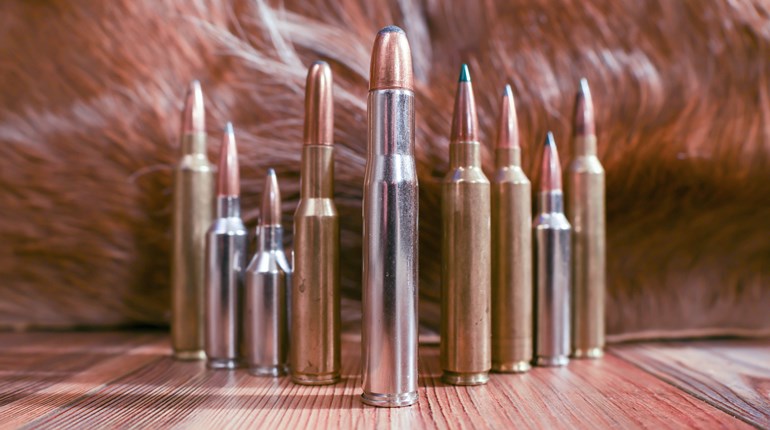
Considering just the commercial offspring of the .30-’06 Springfield—which includes the .25-’06 Remington, .270 Winchester, .280 Remington, .338-’06 A-Square and .35 Whelen—and the following they have, there’s no doubting the genius of the .30-’06 design. Fads may come and go in the shooting world, but I have no doubt that the .30-’06 Springfield will be with us in another century, still making hunters smile for their photos.
Looking for previous installments of Behind the Bullet? We've got you covered.
• 6.5 Creedmoor
• .300 Remington Ultra Magnum
• 7mm Remington Magnum
• .470 Nitro Express
• .280 Remington
• .300 Winchester Magnum
• .270 Winchester
• .222 Remington
• .45 ACP
• .404 Jeffery
• .44 Remington Magnum
• .243 Winchester
• .338 Winchester Magnum
• .357 S&W Magnum
• 6.5-284 Norma
• 8x57 Mauser
• .38 Smith & Wesson Special
• 7x57mm Mauser
• 9 mm Luger
• .35 Whelen
• .454 Casull
• .375 H&H Magnum
• .45 Colt
• .22-250 Remington
• 10mm Auto
• .308 Winchester