We are all familiar with U.S. Marine Col. John D. "Jeff" Cooper, his passion for defensive firearms training, and his love for the M1911 in .45ACP. He was the founder of the American Pistol Institute—you may know it by its modern name: Gunsite Academy. At API Col. Cooper taught the skills necessary to defend one’s self, and instilled the appropriate mindset for that defense. Invariably, the good Colonel preferred the .45ACP as the tool for that job. However, as good as the venerable Browning-designed cartridge was, is and shall be, Col. Cooper had a desire for a faster, harder hitting defensive cartridge.
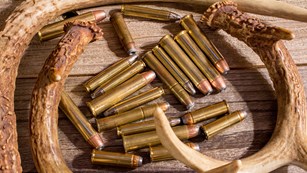
In the early 1980s, Col. Cooper sat at the drawing board to develop a cartridge of suitable diameter, which would drive a 200-grain bullet to a muzzle velocity of 1,200 fps, in deference to the .45ACPs heavy bullet concept, but with a bit more horsepower. What he ended up with—with the help of Whit Collins, John Adams and Irving Stone—would morph into the 10mm Automatic. Released in 1983 in the BrenTen handgun, the 10mm Automatic offered and improvement on the exterior and terminal ballistics of the 9mm Luger and .45ACP. Using a cut off .30 Remington case (a cartridge with .30/30 WCF ballistics, but of different conformation), measuring 0.992” long, the straight-walled design would function like the Luger and .45ACP in that it would headspace off the case mouth, and it would use the .38-40’s .400” diameter bullets.
 Fast forward three years, in Miami, Florida. Two bank robbers, William Russell Matix and Michael Lee Platt were in a shootout with eight FBI agents, and despite being outnumbered, they were winning. Using a 12-gauge shotgun, a .357 revolver and a Ruger Mini-14 rifle, the robbers had held off the FBI for over five minutes, killing two agents, and subsequently dying for their efforts. A long investigation followed, and the FBI laid a portion of the blame for the fiasco on the 9mm Luger and .38 Special sidearms that the agents were carrying. The Bureau determined that these calibers had exhibited a lack of stopping power, and the hunt was on to arm FBI agents with a semi-automatic pistol (the difficulty of reloading a revolver in a fire fight was an issue in this case as well) of suitable caliber to stop an armed opponent, at distances greater than the .45 ACP could.
The FBI ordered 10,000 Smith & Wesson Model 1076 pistols, with a 4¼" barrel chambered in 10mm Auto, for issuance to their agents, but the order was cancelled when the recoil of the Big 10 proved to be too much for some agents to handle effectively. The ammunition was down-loaded, leaving a substantial airspace, and while the terminal ballistics of the lighter load was acceptable to the FBI, Smith & Wesson decided to shorten the case, resulting in the .40 S&W we all know so well. And, it seemed as though the 10mm would be headed for obscurity.
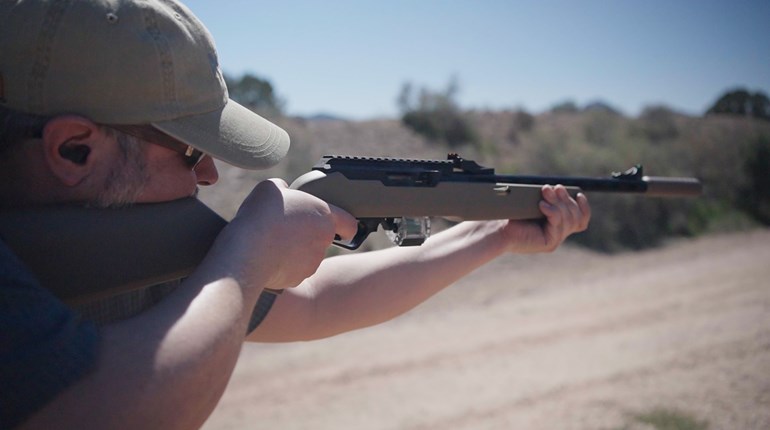
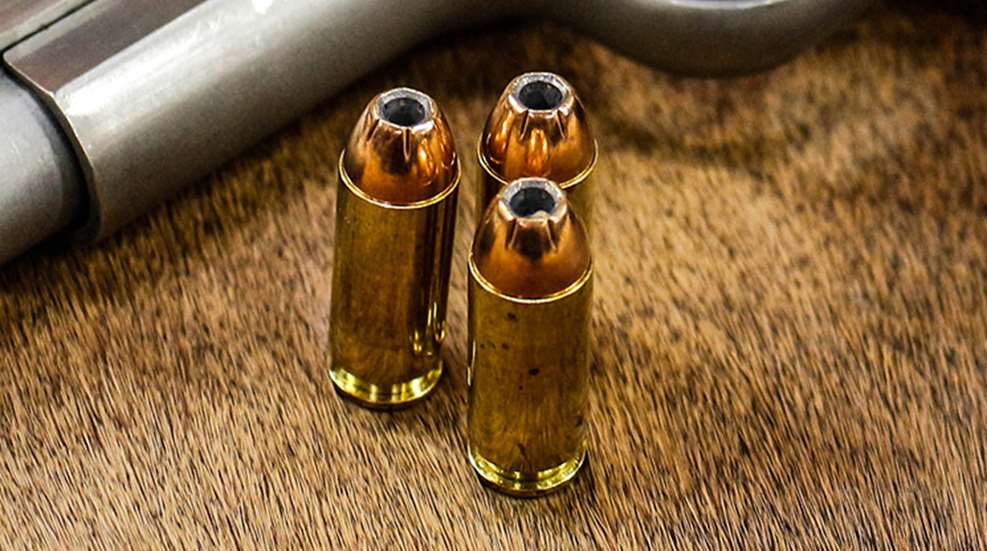
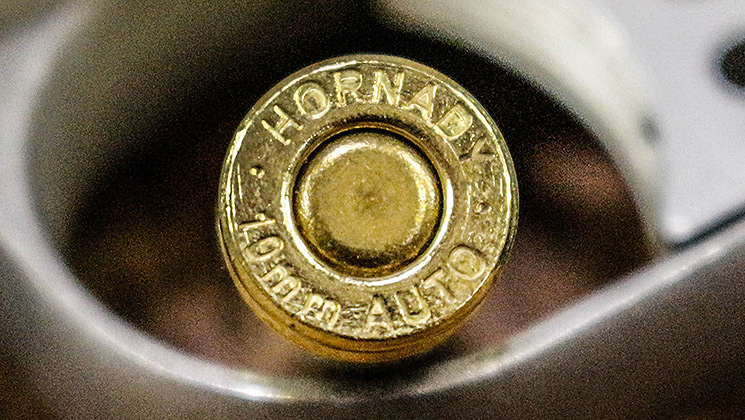
In spite of being forced to take a serious back seat to the .40 Smith & Wesson (which many 10mm devotees refer as the .40 Short & Weak), and the fact that very few modern pistols are being chambered for the 10mm Auto, it has made a bit of a comeback as a hunting round. Guys like Ted Nugent and Razor Dobbs have championed the 10, taking game up to the size of elk with it, and singing the praises of the cartridge in the hunting fields. It approaches the power of the .41 Rem. Mag., but in an autoloader. Federal, Remington, Winchester, Hornady and other boutique companies make 10mm Auto ammunition, loaded with good bullets that are suitable for both hunting and for self-defense as well. Federal Premium’s Trophy Bonded 180-grain bullet at 1,275 fps would make for an excellent deer or hog, as would the Hornady 180-grain XTP at 1,180 fps. It’s obvious that distances will be on the shorter side of life, due to the limitations of barrel length and sighting radius, so with the higher impact velocities you’ll want a stout bullet to guarantee good penetration. DoubleTap and Buffalo Bore offer heavy-for-caliber hard cast lead bullets, at 220 and 230 grains moving along at just about 1,100 fps.
If you like the way a full-sized frame shoots, but want a bit more power than the .45 ACP has to offer, wrap your hands around the Big 10, and you may find the handgun experience you’ve been looking for.
Looking for previous installments of Behind the Bullet? We've got you covered.