I hear it quite often from both the uninformed and the ill-informed: “Trophy hunters on safari just take the head and leave all the meat to rot.” Allow me to assure you, nothing could be further from the truth. Africa is a very large continent, comprised of 54 countries (at the time of this writing), so there are some different traditions and customs, but I can attest to the practices among the majority of the countries of southern and eastern Africa.
 Across five countries, and a significant number of areas within those countries, I’ve had the good fortune to hunt in a variety of different manners. The high-fence areas of South Africa—so affordably-priced and a perfect way to cut your teeth in Africa—offer a different experience than does the dangerous game blocks of Tanzania, Mozambique, Zimbabwe and Zambia. It certainly doesn’t matter to the animals; though the areas they occupy may be different, the end results, for the purposes of this article, are the same.
Let me briefly touch on this while we’re using the words “trophy hunting”: if any animal you take doesn’t merit a moment of reflection, gratitude and respect, take up golf. Forget the damned tape measure, you decided to take an animal’s life, and it SHOULD be a trophy, it should be honored. Enough about that for now.
Among the wide variety of species I've taken—from the diminutive steenbok to the mighty elephant—I have yet to see a scrap of meat go to waste. In South Africa, at least on the ranches I’ve hunted, both the animals and the meat belong to the ranch owner. The hunter, through trophy fees, receives the hide, head and horns, and as international regulations prevent any hunter from bringing meat back to the United States from any African country, this system works well. The animals are butchered cleanly by experienced hands, and what meat isn’t used in camp for the hunters and staff is sent to market. It is legal to sell game meat in South Africa, and nothing goes to waste there. Biltong (our jerky), cured and uncured sausages, as well as traditional cuts (steaks, chops, etc.) are all available. Because the ranches and/or hunting blocks tend to be smaller than the massive dangerous game blocks, it is much easier to facilitate the transportation of the carcass back to the processing shed, where refrigerators and freezers, as well as a commercial processing facility, often wait for the meat. On the four South African safaris I've been on, the teams of skinners/butchers were among the most efficient I've seen.
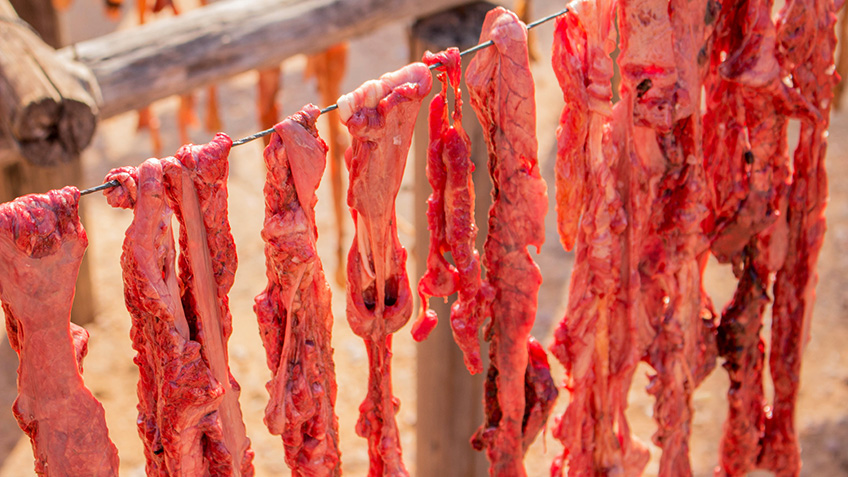
In the veldt—those wild, dangerous game blocks—where refrigerators and freezers are at a premium, the meat is handled a bit differently, depending on the species. Almost everything but elephant and hippopotamus are usually loaded whole into the truck—if camp is within range and the temperature is low enough to prevent the meat from spoiling—and the skinners go immediately to work in camp. I’ve seen a crew of African skinners turn a bull elephant into an organized pile of cuts of meat and hide, all prepared for consumption by the local village. Again, what is to be immediately consumed is butchered into the necessary cuts, but the majority of the meat is cut into strips for biltong and dried in the African heat. That biltong, irrespective of the source, will last for up to a year if properly dried, and is one of the major sources of protein in the native African diet.
In addition to the meat of all the game animals, the organs are also utilized. In camp, I’ve dined on tongue, liver, even buffalo testicles (I swear I didn’t know), and I’ve seen what the camp staff does with intestines, kidneys and other organs. Like I stated earlier, nothing goes to waste.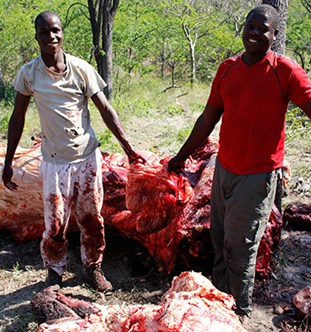
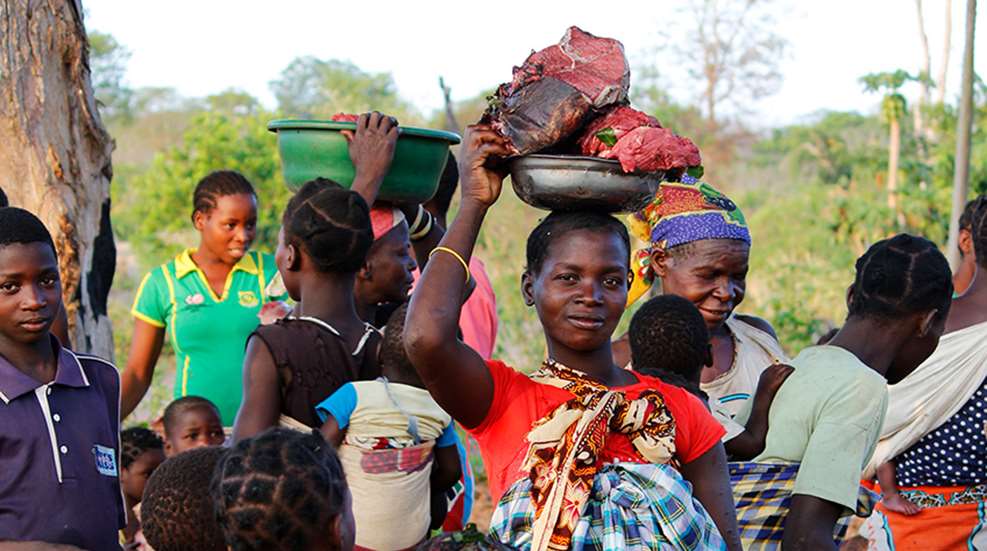
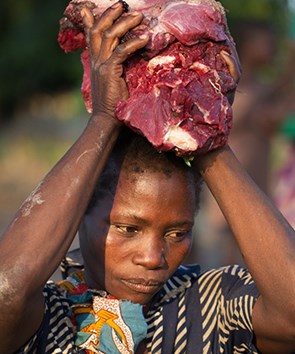
So once it’s processed, what happens to the meat from an animal as big as an elephant, Cape buffalo or eland? Well, I’ve seen some situations, like the Selous Game Reserve in Tanzania where there are no permanent residents, the huge amounts of dried meat are trucked out at the end of the season. The camp staff is welcome to what they and their family can use, and the rest is shared with those villages outside the reserve. In Zambia, with its huge hunting blocks, the residents of those blocks are provided with 80 percent of meat taken, which not only provides the necessary protein, but certainly deters poaching, which most definitely includes the indiscriminate taking of bulls, cows and calves alike. In the Coutadas of Mozambique, I've seen the unique relationship between the managers of the blocks—many of which are in excess of 200,000 acres—and the residents of the local villages, where those residents are provided with a prescribed amount of meat, in the form of a certain number of animals. I helped harvest reedbuck for the villages in Coutada 11, and the buffalo bull I took belonged entirely to that village; meeting those people and seeing the first-hand, tangible effects of providing protein in a protein-starved environment was an honor.
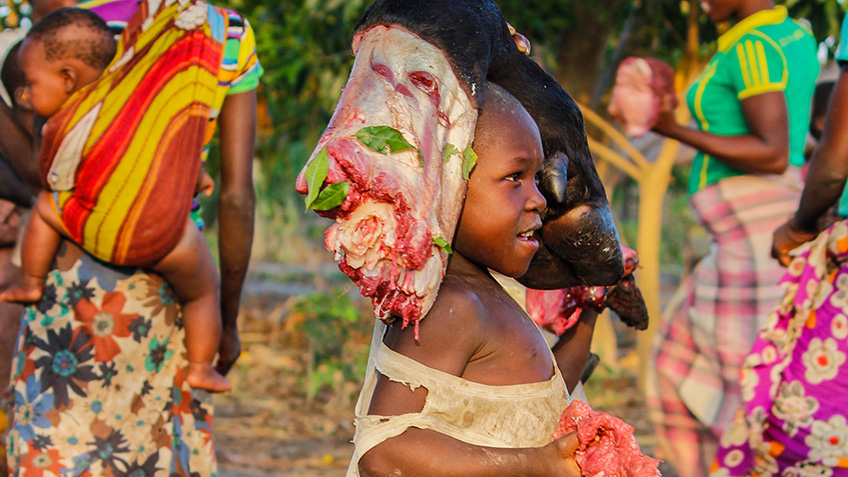
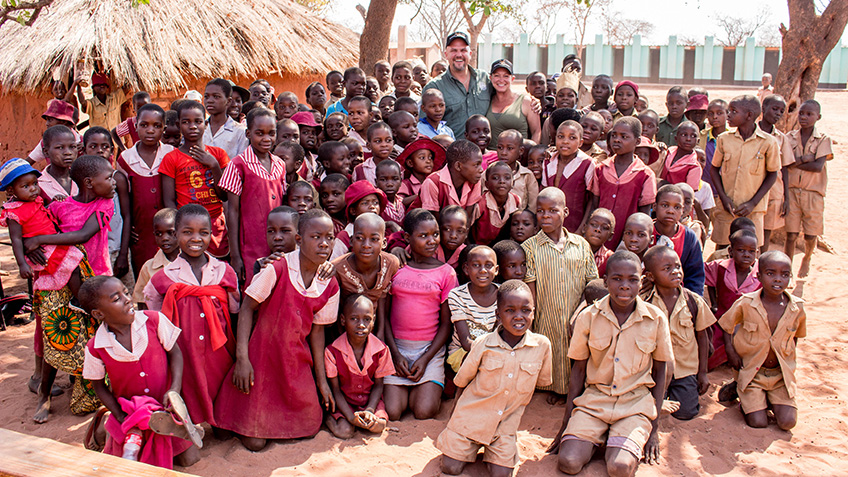
One of the most unique, and fulfilling arrangements I’ve been involved with was in the famous Chirisa Block of Zimbabwe, where Sitatunga Safaris works hand-in-hand with the staff and students of the Muroorwa primary school, just outside the border of the hunting block, to provide meat for the nearly 500 students. We took one afternoon to visit the school and present the parents, staff and students with hundreds of pounds of dried meat, to ensure those students would have nutritious meals while learning.
As a sportsman, I will tell you that the handling and preservation of meat in Africa is a very serious business. While I have yet to hunt the big cats, I know men who enjoy the meat from both lions and leopards, and I have personally eaten at least something from every animal I’ve ever taken on safari. Let those who pass judgment from afar say what they will; I’ve been there and seen what happens, and it’s good for all involved. To see hundreds of children smiling because they know they will be provided for makes me proud to be a hunter.