As the vestiges of an abnormal winter ebb, you’re probably envisaging multiple long beards leisurely strutting toward your decoy(s). Snap out of it! There’s no time to daydream. Now is the time to prepare for spring turkey season. In fact, opening day of many southeastern states—excluding Florida, which has the earliest opener—will occur within weeks of this writing, and the others are only about a month from now, so don’t procrastinate. Following are suggestions on how to improve your odds of bagging a limb hanger this spring.
Scattergun or Stick and String
Regardless of whether your boisterous-bird bagger is a shotgun (modern or muzzleloader) or archery tackle (including a crossbow), it’s time to pattern or practice with it, respectively. Time to wipe off the dust.
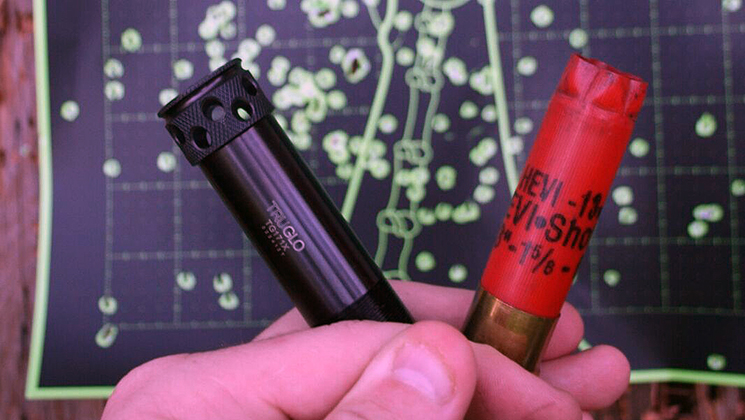
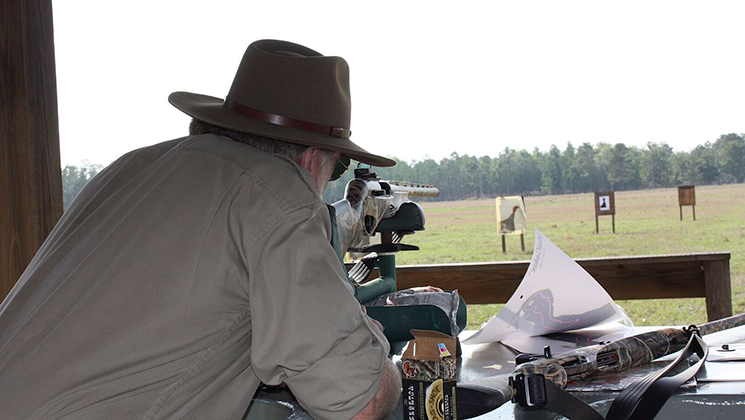
Patterning is an uncomplicated process; simply suspend a large sheet of paper from a backing, add a turkey silhouette target, and take an aimed shot. Remnant and clearance wrapping paper is an inexpensive option for the former, while free turkey silhouette targets can be found on Winchester Ammunition’s website, among other places. Although unnecessary, high-visibility, reactive turkey target can be purchased.
Begin patterning at 30 yards and then increase shooting distance in five-yard increments until you no longer have seven to 10 pellets in the kill zone (i.e. brain and/or spine). Of course, more is better. Beyond the outlined “kill zone,” ensure that there’s considerable pattern density in the 10-inch circle surrounding the point of aim, too; remember, a turkey’s head in small in size and constantly moving, so you’ll need leeway from your load.
Beyond demonstrating the maximum ethical shot distance, the large patterning paper also illustrates the relationship between point of aim and the pattern’s core. Sight adjustment or compensation might be necessary.
Optimal performance of your setup will be realized through experimentation. Pattern different load and choke combinations until you find the duo that meets your expectations. Doing so can get costly, but it’s worth the money, effort, and pain. Before-season sales and after-season clearances are economical ways to enhance your shotshell and choke tube portfolio. You can get amazing deals. Once finished, thoroughly clean your shotgun.
Turkeys don’t have “pie-plate” vitals; they’re diminutive—especially for head/neck shooters—and missing them will result in a lost bird, so precise arrow/bolt placement is mandatory. Perfection is attained only through practice. Don’t skimp. I also recommend studying reputable on-line videos and charts illustrating proper shot placement.
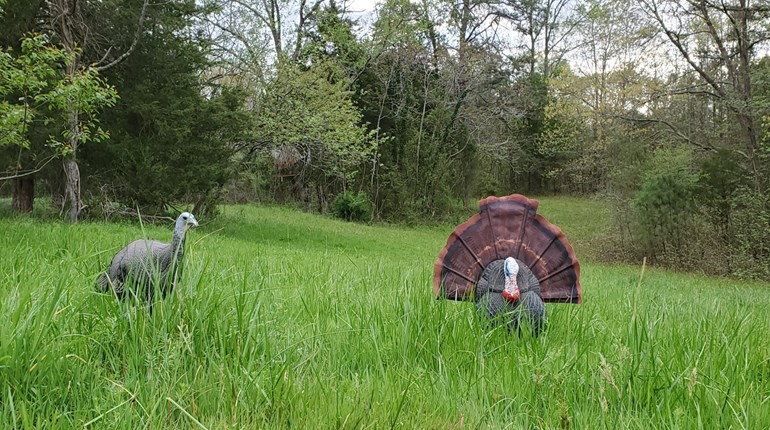
Since you’ll most likely be hunting from a natural or manmade blind, focus on drawing and shooting (with broadheads) from the kneeling and seated positions while wearing the gear you’ll have on when hunting—including gloves and a facemask. Practicing from the ground blind that you’ll be hunting from is advisable. Three-dimensional turkey targets are preferable to cube-style targets due to vitals that are outlined and realistic in size.
As with shotguns, begin close and slowly move back until you can no longer place every arrow/bolt into the vitals. Doing so will provide you with your maximum effective distance. Stick to this distance when hunting.
Calls
Take an inventory of your turkey calls. Replace any diaphragm calls that are dirty, worn, or have dried out latex. Doing so now will prevent misery later. I also suggest adding a call with a slightly different sound (i.e. raspier) to your repertoire. On several occasions, I’ve had a gobbler ignore my favorite diaphragm call, the H.S. Strut Cutt’n 2.5, but readily respond to a raspier call, such as the H.S. Strut Power V or Knight & Hale Black Mamba.
Service your box and glass/slate calls, too. Concerning the former, ensure that the lid retention/pivot screw is somewhat snug so as not to fall out, and apply box call-specific chalk to the lid, removing any excess. Similarly, ensure that the surface of the slate call has been conditioned using an abrasive pad. It’s prudent to keep extra chalk and abrasive pads in your turkey vest. It’s also time to gather and clean those locater calls that oftentimes pull double-duty off-season to rid the pasture of fawn-killing coyotes and garden-raiding crows.
It should go without saying that practice with turkey calls ought to occur before you’re in route to your hunting hotspot. Spending time practicing now will pay dividends in the field.
The Turkey Vest: A Gobbler Hunter’s Swiss Army Knife
Start off the season right with a clean, organized vest. Consider each item’s logical placement before adding it. Naturally, there are built-in pockets for box and glass/slate calls; however, considerable latitude is afforded for arranging other items, such as a binocular, collapsible shooting sticks, diaphragm call cases, face mask, gloves, shotshells, decoy(s), etc. Movement and noise must be kept to a minimal when hunting.
Don’t go overboard; only carry practical and useful items afield. Unnecessary gear adds weight and potentially increases game-spooking noise. It’s also available to have a small first aid kit, knife, a heavy-duty trash bag (better bird preservation for mounting), toilet paper, and, depending where you’re hunting, a GPS. As a precaution, now is a good time to apply Permethrin, such as that from Sawyer, to repel future insects. It’ll last upward of six weeks.
Fantastic Footwear
Few things make you more miserable than wet feet. Even if you don’t cross a creek or trudge through a swamp, dew on a spring morning is enough to penetrate untreated leather and inflict discomfort. To enhance their waterproofness, first thoroughly clean the boots to remove dirt and debris and, after drying and while warm, apply a coat of Sno-Seal or similar treatment. Of course, you can always opt for rubber boots, too. Problem averted.
Selecting a Spot
Where you’ll be hunting on opening day shouldn’t be a haphazard decision. Spring turkey seasons are generally short and opportunities afield relatively few, so careful consideration is paramount. Unless you’re part of a hunting club or privy to private property, you need to find a prime parcel fast. Here’s how to get started: first, consult your game department’s website or their annual hunting/trapping regulations. This’ll greatly narrow the search. Examples of public properties include: wildlife management areas (WMAs); military bases (some); state and national forests; and quota hunts. Keep in mind that hunting with archery tackle will afford you more opportunities than will firearms. As for private property, networking through friends and family can often gain you access. There’s always door knocking, too. I have even heard of vineyards with grape-gobbling turkeys permitting hunting. It’s worth a try.
Consulting with state conservation officers and biologists about the area(s) you’re considering hunting can glean you a wealth of information. Oftentimes, these individuals can point out additional hunting opportunities, too.
Finalize your plans by studying topographical maps and satellite imagery of the parcel(s), as well as by putting boots on the ground. Take the time to really learn the property. Try to locate roosting, feeding, and dusting sites, as well as undetectable approaches (should you need to use them). Glassing turkeys from a distance and utilizing trail cams can provide insight as to their habits and schedules. Armed with this information, on private land I typically erect my ground blinds in advance, while on public land it simply provides a leg up on the competition.
As you can see there’s a lot to do in little time. What are you waiting for?