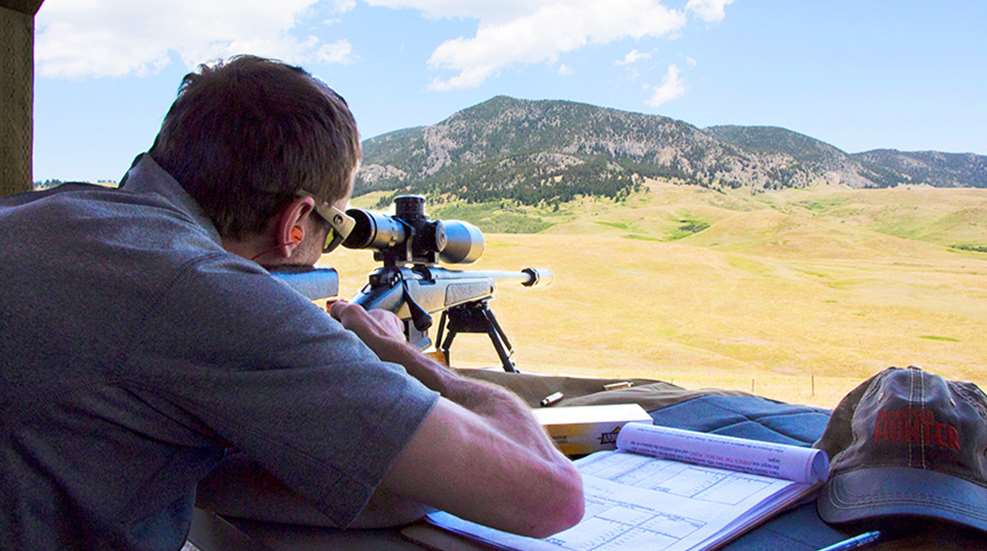
I was recently given the opportunity to attend one of the best long-range schools available to the public; The Bergara Academy, located just outside of Belt, Mont. While I learned more about long-range shooting than I ever thought I would, here are the top five skills I learned, and why other rifle hunters should consider attending.
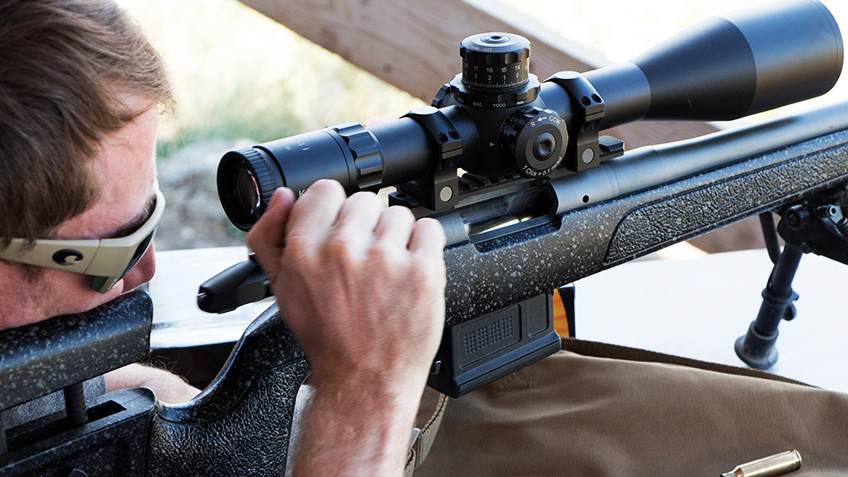
1. Build Bolt Basics
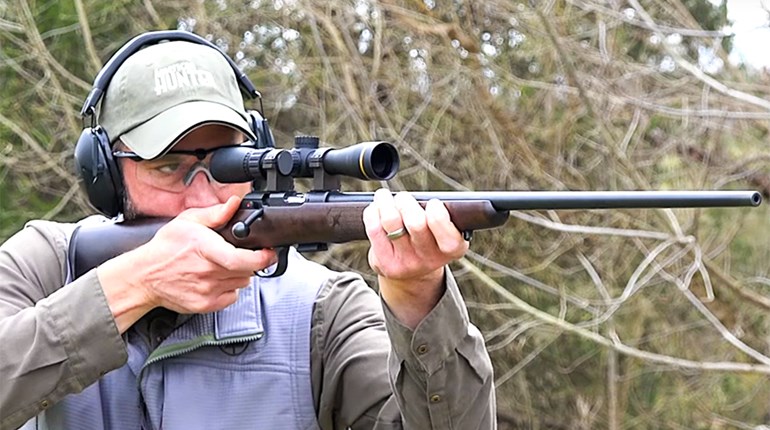
I want to knock this one out first, largely to dispel a common myth associated with long-range shooting, which is: To be accurate, you must take your time. While it’s true for small targets, an elk’s vitals aren’t necessarily small, and although precision is required, hitting a target nearly a 12.5 inches in diameter multiple times in quick succession isn’t difficult after you build the basics of manipulating your rifle’s action while maintaining proper shooting form, which was drilled into us. Why is this crucial? Because if you have a wind reading, you need to be able to get the shot off before the wind changes. Additionally, eye strain becomes a factor after 12 seconds (at most) when looking through an optic. To further compound the situation, breathing needs to be considered, and eight seconds is the cap at which most people can hold their natural respiratory pause before they need to restart the breathing process.
In short, rapid bolt manipulation can be an incredibly useful skill (as well as a confidence booster), and once a shooter finds their rhythm in a solid position, taking snap shots—even at distance—becomes second nature after a bit of practice. These drills aren’t typically performed by most shooters, and I quickly learned why they’re helpful when it comes to hypothetical hunting scenarios. Their biggest application? Two words: Follow-up shots. We hate to admit we may need them, but we’d rather have the ability to take them and not need them than need them, but be unable to confidently take them, because things don’t always go as planned.
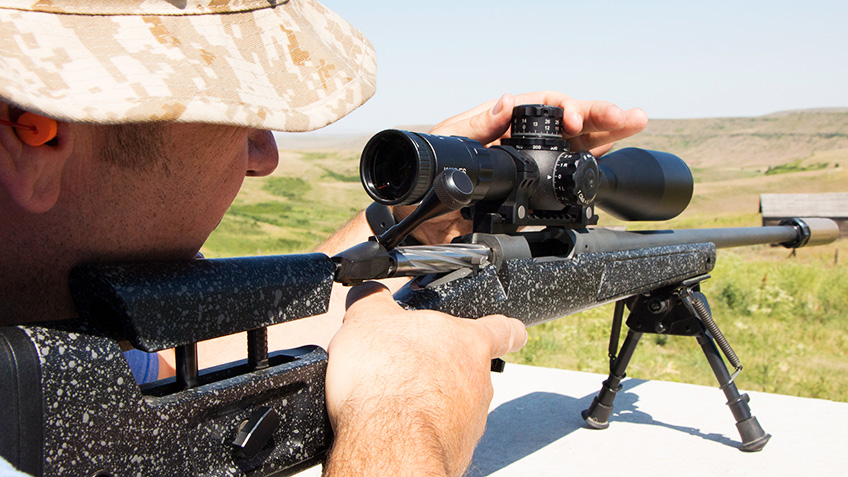
2. It’s All Mils to Me
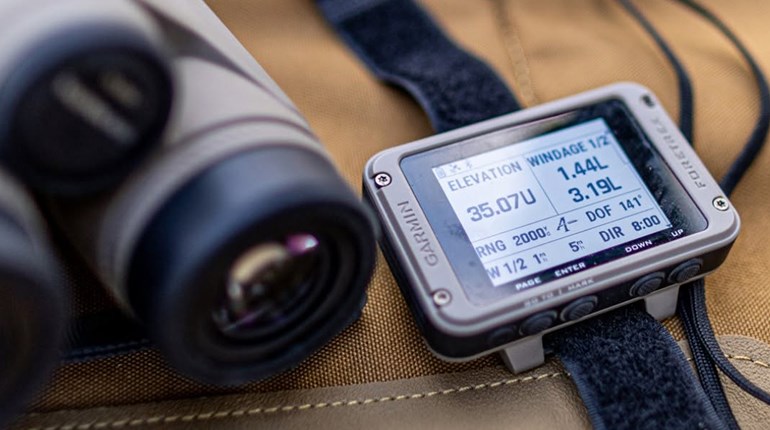
Everything I (and probably most American hunters) know regarding optical adjustments, ranges, ballistics, etc. are all based on the MOA system, and this is America, so why mils? Personal preference aside, while we may not use the metric system, practically every other country does. Therefore, if you’re planning on traveling for hunting, it would behoove you to learn the basics. Plus, the instructors at the school make conversions extremely simple. Thanks to the instructor’s classroom teaching combined with real-world application exercises we completed, I gained an excellent understanding of mils, and was calling wind hold-off and elevation clicks in mils by day two.
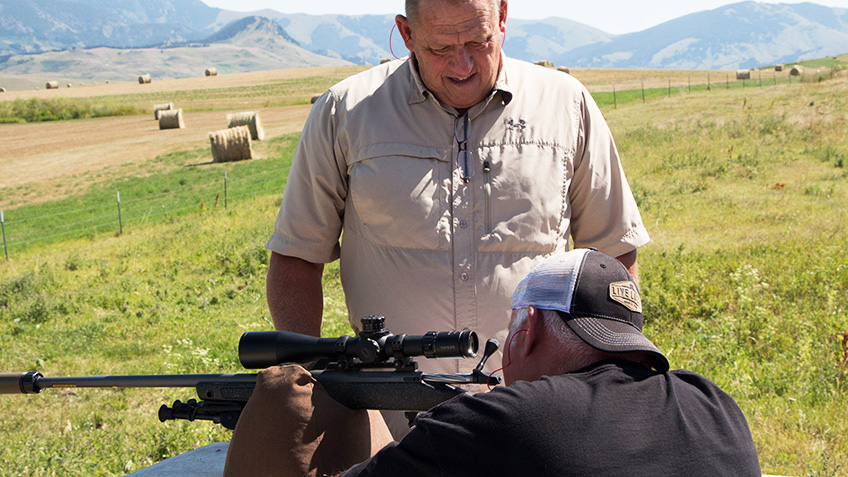
3. Fortify the Fundamentals
As every shooter knows, if you don’t use it, you lose it. Though this was a crash course in long-range shooting, it also served a secondary purpose in shoring up the fundamentals such as breathing, trigger control (which accounts for roughly 85 percent of accuracy) and sight picture. If you don’t solidify your foundation, your long-range accuracy is as good as an empty hunting rifle during the rut. Mistakes are magnified at distance, so if you’re making minor errors—such as canting the rifle like myself and half of my class apparently had a nasty habit of doing—while you might hit targets out to 300 yards, shot placement isn’t as precise as you’d think, and missing becomes more probable the farther you stretch your distance. Shooting at steel removes the ethical decisions we have to make when shooting game, which is nice, but to hear that rewarding ping, you definitely need to double check your setup before taking a shot. Needless to say, considering our instructor was a Marine, Hathcock recipient and a PMI and operational sniper for 20 years, we fixed most problems really quick.
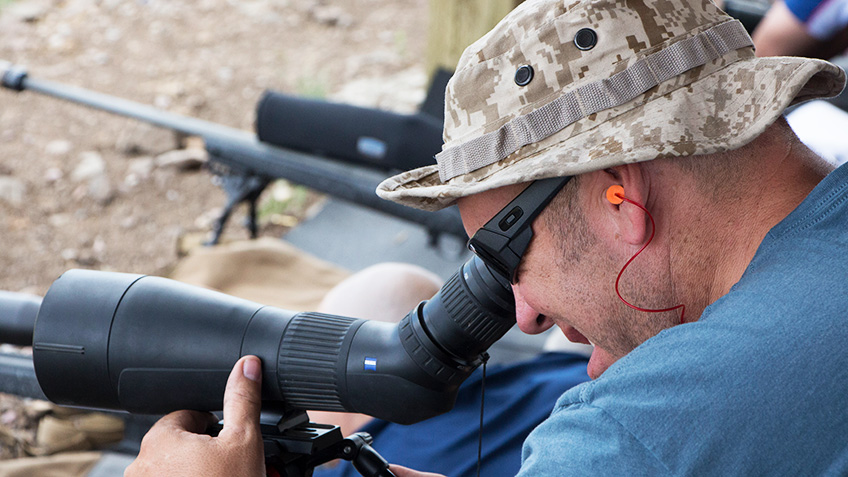
4. Communication
One of the less-commonly considered components of long-range shooting is communication, and because The Bergara Academy features extremely small class sizes (eight students, at most), it builds communication between shooter/spotter teams, which is key to placing shots at 1,000 yards or more, or when looking for and spotting game at extended ranges. It also plays into long-range shots at game because the bullet is most effected by wind at roughly 60 percent of the distance between the shooter and target. Therefore, if you’re looking at an animal at 600 yards away, your field of view through the scope may make a wind call at 360 yards impossible, meaning you’ll hopefully have a hunting buddy who can call wind, or maybe you’ll find yourself in the spotter’s shoes and have to make a wind call for your partner. Either way, communication is vital for success, especially when determining shot modifications or even targets. We’ve all heard stories about spotters and shooters thinking they’re on the same page, but in reality, they’re each talking about different animals.
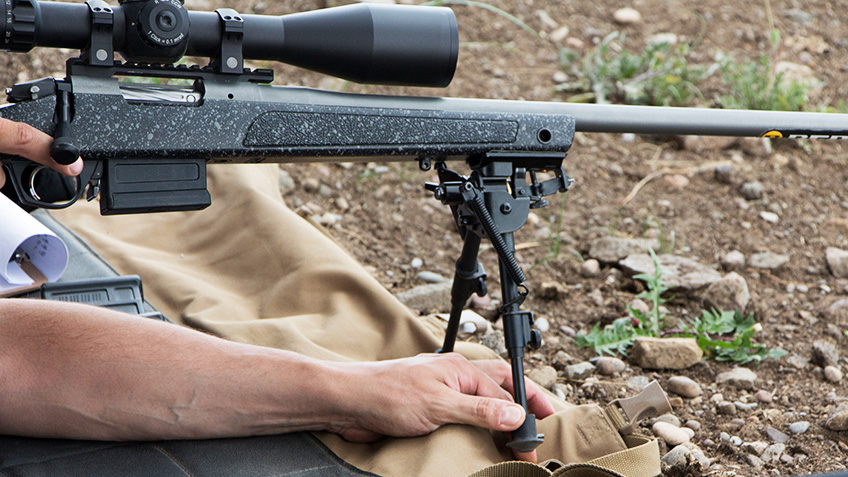
5. Supporting Fire
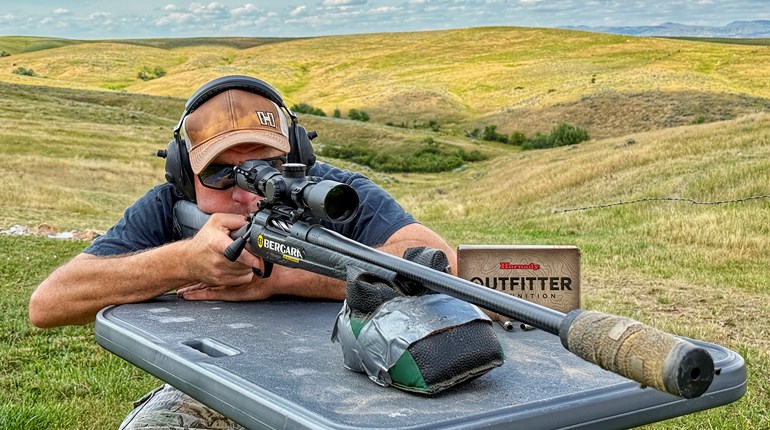
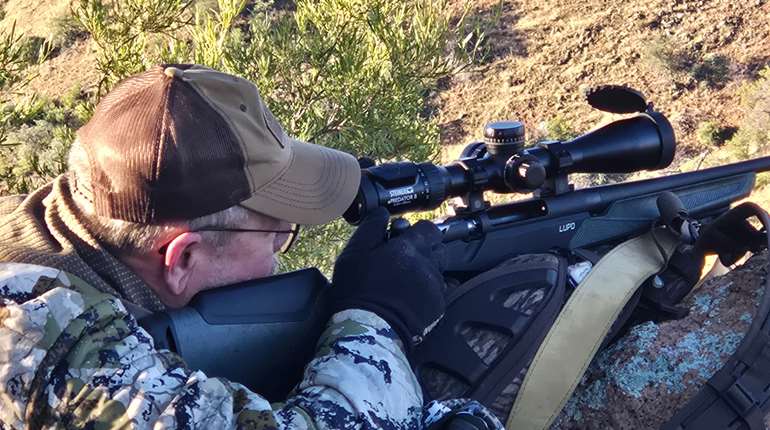
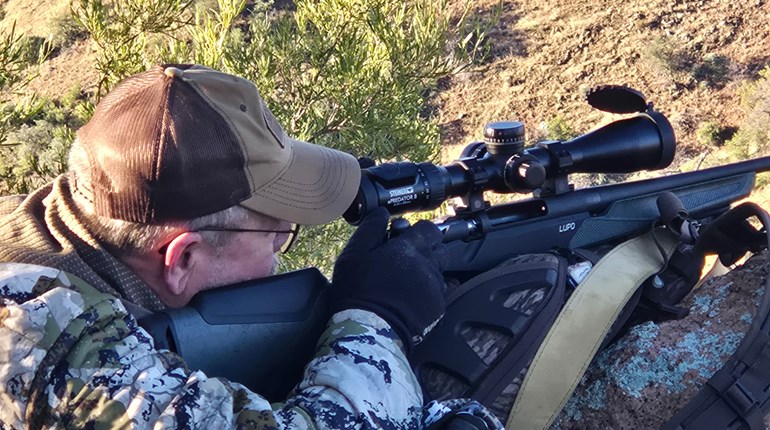
It goes without saying, solidly supporting a rifle makes it more accurate over any distance, and because mistakes are amplified when taking longer shots, it’s important to make the rifle as sturdy as possible. We learned how to support a rifle in several ways. The more points of contact the shooter has with immovable objects, the better, which is why going prone is always the most stable shooting position, and why it’s the position we used most at The Bergara Academy. It’s also important to remember the rifle should be supported by bone rather than muscle, as muscle fatigues. What muscle does come into contact with the rifle shouldn’t be flexed, but relaxed, so as to further prevent fatigue and maximize a steady hold. Bipods or shooting bags were also used to help support the rifle. For field shooting, the biggest concept was ensuring we had 90-degree rests from which to shoot. This 90-degree support, be it a branch of a tree or a notch in a rock, supports the rifle horizontally and vertically to prevent rifle cant, which is particularly important. One trick we learned was how we can use a bipod to brace the rifle against an object, which can further help steady the gun for improved accuracy.
So how much better of a shot did these five concepts, as well as other things I learned, make me? You don’t hit targets at 1,100 yards with an 80 percent success rate in under a minute without knowing these five fundamentals. And these are just a few of the tools I added to my hunting toolbox, thanks to the education I got while attending The Bergara Academy. Want find out what you’re truly capable of while learning several helpful hunting skills along the way? Learn more and sign up for The Bergara Academy at bergara.online/us/the-bergara-academy/.