Choosing the correct bullet for the game at hand may be a daunting task for the beginning hunter. But it doesn’t have to be, despite the critical nature of the choice. We seek information from a variety of sources: ads in magazines that make their claims about their products, articles about successful hunts, conversations with more experienced hunters and the Internet, where some blogs are rife with unsubstantiated opinions. It’s no wonder some hunters may be confused. With so much conflicting information, what can we believe? It’s really not that complicated, despite the importance of the decision.
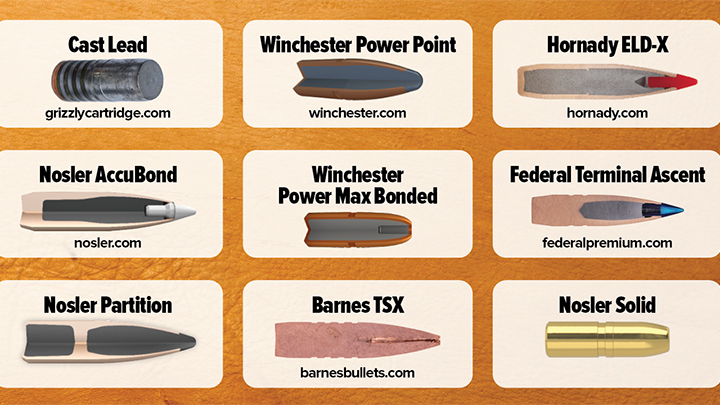
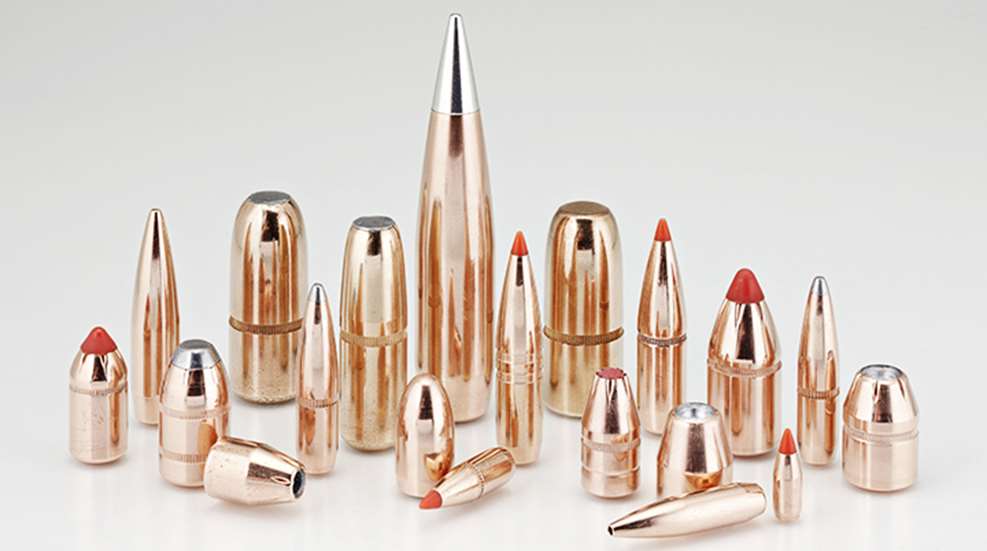
Bullet technology has progressed considerably over the last quarter century, so there is no excuse for using an inferior bullet on your hunt. Bullets are so much better today than yesteryear that cartridges previously considered “inadequate” have now moved squarely into the perfectly “adequate” column when loaded with modern, good quality bullets. Listed here are the most common types/designs of hunting bullets focusing mainly on rifle cartridges.
Cup and Core
These expanding bullets are literally a copper tube (the cup portion) containing a lead insert (the core). While this dated design still works, velocities should be held to a moderate level as high impact velocities can induce core separation, disrupting the designed performance, an obviously unwanted result. Some older cup-and-core designs sometimes expand so violently that not only does the core separate, but the bullet explodes into pieces, arresting forward motion that might leave the vitals untouched and intact.
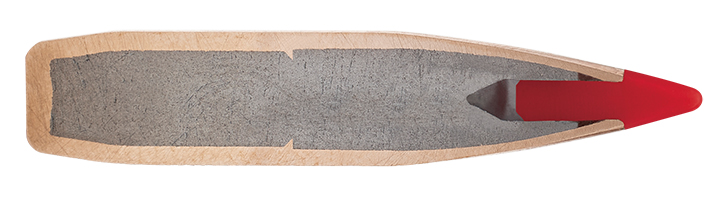
You want your bullet to perform but not fail. Any cup-and-core bullet is excellent for varmint hunting where the animal is of a rather small stature. Many perform well on big game, too, especially when we’re talking about new bullets in this category, such as the Hornady ELD-X. Many hunters think they can do better than this for the majority of big-game hunting, but the truth is many cup-and-core bullets are supremely accurate—and they’re cheap by comparison to other bullets.
Bonded
Bonded bullets are just that; they are essentially cup-and-core bullets with a bonded core, meaning the core is attached to the jacket via a chemical bonding process, ensuring the two components do not separate upon impact.
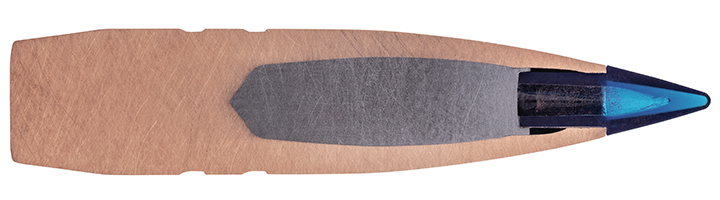
Bonded core bullets provide highly reliable performance as they are able to withstand high impact velocities. Many bonded bullets carry some of the best design features in use today, like boattail bases and polymer tips. The Hornady InterBond, Swift Scirocco, Nosler AccuBond, Winchester Power Max Bonded and Federal Terminal Ascent all are bonded.
Mechanical Locker
These bullets feature separate compartments, one at the base filled with lead and a separate compartment at the front (also filled with lead) that is designed to expand. But the division (partition) between the two compartments prevents the bullet from over-expanding into the bottom portion.
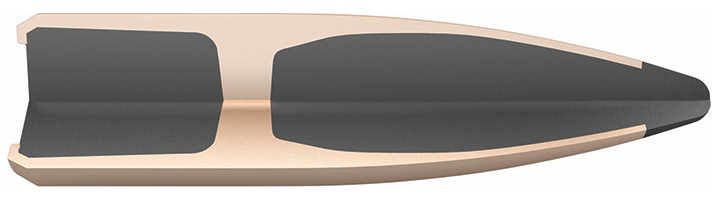
The Nosler Partition and Swift A-Frame are prototypical examples of mechanical lockers. Some of these bullets will lose their front end; what is left is the shank that will typically continue to penetrate. Some mechanical lockers feature a bonded front end providing the best of both worlds: the front end will largely stay together despite expansion, and tend to lose very little mass or weight. This is one of my favorite bullet types for a broad spectrum of game.
Monolithic
These bullets are made from solid brass or copper, hence the monolithic designation. These tend to cost a bit more but they are typically of a higher quality in that they are precisely machined and often very accurate due to their precision concentricity. There are two prevailing types of monolithic bullets.
The first commercially available bullet of this type was the Barnes X; it is an expanding/fracturing design, and it revolutionized hunting bullet design. These bullets feature “petals” designed to tear open and stay attached to the bullet shank. This is one tough bullet that in this author’s humble opinion was single-handedly responsible for making lesser cartridges much more effective on larger game across a broad range of speeds. Fracturing bullets do as the name suggests. The petals are designed to shear off and create their own separate wound channels.
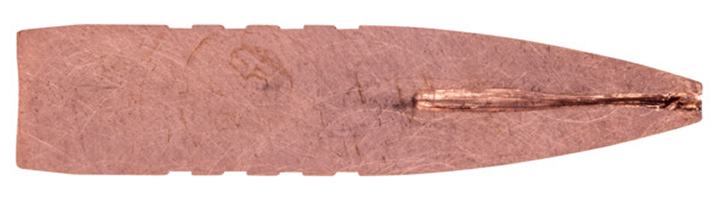
Monolithic solids are true solids in every sense of the word. They offer absolutely uncompromising straight-line penetration, and are impervious to impact velocity or target hardness. These bullets typically feature a flat nose (meplat) that will track in a straight line and also produce a wound channel that is larger than the diameter of the bullet. The Barnes Banded Solid and Nosler Solid are prime examples. This is the ultimate in very large dangerous-game bullets. You likely will not use this type of bullet unless elephant is on the menu.
Solid
The term solid in this case is a bit of a misnomer. “Solid,” in the traditional sense of the word, is an FMJ (full metal jacket, a fully enclosed metal-jacketed bullet) designed to withstand expansion under all circumstances.
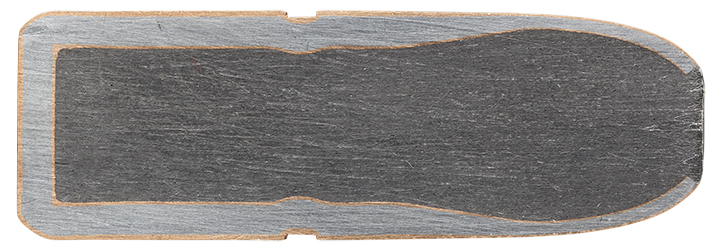
In many cases these bullets feature a steel jacket to toughen the exterior. A gilding metal will cover the steel jacket to prevent these bullets from damaging rifle barrels. These were the traditional dangerous-game rifle bullets, and are now largely superseded by the aforementioned monolithic solid. The Hornady DGX (Dangerous Game eXpanding) is a good example.
Cast
Cast lead bullets are cheaper alternatives that vary in hardness and nose profile. Some are designed to expand and some to penetrate. The problem lies in the material in that it should not be overdriven if expected to perform as designed. Lead tends to distort when it makes hard contact, compromising the design (it can also fracture if brittle). These are popular bullet types used by revolver hunters, where their use in the much more subdued velocities work in their favor as compared to rifle velocities. I would not suggest them as a reliable alternative especially at the higher velocities attainable by rifle cartridges.
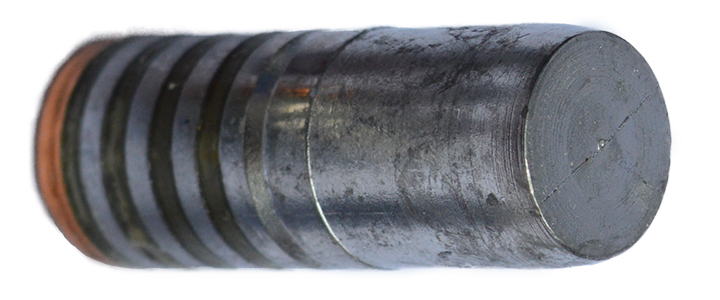
Handloaders will find all of these bullet types available to purchase and load as components from numerous manufacturers. Other hunters (many do not reload) will find all of these bullet types available in a wide range of calibers from a slew of quality ammunition manufacturers. Buffalo Bore and Cutting Edge Bullets make very good cast bullets.
Don’t let this task overwhelm you. Choose well, and then practice shooting from field positions. While the bullet is everything, from a terminal standpoint, your marksmanship is what delivers that terminal effectiveness.