I’ve always liked and appreciated lever-action rifles: the way they feel on the shoulder and in the hand; the look; the connection to our Old-West history.
For a hunting firearm, however, I’ve usually opted for bolt-actions and ARs for a single reason: range. Of course I prefer a closer shot to a longer-distance one, and will try my best to close the space between myself and my quarry, but, if that won’t work, I’m more than willing to take a shot out to 300 yards on deer-sized game. Most levers I’ve used were chambered for pistol cartridges, their straight-walled, jumbo cousins like the .45-70, or the venerable .30-30 Win. I would consider none of these a 300-yard shooter.
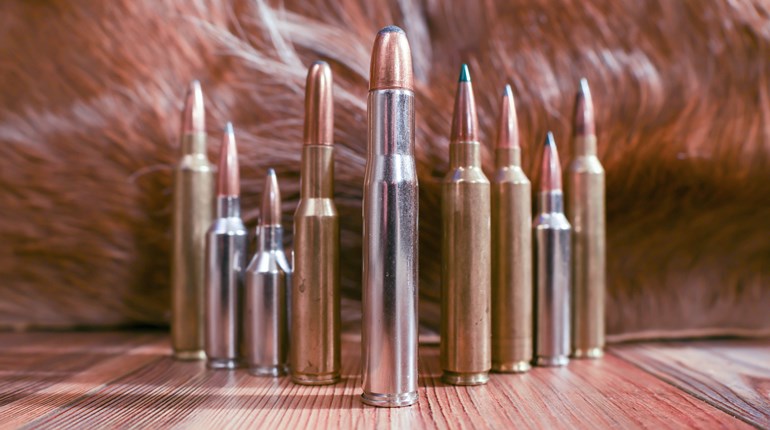
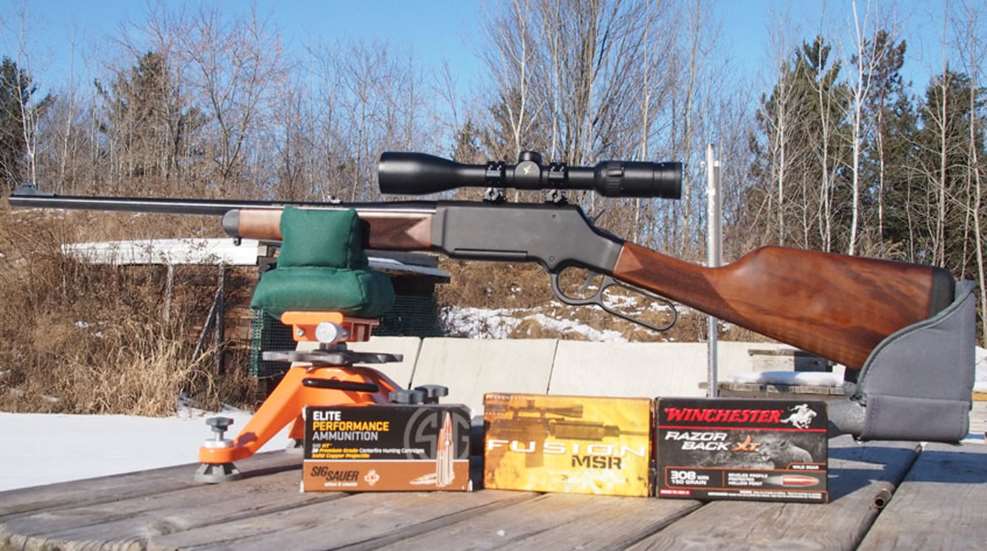
Thus, I was very interested when Henry Repeating Arms, of Bayonne, N.J., announced the Long Ranger, a rotary-fed lever action in short-action calibers .223 Rem., .243 Win, 6.5 Creedmoor and .308 Win., with a 20-inch, free-floating barrel.
Recently, I had the chance to test a Long Ranger chambered in .308 Win. The rifle is comfortable on the shoulder, the lever functions flawlessly and it’s more than accurate enough to be a 250-yard deer killer. The sole problem I experienced was a too-stiff trigger.
First, I mounted one of my “go-to” hunting scopes on the Long Ranger, a Swarovski Z3 3x-10x-42 mm. Henry had included a two-piece Skinner scope-base kit that screwed into the top of the rifle’s receiver; they fit perfect and provide solid anchor points for the Swarovski. I cleaned out the barrel and applied a light coat of gun oil to the bolt and other moving parts.
I had two sessions with the Long Ranger at my local shooting range, putting approximately 180 rounds through the rifle. My range is of the outdoor variety, and it was definitely winter here in north-central Wisconsin. While there was little to no wind during both sessions, it was cold. The thermometer read five-degrees Fahrenheit my first visit, but “warmed up” all the way to eleven-degrees for the second go ‘round.
I first zeroed the rifle at 50 yards, shooting off sandbags. This process was a little frustrating as my shots kept jumping around the bullseye. I put it down to my lack of experience with this particular rifle and moved on to 100-yard targets, but here I began to understand other factors affecting accuracy; namely, a trigger with a hard pull, and a barrel heating up too quickly for fast, repetitive shooting.
The trigger on the Long Ranger has a combination of moderate creep and some stacking right before the break. If I wasn’t careful to make sure I completed a very smooth, extremely consistent pull, my shots tended to go wide. Besides this, the barrel heats up fairly fast, especially when you’re someone who shoots ARs regularly and is therefore very used to pulling off quick shot groups. That “someone” would be me.
On my second trip to the range, therefore, brought along my Champion Target’s Premium Shooting Rest, a very solid and adjustable platform that can handle everything from bolt actions to ARs.
With the Champion Rest, my groups got considerably tighter, mostly, I think, because the solid rest and the padded rear pocket holding the stock negated much of the trigger’s effect on accuracy. I also made it a point to space out my shot strings.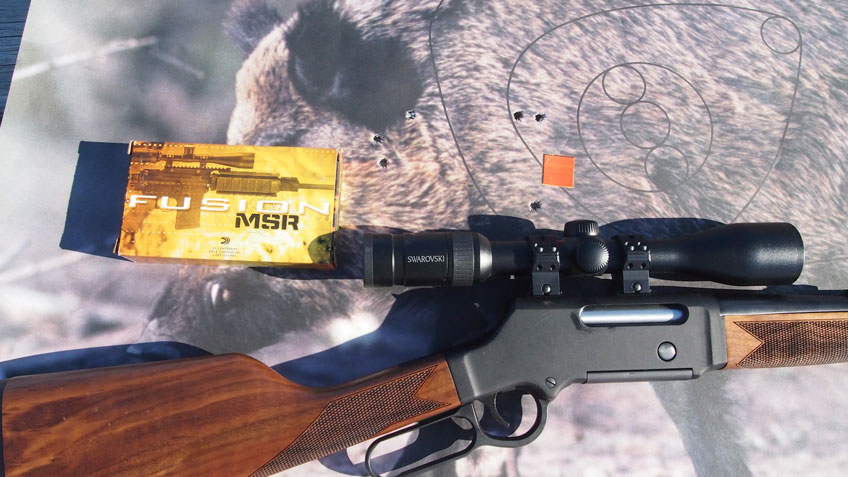
Life-sized hog target reveals the pattern the author found: first two shots right on target, but #3 drifts.
I used three brands of .308 Win. ammunition in my testing: Federal Fusion MSR with a 150-grain bullet; SIG Sauer’s Elite Performance firing a 150-grain solid-copper bullet; and Winchester’s RazorBack XT sporting a 150-grain hollow-point bullet. (NOTE: Winchester changed the name of this ammo line to RazorBoar XT, though it uses the same bullet and powder load as the RazorBack I have.)
I tested the ammunition using three- and four-round groups as my measure (the Long Ranger’s rotary magazine holds four rounds in the .308 Win., 6.5 mm Creedmoor and .243 Win. models, five on the .223 Rem. version). My best accuracy was achieved with the Federal Fusion MSR rounds, interesting given that Federal optimized this round to work well in ARs. The top group with the Fusion measured .773 inches with a three-shot group.
The SIG Sauer Elite Performance came in second with a .778-inch group for three rounds, and 1.05-inches with three shots for the RazorBack XT.
On average, four-shot groups with the Fusion and SIG rounds increased to 1.25-inches, while the Winchester load came in at 1.45 inches.
The trigger remained hard to pull through my shooting time. I couldn’t detect a loosening even after the 180 or so rounds I put through the rifle. My Lyman Digital Trigger Pull Gauge put the pull at an average of 3.5 pounds, which is pretty good, but doesn’t really factor in the practical effects of trigger creep and stacking on accuracy.
The Long Ranger features an exposed hammer and forged-steel lever, but uses a geared action driving a machined and chromed steel bolt with a six-lug rotary head. The six-lugs create a strong, consistent lock-up from shot to shot. The lever action operated smoothly, and I never had a problem chambering or ejecting a round.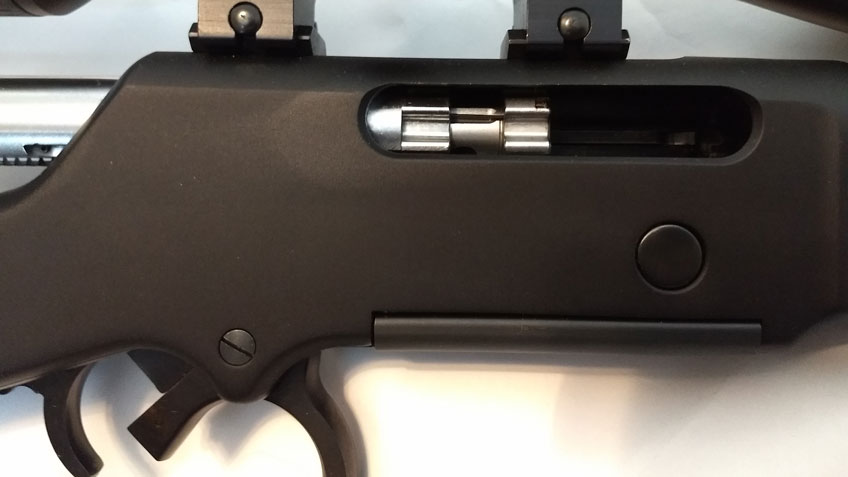
The rifle’s lever-action is very smooth, chambering and ejecting rounds with ease.
With side ejection and a lightweight aerospace-alloy receiver, the top is drilled and tapped for scope mounts, and the bottom features a steel-bodied flush-fit detachable magazine. The magazine is released via a blackened-steel release button on the right side of the receiver, and pops in and out of the magazine well easily.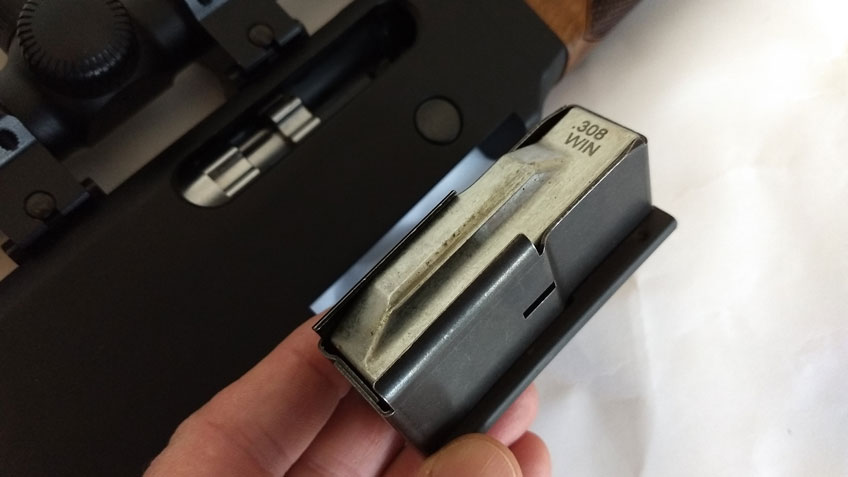
The Long Ranger’s rotary magazine loads easily and pops in and out of the magazine well without a hitch.
The rifle doesn’t have an external safety. Instead, it relies on a transfer-bar safety that prevents the hammer from contacting the firing pin until the trigger is fully depressed. Pulling the trigger moves the transfer bar out of the way, allowing the hammer to strike the firing pin. This system lets you carry a round in the chamber with the hammer forward. If your hammer should slip as you are cocking it back, the transfer bar won’t allow other contact with the firing pin, so the rifle won’t go off. Another thing of note, the hammer spur is well serrated and provides a very tactile surface, even when the spur is wet or damp.
Recoil was noticeable, though not terrible. This is not, after all, a gas-operated rifle with a buffer tube in the stock. The rubber recoil pad does blunt the recoil, but the full force of the .308 Win. cartridge is coming right back at your shoulder.
With an optic, this is easily a 250-yard deer-and-hog rifle, at least in the .308 Win. chambering (we can argue about how well .223 Rem. and .243 Win. will do the job at that distance another time.) Yes, I can see the Long Ranger as my main deer- and hog-hunting rifle. First though, I’d have a good gunsmith smooth out the trigger.
Technical Specifications
Calibers: .223 Rem., .243 Win., .308 Win. (tested), 6.5 Creedmoor
Action: Lever-Action
Bolt: Six-Lug Rotating
Feed System: Four-round rotary magazine (five rounds in .223 model)
Barrel: 20-inches long, steel
Rifling: 1:10, Right hand, six-groove
Front Sight: Black, ramped, with Ivory bead
Rear Sight: Adjustable, Folding
Safety: Internal transfer-bar safety
Finish: Blued
Stock and forearm: Straight Grip Checkered Oil Finish American Walnut
Weight: 7 lbs.
Overall Length: 40.5 inches
Accessories: sling swivel studs, solid black rubber recoil pad, receiver is drilled and tapped for scope mounts, two-piece Skinner scope bases included.
MSRP: $1,066; henryusa.com