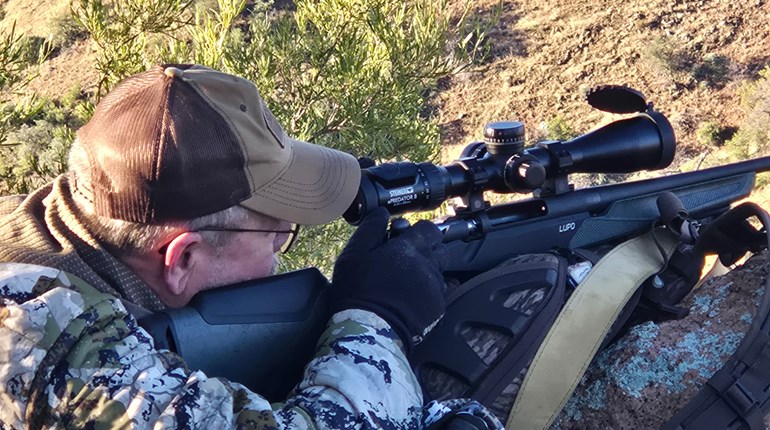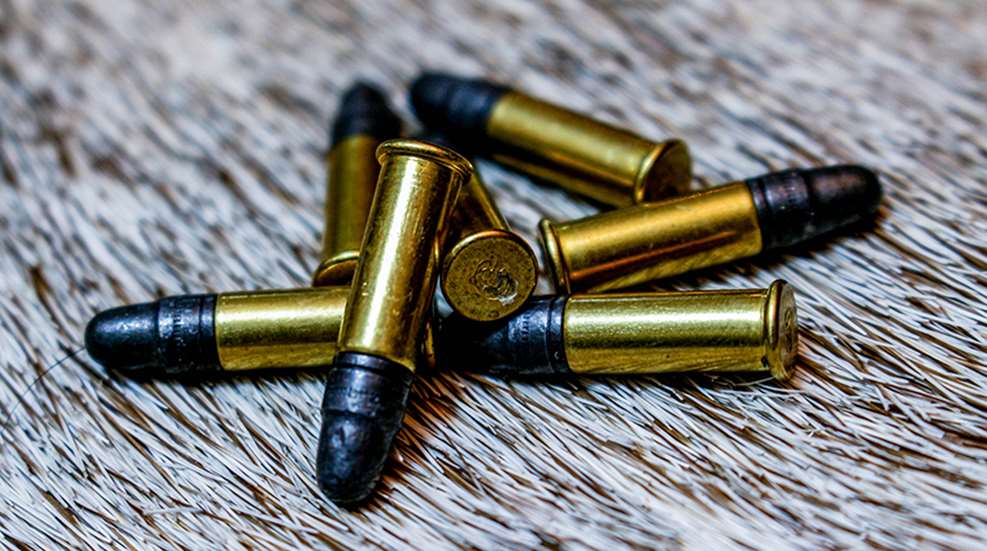
It was my first rifle, and I’d be willing to wager that for the majority of you, it was your first as well. And there’s a good reason for the little rimfire cartridge to be a hunter’s first; it’s the perfect blend of low report, complete lack of recoil and affordability. I believe everyone who enjoys shooting or hunting should own at least one rifle chambered for the .22 Long Rifle.
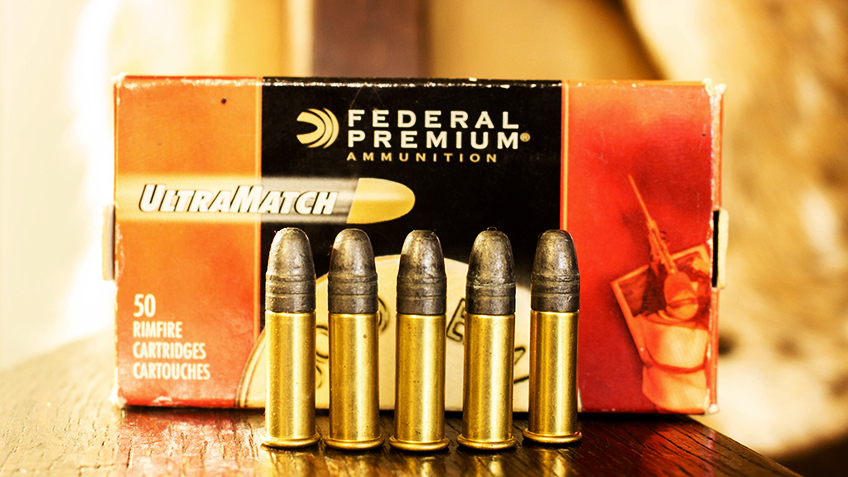
The ‘twenty-two’ or ‘two-two’—depending on what side of the pond you’re on—is a fantastic tool to hone your rifle mechanics; it can help ward off a flinch from big-bore rifles, as well as sharpen your eye for the hunting season without the expense of premium centerfire ammunition. It can be housed in a number of action types in both rifle and pistol, and is a very efficient hunting cartridge, capable of taking numerous small game species, as well as serving as a predator/varmint round at shorter ranges.
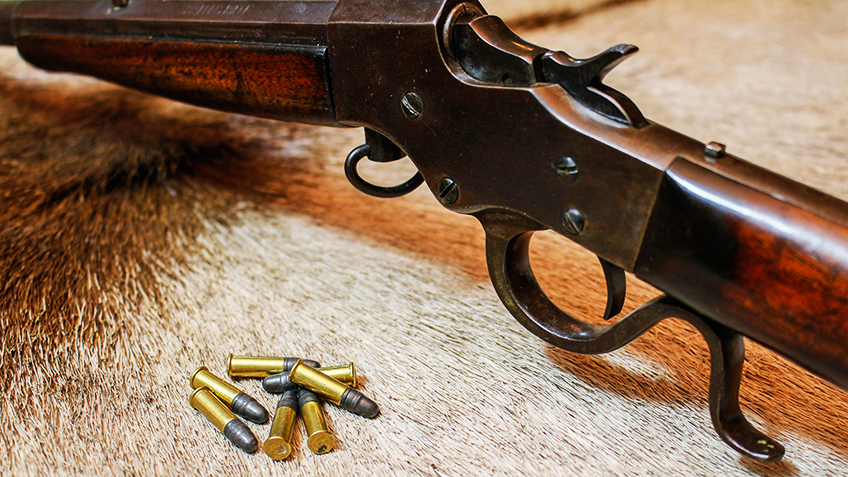
The design hearkens back to 1887, when J. Stevens Arms & Tool Co. combined the case of the .22 Long cartridge—normally loaded with a 29-grain projectile—with the heavier 40-grain bullet of the .22 Extra Long, obtaining a muzzle velocity of 1150 fps. The .22 LR uses a heeled bullet, in that the projectile is the same diameter as the case, and a thinner ‘heel’ is inserted into the case. With an overall length of exactly 1-inch, the .22 LR was originally loaded with five grains of a finely granulated black powder; the cartridge saw the transition to semi-smokeless and finally smokeless powder. Depending on the firearm and the loading, the .22 LR can be either supersonic or subsonic, and because of its mild report and recoil, it’s often seriously underrated.
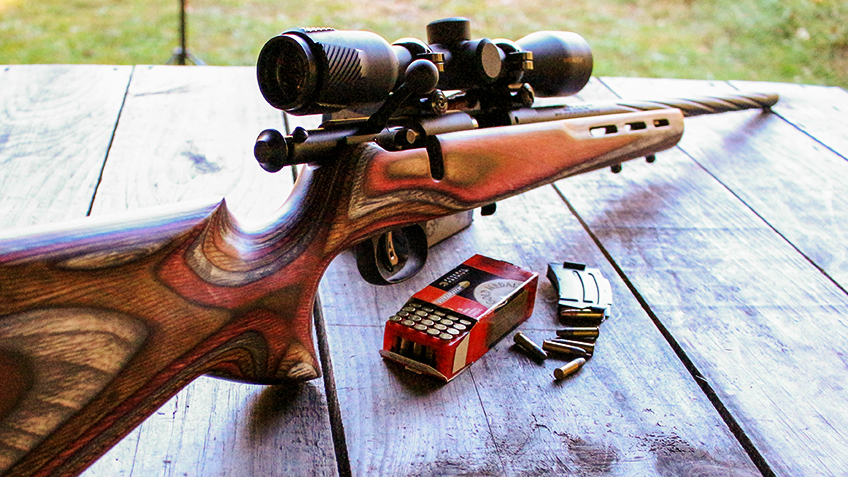
Despite the diminutive look and sound, .22 LR can and will kill both animals and people. No, it’s not a hard-hitting man stopper, nor is it remotely a logical choice for deer hunting—though it has been called on for both purposes. It most certainly shines in the squirrel woods or at the shooting bench for precision shooting, and it can put that indelible smile on a new shooter’s face as a plinking round.
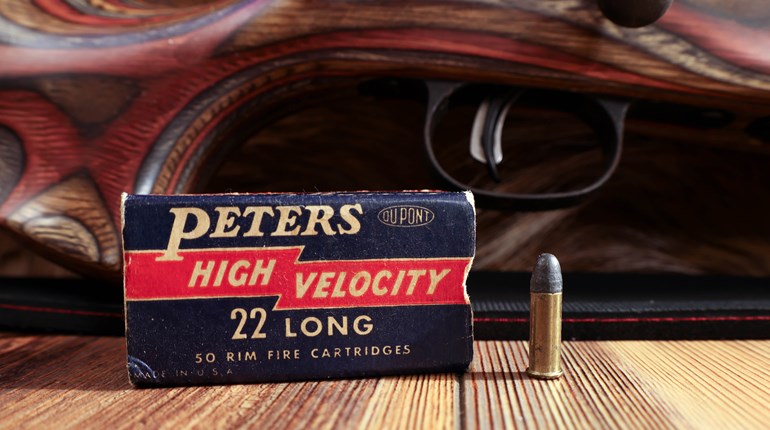
The rimfire design is effective; keeping the priming compound in the rim of the cartridge is simple yet inexpensive to manufacture, with the rim also serving for headspacing. The .22 LR is the culmination of the progression of cartridges which started with the .22 Short, .22 Long and the much more rare .22 Extra Long. While both the Short and Long cartridges were popular when my father started hunting in the early 1960s, two decades later when I began to hunt with him, the .22 LR was invariably the most popular option, as fewer and fewer rifles were chambered for the smaller cartridges.
You see, the rim and body diameter of the Short, Long and Long Rifle are all the same; the only varying factor is the length of the case and the weight of the bullet. Much like the relationship between the .38 Special and .357 Magnum, or the .44 Special and the .44 Magnum, a rifle or pistol chambered for .22 LR can safely fire .22 Short or .22 Long ammunition, though in the autoloading firearms there may not be enough pressure to cycle the action.
The .22 LR got a bit of an upgrade when CCI released the Stinger in 1975, the first of the hyper-velocity designs. Using a longer case and a shorter 32-grain bullet to maintain the same 1-inch overall length, the Stinger obtains over 1600 fps—in comparison to the high-velocity load which generates about 1250 fps in a rifle—for a bit more striking energy. My dad used the Stingers in his Bicentennial Ruger 10/22 for years with excellent results.
I have a Ruger 77/22 bolt-action rifle that has served me very well since 1985. Built like a big-game rifle, it has fine iron sights and I keep a low-power scope on it these days, as it serves as a training tool for dangerous game hunts. This rifle shoots many types of .22 LR ammo well, but it especially likes the inexpensive Remington Thunderbolt ammo; it’s a simple waxed lead projectile, but for some reason this rifle shoots it well. I like it for hunting and practice alike; it has accounted for more squirrels, rabbits and other small game than I can recall.
The .22 LR can be used for target work as well; there are many good match loads from proven companies like Federal and Norma, and in a well-built rifle, they can deliver hair-splitting accuracy. It is a great fun to take the .22 LR out to 100 yards and beyond; you may be surprised with the results.
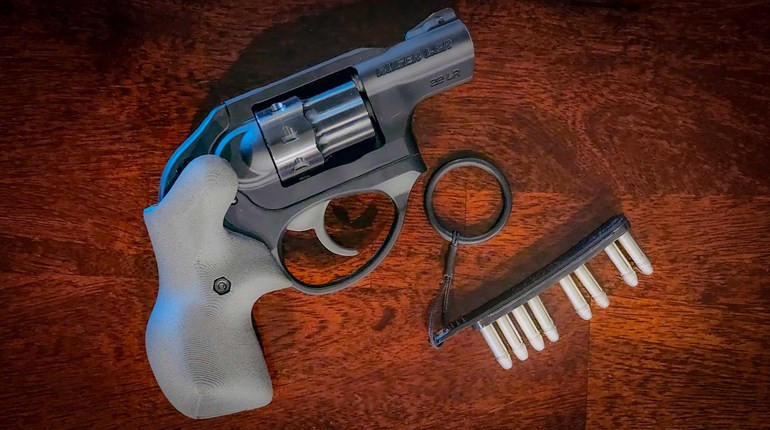
In a handgun, the .22 LR can be equally at home. When I was too young to hunt myself, I would accompany my dad on nighttime raccoon hunts; he took great pride in his ‘coon hounds. Armed with a large Dynalite flashlight and a Ruger Single Six revolver, he would take a respectable number of raccoons with prime fur each fall, and prices in the late 1970s and early 1980s certainly supplemented the family income. I couldn’t begin to estimate how many raccoons that single-action revolver has taken, but I know that in spite of the external wear and tear, that gun still shoots well. There are also many good semi-automatic handguns chambered for the .22 LR; a good Browning Buck Mark or Ruger Mark IV pistol is a most handy tool.
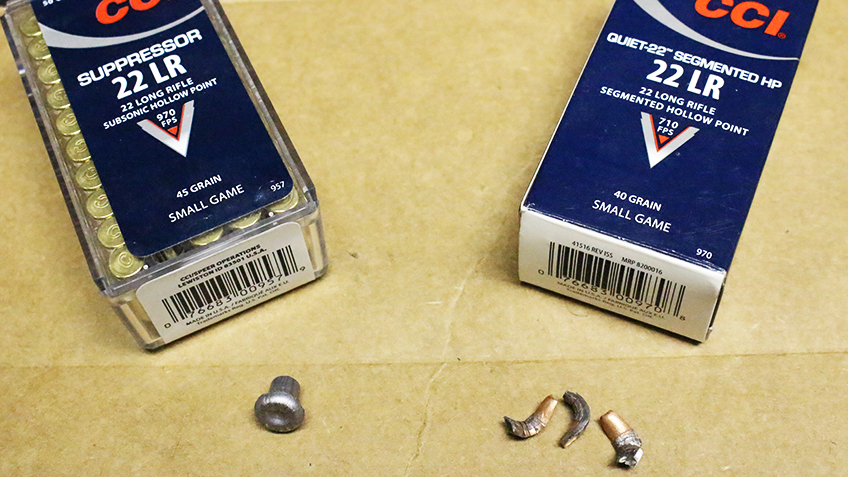
The classic combination of a 40-grain waxed lead bullet at 1150 fps is still effective, but there are many other options available, including subsonic heavyweight bullets—perfect for eliminating garden pests without alerting the neighborhood—and bullets designed to fragment upon impact. There are hollowpoints, full metal jacket designs, pure lead bullets, plated bullets and more. Anyone can learn to shoot a .22 LR, and I consider it one of the staples of the hunting world; there should be at least one in everyone’s collection.
Looking for previous installments of our "Behind the Bullet" series? We've got you covered.
• 7mm-08 Remington
• 8mm Remington Magnum
• .338 Federal
• .224 Valkyrie
• .338-06 A-Square
• 9.3x62mm Mauser
• .257 Weatherby Magnum
• .45-70 Government
• .300 H&H Magnum
• .25-06 Remington
• .30-06 Springfield
• 6.5 Creedmoor
• .300 Remington Ultra Magnum
• 7mm Remington Magnum
• .470 Nitro Express
• .280 Remington
• .300 Winchester Magnum
• .270 Winchester
• .222 Remington
• .45 ACP
• .404 Jeffery
• .44 Remington Magnum
• .41 Remington Magnum
• .243 Winchester
• .338 Winchester Magnum
• .357 S&W Magnum
• 6.5-284 Norma
• 8x57 Mauser
• .38 Smith & Wesson Special
• 7x57mm Mauser
• 9 mm Luger
• .35 Whelen
• .454 Casull
• .375 H&H Magnum
• .45 Colt
• .22-250 Remington
• 10mm Auto
• .308 Winchester