As the last week of the three week Missouri turkey season began, so had my lack of enthusiasm of getting up at 4:30 a.m. for several days in a row. As the rain came pouring down the night before, it was not hard to talk myself into sleeping in the next morning. Even so, I chose to go with my experience in knowing that a gobbler can’t be taken if you’re not in the woods.
As the morning began, the night rains had turned into a mere mist, making it tolerable to continue hunting. I continued to a spot where the turkeys had been all season, which also seemed to be a good location for them to go when the weather wasn’t ideal. It was a small patch of timber that divided two open fields. I knew if I arrived well before daylight, I might have a better chance of getting set-up in the field before the turkeys began to wake while still on the roost.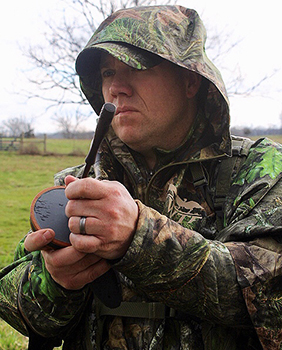
As the morning progressed, I began to lose hope. There were no turkeys in sight and no gobbles to be heard, which lead me to believe that the rain had them in a different pattern. After packing my gear and decoys back into my Nomad turkey vest, I stood to get ready to make my way back to try again another day.
After taking just two steps from the tree where I had been sitting, a tom gobbled in the timber that I’d been facing the whole morning. I immediately sat back down, got my shotgun back into position, and made some soft yelps on a diaphragm call, trying to avoid any unnecessary movement. Two or three gobbles rang out in a 30 second period, and I knew from prior experience that this gobbler was coming.
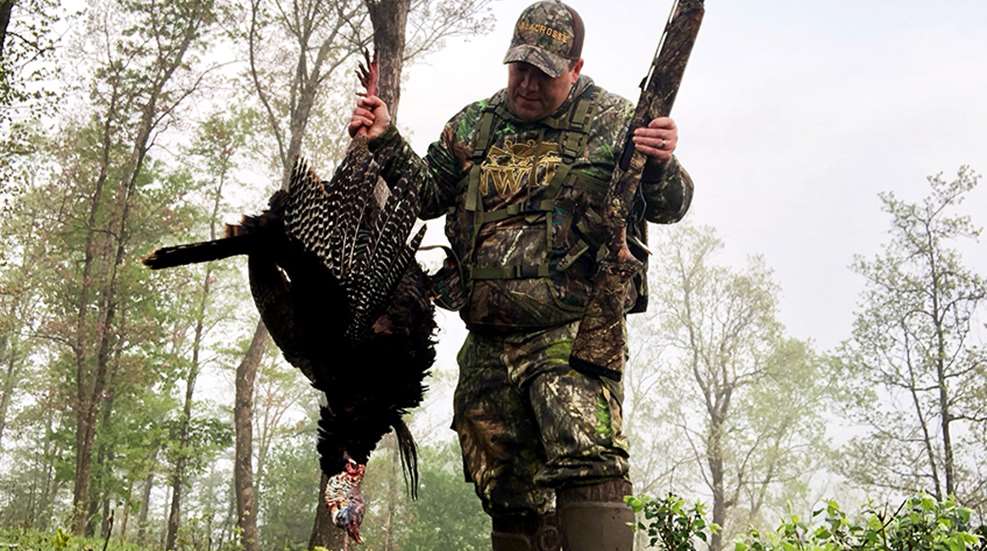
Sure enough, two minutes later, a mature tom entered the field to find out where my soft hen yelps had come from. I was able to make a successful shot at only 17 yards on an outstanding Missouri gobbler. During the past 25 years of turkey hunting, I can humbly say that I’ve learned a few things while turkey hunting. One is that each year, it gets easier to make up excuses. Examples such as being tired, deciding it’s too windy, cold or rainy, and many other excuses to be able to catch a few more minutes of sleep. I’ve also learned that there are a few techniques for hunting turkeys in the rain that can make a hunter successful when Mother Nature does her thing.
Patience is Critical
One of the hardest things I’ve had to learn throughout the years is to have patience. If one will have patience to wait it out, the benefits can reap success. During the spring wild turkey breeding season, a gobbler has one thing and one thing only on his mind: finding a hen to breed. With the built up adrenaline that’s running through a gobbler’s veins, a rain shower becomes similar to a bull waiting in the shouts before the gate is open for him to come out bucking.
Over the years, I’ve discovered that one of the best times to find a so-called “fired up” gobbler is right after a rain storm. As soon as the weather breaks, he is like that of the bull, ready to explode out in the open. The key to success in these situations is to be ready when it happens. Using a ground blind is a great way to stay in the dry until the weather clears. As soon as it does, began calling to resemble that of a hen that has made her way to the field and is now looking for a tom. This is also a great time to take advantage of a decoy such as the Avian-X LCD Breeder Hen. This aids to the realism when a gobbler comes in looking for the hen that he’s been hearing.
Open areas such as a field, pasture or road are great places for turkeys to be when it’s raining or moments after a rain has ended. When a turkey is in the timber when it’s raining, everything is moving to them. This takes away from their dominant eyesight that is widely known as being excellent at catching predators or us hunters. Being in a more open area allows them to keep a better eye on their surroundings. Another reason for turkeys to be attracted to open areas while raining is that of their feathers being heavier. This, too, prevents them from being able to get away from danger.
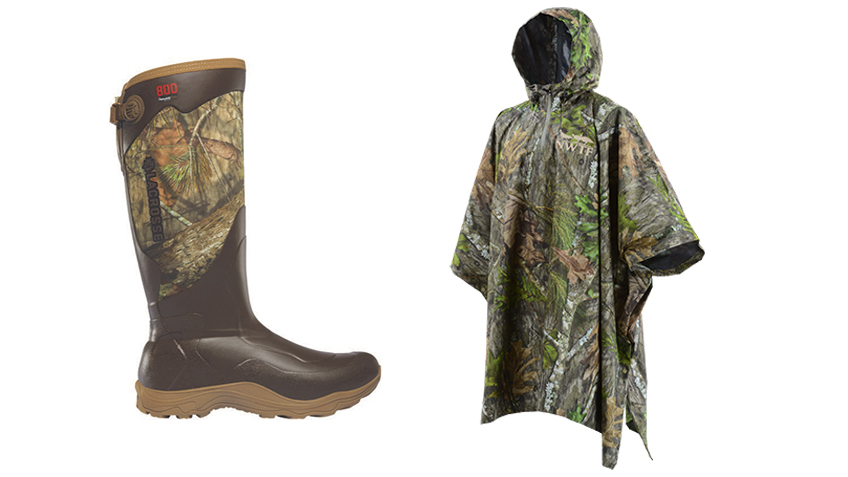
If hunting open areas is not an option, taking advantage of high-quality rain gear is crucial. Wearing rain gear such LaCrosse rubber boots to keep your feet dry and waterproof camo (I love my Nomad NWTF Poncho) allows you to be able to wait out the elements while still being close to where the action will occur once it lets up. Unlike a ground blind, wearing protection like a poncho allows you to be mobile yet concealed when trying to find a gobbler’s location.
I typically take my time through the timber or along the edge of a field and listen for a gobbler ready to come to a call. During light rains or a mist, I like to use calls randomly while walking in hopes of striking a gobble, and then once I hear one, will set up quickly and begin calling the gobbler in. An important thing to remember when doing a run-and-gun style hunt while raining is to use waterproof turkey calls. There are many box or slate calls that won’t work once they’re wet. However, one can always use a diaphragm or slate call, as long it’s used with a waterproof striker such as carbon or plastic. If you’re a traditional hunter and like the sound of a box call, there are manufactures who have developed a waterproof coating that’s on the lid of the call which can be used while wet.