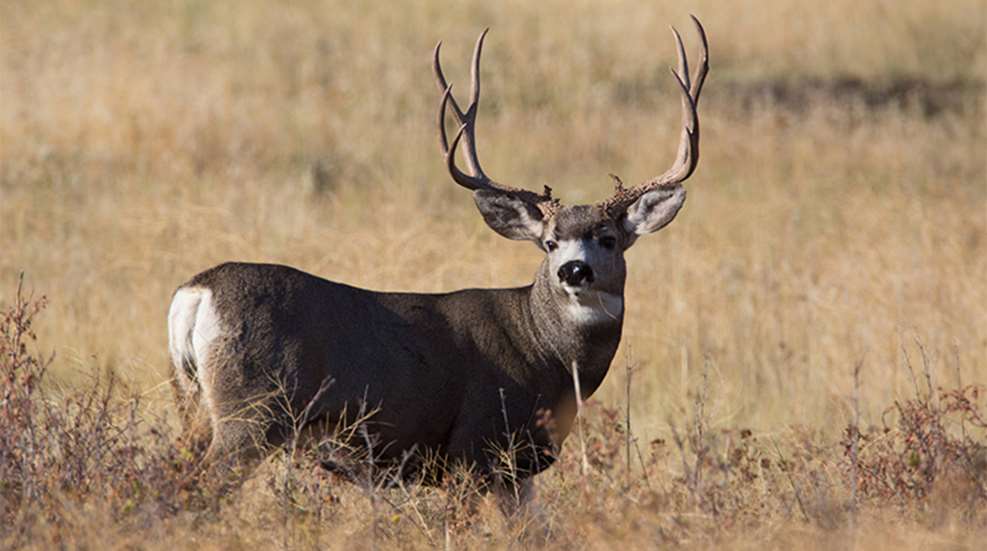
In my opinion, a big mule deer buck is one of the hardest animals on earth to kill with a bow. They don’t have regular patterns like a whitetail; their eyes, ears and nose are superb. They usually hang with a group of other bachelor bucks, and together they employ a strategic method of bedding with somebody facing in every direction. They almost never drink in the daylight, rendering them all but impossible to ambush over water. And they don’t like to be disturbed: bump them once, and they’ll move to a different location or go nocturnal.
Muley bucks do have a couple weaknesses though: food and romance. And in some specific locations they like to bed in big, wide-open territory. That can put them in a stalk-able position. Let’s look at those three chinks in a buck’s armor and see if we can put an arrow through one of them.
Spot-and-Stalk
Probably the most respected method of hunting in the West, spotting and stalking can be exciting, adrenaline-ridden and effective. The above-timberline habitat of Colorado or Nevada and the broken high-plains badlands of Wyoming or the Dakota’s can be ideal for spotting and stalking big muley bucks with stick and string.
But spot-and-stalk methods can also be frustrating, physically extreme and futile. For instance, the mule deer where I live never bed in open stalk-able areas. They climb atop mesas and bed in thick pinyon/juniper forests. It’s impossible to spot them, and just as hard to stalk them.
To kill a big spot-and-stalk buck, you’ll first need to spot him, then put him to bed, and then stalk close enough for a shot. Let’s look at the process in detail.
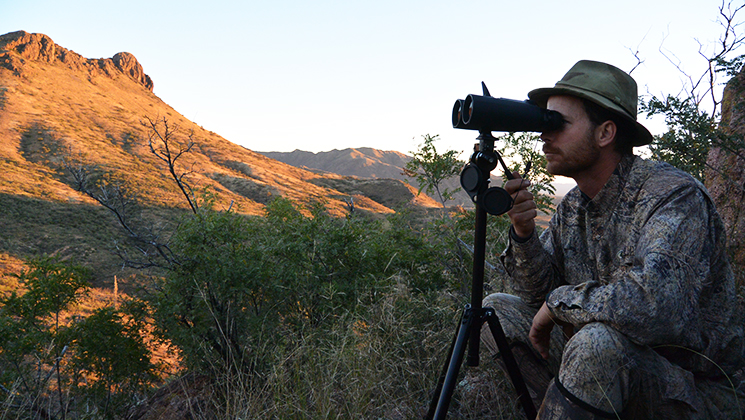
1. Spot Climb a high vantage point and let your binoculars do the walking. You’ll be glassing up to a couple miles distant, so use premium optics. Once you spot bucks, study them through a spotting scope to determine if there’s a shooter buck amongst the group. Try to get to know the bucks while you watch them: How many are there? What are their habits? What is their pecking order? There’s always one schizophrenic buck in the gang; figure out who he is and avoid him. Most of all, figure out how the big boys move in relation to the group: Do they like to bed above, below, in the middle or to the side? The answers to these questions will dictate whether a buck is killable or not.
2. Put Your Buck to Bed. Early-season bucks usually feed for a few minutes up to several hours before heading to their morning beds. Spot them now, but don’t make a move. Watch as they work their way to a bedding area and lie down. You need to stay put a little longer though; most of the time a buck will bed—often, but not always, in the sun—for about 45 minutes to an hour, and then he’ll get up and move to a different bed in the shade. That’s when you make your move. Watch him for 15 minutes or so to be sure he’s settled in, and then go. You’ll have roughly three to five hours before he gets up to relieve himself and eat a midday snack.
3. Stalk in Close. While you’re waiting for the buck to settle in for the day, you need to strategize your approach. Figure out what the wind is doing at the buck’s location. Plan an approach route, and locate landmarks to keep you on track. Everything looks different when you’re on location than it does from a distance, so study it well, and then make your move. Ditch your shoes and pack while you close the last 100 yards, sneaking in on just your socks.
If you’ve planned and executed successfully, you’ll either be able to arrow the buck in his bed or set up downwind of the buck. Get comfortable and stay ready—ideally you should be able to see at least his antler tips. It may be several hours until he gets up. When you see him swivel his head a couple times, get ready. His antlers will swoop down and forward as he begins to get up—that’s when you draw your bow. You’ll have a few seconds to squeeze off the shot before he busts you and heads for the next county.
Hunt the Rut
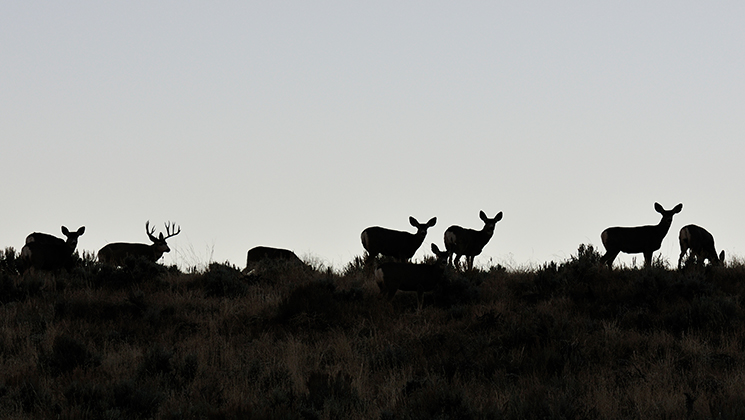
When a big muley buck has romance on his mind he disregards all else, becoming very vulnerable. It’s the reason that there are almost no public land rifle hunts during the rut, and precious few archery hunts. Big bucks forget all their hard-earned survival tactics, charge around during all hours of the day and will look right at you and then go back to chasing tail. Peak rut in most locals happens in late November and early December, and a little research can turn up hunting seasons in various states. It’s a great time to hunt big muley bucks with a bow. Here’s what to do:
1. Shadow Doe Families. Mule deer bucks travel from doe family to doe family, looking for a group that’s coming into estrous. When he finds one, he’ll stay with them until they’re serviced (usually several days), then he’ll hit the road in search of another party. Your best tactic right now is to find does—lots of them—then stand by for a big boy to show up. Sneak in and set up downwind of the group and wait until he offers a shot.
2. Set Up on Travel Routes. As mentioned above, big bucks move a lot during the rut. I once watched a big rutty buck cover over a mile in less than fifteen minutes, checking three families of does along the way. Find a ridge-top saddle, pinch-point or natural funnel and set up downwind of it, much like you’d set up to hunt whitetail. If you’ve got doe groups on both sides of your position, you’re golden. Wait all day, especially if the weather is cool and/or overcast.
3. Rattle. Muleys don’t rattle up as readily as whitetails do, but if the timing is right, they’ll come in. Try getting within 150 yards downwind of a big buck and his does, and make like a couple rival bucks battling it out. You can also rattle to traveling bucks, giving the impression of two bucks fighting over hot does—you just might get lucky.
Ambush
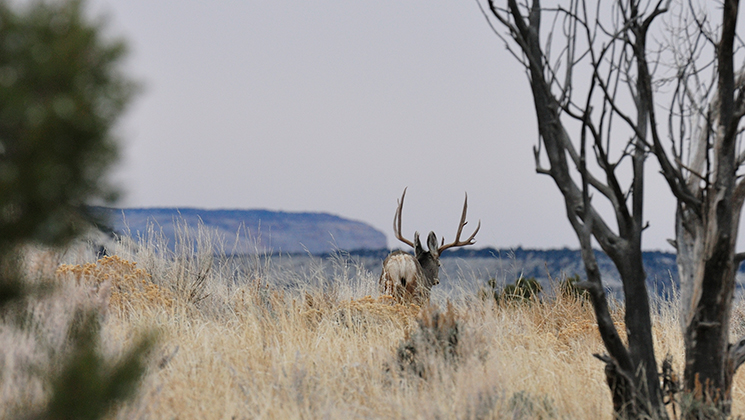
Successfully bushwhacking a big muley buck is all but impossible under ordinary circumstances. They’re just too nomadic. I’ve sat on a ridge top and watched the same bachelor bucks enter a 90-acre alfalfa field ten different ways in ten different days. That said, in my home turf, spot-and-stalk methods are next to impossible, and the rut happens months after the bowhunt is over, so the big bucks I’ve killed with a bow have all been ambushed. Here’s how to make it happen.
1. Bottlenecks. Though rare in good muley habitats, bottlenecks do exist. Case-in-point: one meadow I sometimes watch is bordered by a creek and has a sandstone point jutting alongside. The deer’s favorite bedding area is opposite that creek and point. The only way for them to get there is across the creek, past a huge ponderosa pine, and around the point. Sit there long enough and you’ll kill a buck. Another good place might be in a narrow ridge-top saddle between feeding and bedding areas. Just remember, mule deer go where the wind blows them, so the situation and terrain must be significant to create an effective ambush.
2. Attractants. Sometimes the only way to get within archery range of a mule deer buck is to hunt over something he wants pretty badly, such as a good acorn patch, a mineral lick or an apple tree near an old homestead. Those spots are few and hard to find, but if you locate one, you might see an old warrior compromise his safety for a nibble of his favorite treat. That’ll give you a chance to turn him into your favorite venison treat.
3. Decoy. I’ve seen it work one time; the biggest buck any of my clients ever killed came to a decoy. He fed in a large meadow each night, leaving well before dawn each day. My brother was guiding, and just couldn’t get the hunter and the buck within the same zip code. Then one day he had a flash of brilliance and set our 3-D buck target in the meadow near the client’s blind. That old savvy buck saw the decoy from clear across the meadow and came to investigate. He ended up gross scoring 196 and some change. I’m not saying a decoy will work every time, or even often. But it worked on the biggest bow-killed buck I’ve seen on the ground.
Still-Hunting
Still-hunting deserves an honorable mention in this article, especially if you’re simply hunting any buck. Slipping your way very slowly through good deer habitat can provide a fun way to spend your midday, teach you a lot about your hunting area and even offer a shot opportunity. Just be sure to keep the wind in your face and move slowly as cold molasses, picking cover apart with your binocular. “One step, two looks” is a good mantra. Spot a buck, and your adventure morphs into a spot-and-stalk event.