Photo Courtesy of USFWS
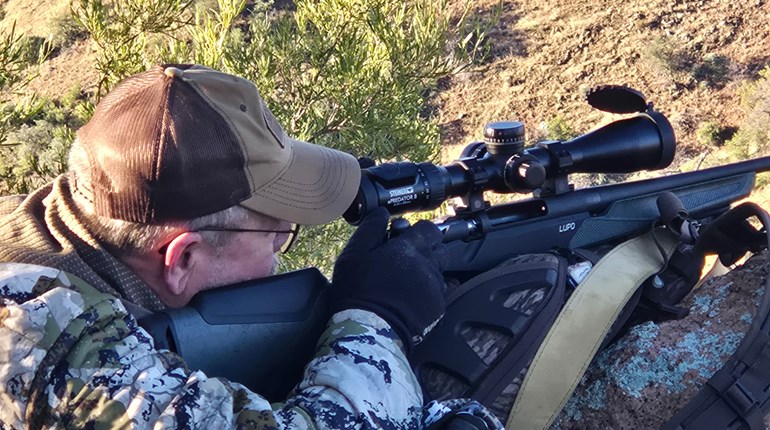
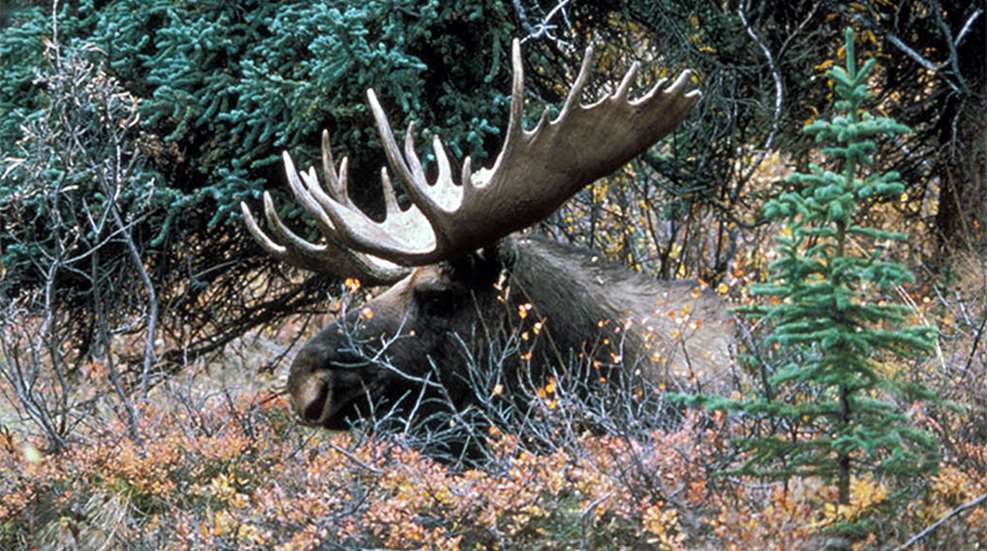
This case began September 2007 along a stretch of the Nation River in Alaska’s Yukon-Charley Rivers National Preserve. An Alaskan named John Sturgeon was using a hovercraft to get to his moose-hunting spot. His engine wasn’t working properly so he landed the craft on a sandbar. Two people approached him. After a while, they identified themselves as employees of the National Park Service (NPS) and told Sturgeon that NPS regulations forbid the use of hovercraft. They told him he couldn’t even drive his hovercraft back from where he came. He’d have to have it towed.
This began a court battle with Sturgeon and the state of Alaska on one side and the NPS on the other. In the balance was whether the NPS’ regulations are paramount in a state with a very complex mix of state, federal and tribal lands.
The case became known as Sturgeon v. Masica. It moved along through the court system until the U.S. Court of Appeals for the Ninth Circuit ruled that a federal statute “unambiguously” supports the NPS’ ban on hovercrafts.
Sturgeon’s only option was a long-shot appeal to the U.S. Supreme Court. The state of Alaska was on his side. Safari Club International (SCI) got involved, as Sturgeon is an SCI member, and submitted a “friend of the court” brief.
Many were surprised when the U.S. Supreme Court agreed to take the case. Some recognized this as a way to perhaps curb federal power over the millions of acres of land it controls in Alaska and across the Lower 48.
The federal government opted to play down the case. “The question whether hovercraft may be navigated on navigable waters within national parks’ boundaries,” the U.S. solicitor general wrote, “is not in itself one of surpassing significance.”
Alaska’s congressional delegation, in a “friend of the court” brief supporting Sturgeon, saw urgency in this case: “What is at stake here for Alaska, is not just a different view ... about permissible weekend recreation or the best method of routing tourists through national parks…. [U]nencumbered access to Alaska’s waters and meaningful use of Alaska’s natural resources is necessary to sustain life in much of rural Alaska.”
Alaska, they argued, is unique. There are many areas of Alaska that simply can’t be realistically reached without things like float plains and even hovercraft. Having a federal agency in Washington, D.C., rule that rural Alaskans have to live by some arbitrary regulation is to diminish a way of life that someone inside the Beltway can’t even conceive. They argued that the implications for this ruling have many real consequences for rural people and visiting sportsmen.
That’s a clear struggle for freedom from bureaucracy, but then things become legally complex. Alaska is a patchwork of federal, state and tribal regulations that work in ways so complex it could startle even an IRS auditor. In this case Sturgeon wasn’t hovering over NPS land, but over state land managed by the NPS within the Yukon-Charlie Rivers National Preserve. Basically, in dispute was legal language in the Alaska National Interest Land Conservation Act, which establishes the limits of federal authority over state and Native lands in this region of Alaska: “Only those lands within the boundaries of any conservation system unit which are public lands (as such term is defined in this Act) shall be deemed to be included as a portion of such unit. No lands which, before, on, or after the date of enactment of this Act, are conveyed to the State, to any Native Corporation, or to any private party shall be subject to the regulations applicable solely to public lands within such units.”
Read that once—or 10 times—and you’ll still see why whatever this says is ambiguous and highly debatable.
Sturgeon—and the state of Alaska—argue that this language means state lands are exempt from NPS regulations. The NPS says it gives them the power to decide who does what.
In this case, the U.S. Supreme Court, in a unanimous decision, looked this over, was just as baffled as you and me, and on Mar. 22 sided with Sturgeon and the state of Alaska. They agreed with SCI’s argument that the NPS’ interpretation would have a detrimental impact on sportsmen’s ability to access the area’s world-class hunting and fishing opportunities.
After this high court win for Sturgeon, SCI reported that the Supreme Court “concluded that the unique history of Alaska’s statehood and management of its natural resources further exposed the absurdity of the Ninth Circuit’s interpretation.”
This is a big deal because, though the ruling only has to do with Alaska, the Court at least found that NPS regulations have to be intelligible. Now if they’d only tell that to the IRS.
This particular case, however, is not over. The Supreme Court sent several questions back to the lower courts to resolve.