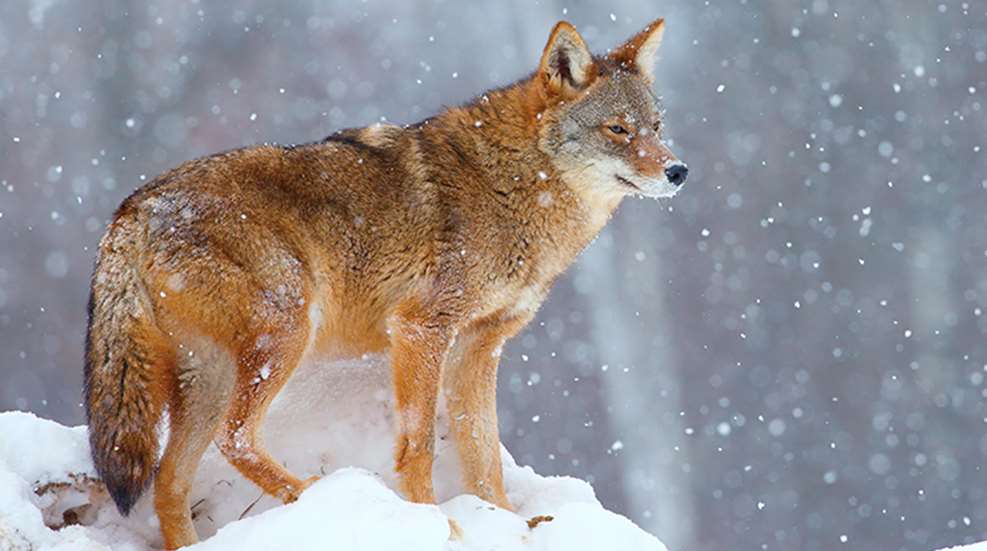
Predator hunting in winter is about being charged by hungry coyotes that are under the impression you’re a critter wailing in pain. Its scenes are all frozen forests and white fields flaring red at sunrise and sunset. It is hunters who only have to watch their breath to check the wind, and camaraderie between 20-minute setups. It is fast shooting. Afterward, it’s skinning out and estimating if you made enough to pay for your gas and shells and being happy when you know you made even more and not caring so much when you don’t. Sounds simple enough, and it can be if you use this little bit of predator know-how.
1. Find the Coyotes
The thing about coyotes in the Midwestern farmlands and Eastern hardwoods is they might walk miles at night, but they spend their days in pockets of cover. You can’t reach out long distances to them across sagebrush flats as you can in the spacious West. This typically means targeting thickly wooded areas. You want to call in places that hold small game or those near other food sources.
Steven Reinhold, one of Mossy Oak’s predator pro-staff managers, gave me some advice that I’ve also heard from champion callers I’ve hunted with in Texas and Colorado. He said, “In late winter, when cows are calving, coyotes move in. They might kill a calf or perhaps even catch a cow calving, but what they’re really after is the afterbirth and,” this surprised me, “the calf dung. You see, calf dung is loaded with undigested nutrients from milk.”
Reinhold is one of those all-around hunters and trappers that makes me think mountain men still exist in spirit. He is a naturalist at heart, as he is always trying to learn something new about the game in the Ohio farmlands where he lives. Outside of the livestock-coyote connection, he scouts for rabbit cover and other small-game habitat.
This resonated with me. I also live in the East, but my region has hardwood mountains that descend into suburban sprawl. The best coyote and fox hunting is on the margins of those two habitats. Scouting in this area is all about finding the right cover, though in a few places, dairy farms have given me the scenario he likes best. We compared notes and he gave a gear tip: “As it sounds like you need to hike to setups, try the TZ PP15 Predator Pack from Tenzing. It’s a pack with spring-loaded legs and a padded foldout seat that keeps all your calls right at hand.”
2. Use Different Calls
For much of the season Reinhold’s go-to call is blackbird distress. “Everyone uses some version of cottontail distress as his call of choice,” said Reinhold. “By early winter most of the coyotes and fox have learned not to trust dying cottontail calls. I’ll also use coyote-pup distress calls later in the winter, and howls and barks when coyotes are breeding. The point is to be realistic and enticing, which means not sounding like everyone else.”
I’ve had good luck in suburban areas with cat distress calls—yes, housecat distress calls. An electronic call from Johnny Stewart I use comes with this option. It helps that I’ve never been a cat person, but I was sold on it after a neighbor described the awful sounds she heard one night of a cat being run down and torn apart. It works.
Whatever you do, Reinhold said that, like turkey hunting, you should start at low volume. “If there is a predator close, you might scare it off by suddenly blaring calls at full volume. I’ve seen this happen to turkey hunters when they start by pounding on their friction calls,” said Reinhold. So he starts low and builds.
3. Take the Right Gun
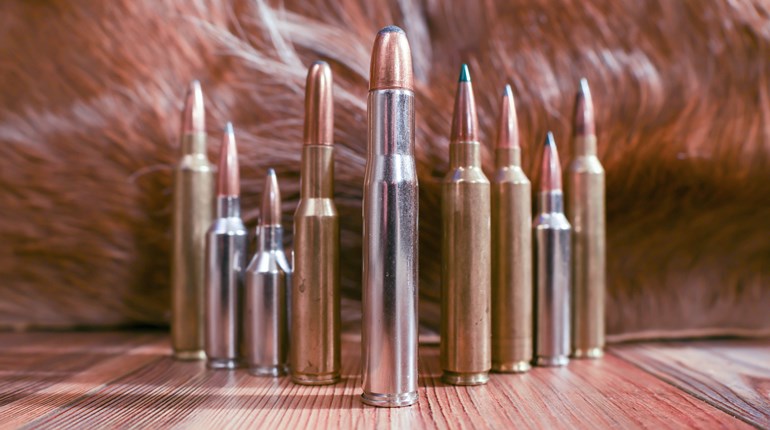
Reinhold hunts in Ohio’s farmlands. His go-to gun is a Remington 870 loaded with No. 2 buckshot and choked tight. His rifle is a bolt-action in .22-250 Rem. He’ll often take both and leave the rifle on a bipod facing, say, a harvested cornfield, and the shotgun in his hands ready to take any predator that uses the brush to circle and get close. While attending a coyote-calling contest (a contest where the winner kills the most in a set time period) in Wyoming I noticed that the most successful teams had one hunter with a rifle and the other with a tightly choked shotgun.
The reason: Shooting is the skill that separates the coyote callers from the coyote killers. Gun skills are paramount. Coyotes won’t give you time. They appear and disappear.
Reinhold said, “When I set up I spend five minutes looking and glassing, as I want to know the shape of every stump and rock. A coyote will often sneak in for a peek. You have to see that and get right on them and kill them.” This means that you need real range time to practice shooting from prone and sitting positions. You need to be able to get on target and make those shots fast.
4. Set Up Like a Deer Hunter
Like deer hunting, you want your prey to come from upwind. The thing about predators, especially educated coyotes, is they’ll often circle downwind. In the open West this is less of a problem, as you can often see downwind. But in the Eastern forests and farmlands you typically can’t. “This is why I ideally look for backstops,” said Reinhold. “You want some way to force that coyote to show himself before he’s downwind.”
Reinhold said he prefers to call coyotes into places where the terrain and cover funnels the predators into a more predictable approach path. He sneaks into his setups. As with getting in and out of a deer stand, low-impact is key.
He stays about 25 minutes. If you want to call bobcats you need to stay twice as long, but coyotes and foxes should respond by 25 minutes. Call for about 30 seconds and stop for two minutes, before repeating. Reinhold mixes hand calls with electronic calls. The choice of calls, duration and volume depends on how pressured your local predators are, the terrain and time of the season. All this is the normal advice on setup and calling time, but Reinhold added: “Even if I think I haven’t called anything in, I sneak back out, as you just never know what’s watching or listening.”