How Do You Compare Riflescopes?

by
posted on December 16, 2014
** When you buy products through the links on our site, we may earn a commission that supports NRA's mission to protect, preserve and defend the Second Amendment. **

The Quandary
On a fairly regular basis, I am sent riflescopes for testing and evaluation. Testing objective factors such as the accuracy of adjustments, durability and eye relief is a relatively straightforward process. That said, testing optical quality can be really difficult without sophisticated testing equipment (which I don't have).

The Question
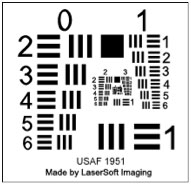
How do you objectively compare and evaluate the subjective qualities of a riflescope?  Until recently, the only way for me to evaluate factors such as optical clarity and light transmission was by mounting the scope to a rifle and taking it (and a few other rifle/scope combos) outside in various lighting conditions. At dusk, for example, I could take turns looking through scopes at a 1951 Air Force Resolution Target and see which scope gave me the best performance in the diminished light. The problem was that by the time you switched rifles and scopes, your brain "forgot" exactly what the previous image looked like. Not a perfect system to say the least.
The Solution
A few months ago, a box showed up at my door—sent by a well-known gunsmith friend. It was a steel bar, fitted with four different scope rings set side-by-side. The bar allowed for up to four scopes to be mounted and adjusted so that they all shared the same point of aim. The entire package can be mounted on a camera tripod so that the evaluator (me) can sit comfortably for long periods of time behind the glass. By moving my head an inch or so in each direction, I can compare scopes on the same plane, focused on the same target, in the same conditions. As dusk falls, I can quickly move back and forth between images, comparing apples to apples. Simple, but very effective.

Nothing groundbreaking here, but a little window into what methods we use to evaluate products.

Latest

Allen Tejon Above And Whitetail 2 Below Gun Cases

Reviewed: Allen Tejon and Bruiser Whitetail 2.0 Gun Cases

Have a big rifle or slug gun that none of your soft cases seem to fit? Don’t let your firearms get banged up. Take a look at Allen’s Tejon or Bruiser Whitetail 2.0 cases!               

First Look: Marlin Trapper Series Model 1894 in 10mm Auto

Marlin has introduced the first ever lever-action rifle chambered in 10mm Auto. The Marlin Trapper Series Model 1894 in 10mm Auto is launching in conjunction with Hornady Manufacturing Company’s new LeveRevolution 10mm Auto ammunition.

Hardware Review: Steyr Pro Hunter III SX

While its most recognizable gun remains the ever-futuristic-looking AUG tactical bullpup first made in 1977 and still used by militaries worldwide, Steyr also makes handguns and hunting rifles. Its Pro Hunter III SX rifle is an all-around hunting rifle and a great example of Steyr quality, a trait much easier felt than described. I’ll try it anyway.


NRA Foundation Awards $250,000 Grant to USA Shooting to Support National Team Programs

The NRA Foundation announced a $250,000 grant to USA Shooting to support the organization’s national team programs.

Copper Mine Helps Boost Arizona’s Bighorn Population

One of the world’s most productive copper mines is also one of Arizona’s most reliable sources of Rocky Mountain bighorn sheep. The bighorns are not shy about entering the Freeport McMoRan open-pit mining operation—near Morenci, Ariz.—but predators are. As a result, there’s no natural check on sheep population growth.

#SundayGunday: Savage Arms AC30 B.O.B. Suppressor

This week, Shooting Illustrated's Jay Grazio makes a guest appearance to showcase the Savage Arms AC30 B.O.B. suppressor.

Interests


Get the best of American Hunter delivered to your inbox.