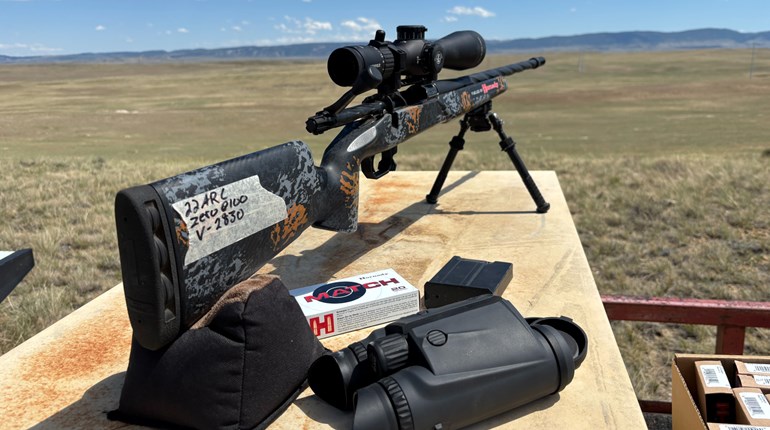
My first time pronghorn hunting I carried an 8X42 binocular. I figured it would be sufficient. I was wrong. On my second antelope hunt I used a 10X42 and spent a good bit of the hunt borrowing my guide’s higher magnification glasses to look at horns. By selecting a lower power binocular I avoided extra weight. In turn, I sacrificed my ability to see. On my most recent pronghorn hunt I went with 12x glass.
Some believe that one good binocular is all you need. I used to think that way, but experience is the best teacher and as I’ve hunted in different places and landscapes I’ve learned that the tiny 8X or less binoculars, like I commonly use in the Eastern hardwoods, just won’t cut it out West where you can almost see into the future. Conversely, here at home, a high magnification binocular will make you bug-eyed where 60 yards is as far as you can see.
Top-end binoculars can cost as much as a used pickup truck and hunters who go that route often opt for 8X or 10X magnification as a compromise. I’ve become less of a fan of compromise, finding it often better to go with gear that is best suited for the specific application. The problem is that many hunters, me included, cannot afford both a low- and high-magnification unit of the most expensive binocular available.
This is where Leupold’s new BX-3 Mojave line of binoculars enters. With prices ranging between $350 and $460, you can look through good glass at a fraction of the cost of the deep-pocket European binoculars. For my Utah antelope hunt I chose the 12X50 BX-3 Mojave and spent no less than six hours each day with my eyes glued to them. I never had to ask my guide to use his.
Leupold’s BX-3 Mojave, roof-prism line of binoculars is packed with all the features optics snobs expect from quality glass. They have fully multi-coated lenses and L-Coated BAK4 prisms to provide excellent image transmission. These features combine to keep the image bright. Phase-coated prisms reduce residual diffraction and this helps to keep the image you see crisp. All of this, in addition to silver-enhanced, cold-mirror coatings on the prisms, contributes to accurate color reproduction.
If you are an optics engineer, this all makes sense. If you are a regular guy like me all this technical chatter will make your eyes glass over. So here’s what I can tell you about the Mojave binoculars.
After extended periods of glassing with the BX-3 Mojave 12X50 I did not experience any eye strain. I was able to initially judge antlers at unrealistic distances—further than my guide could with his high-dollar 10X glass. I did not tire of lugging it around. The 12X Mojave weighs less than 30 ounces. Comparable high-end European binoculars cost four times as much and weigh 25 percent more.
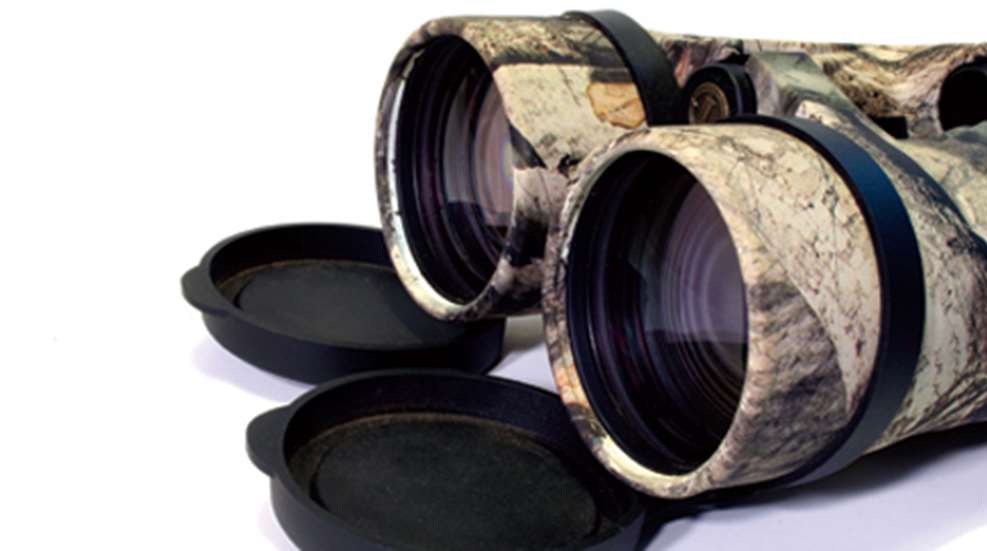
Mojave binoculars are available in four models: 8X42, 10X42, 10X50 and 12X50. They are offered in black and in Mossy Oak Treestand camo. All have a large, easy to adjust focus knob, twist-adjustable eyepieces for use with glasses, front and rear lens covers and a comfortable foam strap and case.
My only complaint was interpupillary distance—the distance between the left and right ocular lenses. I had to adjust the lenses as close together as possible to get a clear view. This necessitated alternating the positions of the retaining straps that hold the front lens covers on so that they did not touch. After I sorted this out it was not an issue but if you have predator eyes that are closer together than mine, these binoculars might not work for you. For what it’s worth, the five others in my group had no issues with this at all.
The entire BX-3 Mojave represents how modern manufacturing can produce good glass that is not so heavy you get a binocular headache, a crick in your neck after a day in the field or a price tag that will rip your wallet. The Leupold Mojave 12X50 binocular is a great open-country glass at a reasonable price.
Magnification: 2X
Objective Size: 0 mm
Field of View (ft. @ 100 yds.): 20'
Weight: 8.2 ozs.
Length: .6"
Exit Pupil: .2 mm
Eye Relief: 7 mm
Interpupillary Distance: 8-74 mm
Focus Distance: .9"-infinity
MSRP: $459.99