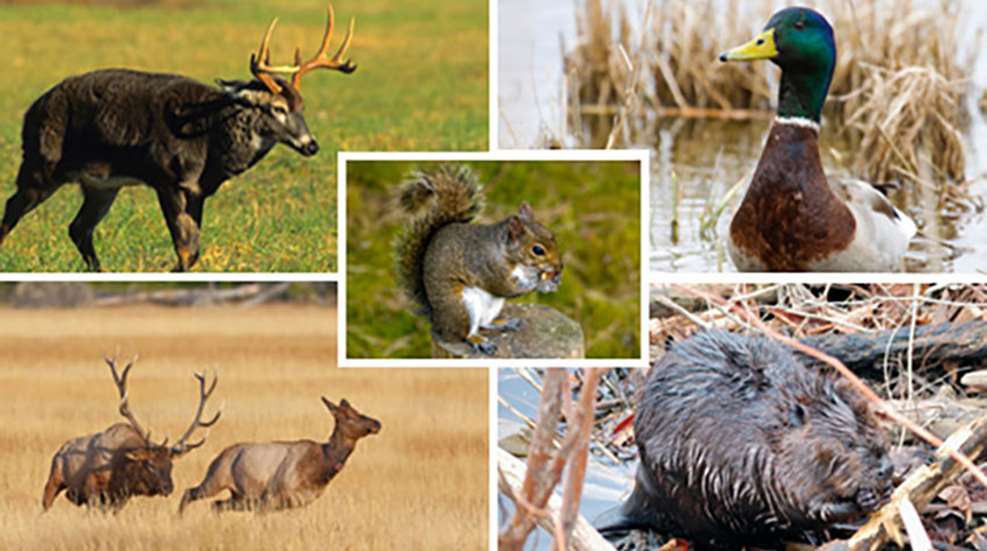
Most non-hunters respect the notion of hunting for food, while they tend to disregard motivations about trophies and sport. So, no matter what a hunter's full suite of motivations are—be they antlers, sport, time spent with family in a natural environment, etc.—we can win the hearts and minds of our adversaries by being outspoken and resourceful users of our country's prolific renewable source of wild meat. Remember this mantra: Hunt to eat; eat to hunt. In that spirit, here are my top five wild-game meats in America.
No. 5: Whitetail
This might seem a tad predictable, but I'm including whitetail deer because the animal has a greater ability to produce consistently high-quality meat than any other large mammal that I know of—and I know of quite a few. It's perfectly common to get a bull elk that's too tough to chew, a caribou that's lean and poorly muscled, a mule deer that tastes rank from hormones, an antelope that tastes like sage, a wild hog that smells like carrion, a bear that tastes like rotten salmon. But it seems almost impossible to find a whitetail deer that isn't at least good, if not great. I like to think of whitetail meat as being more American than even hot dogs and apple pie. Not only is this deer the most hunted big-game animal in America, it's the most hunted anything in America.
No. 4: Beaver
That's right, beaver. North America's largest rodent made this list, not only because their flesh tastes like pot-roasted beef, but also because the meat of so many of them gets wasted every year because few know how to handle this animal as table fare. I first got turned on to beaver meat when I was trapping furbearers for spending money during college. I read that my heroes, the mountain men, often ate beaver tails cooked over an open fire. My earliest experiment with this method was so disastrous that I came away thinking the historians must have made a mistake and that the mountain men were actually eating the hindquarters of beaver and not the actual tails. So, one morning, before running my trapline, I stuffed the back legs of a beaver into my Crock-Pot along with some carrots and potatoes. When I got home that night, I could have sworn that someone broke into my house and traded my beaver meat for 5 pounds of beef brisket. The beaver flesh broke apart easily with the grain, and it was pleasantly fatty and mild flavored. Since then, I've pot-roasted beaver meat on a dozen occasions or more, and I've been shocked by its tastiness every time. The key is to remove the castor glands and oil sacks early in the skinning process, so there's no contamination of the flesh. From there, it's a simple matter of following your favorite pot-roast recipe. (On a related note, I have figured out how to roast beaver tails; the fat inside is perfectly edible, but that's about all I can say about it. At least the historians were correct.)
No. 3: Mallard duck
I'm not a fighting man, but if I ever get into a tussle it'll be with one of those guys who refer to mallard ducks as "flying livers." Sure, duck meat might come out tasting like liver if you skin it and then incinerate the flesh until it turns gray. But that's like complaining about cash because you can't spend it after you've burned it to ash in your fireplace. Instead, duck needs to be treated delicately and with respect. Every hunter should figure out how to do this, since just about every one of us has access to this bird at some point during the fall and winter seasons. First off, never skin the bird. You have to pluck it, since the duck's skin and fat hold the majority of its flavor and moisture. Then, fillet the breast meat away from the breast plate, taking care to the keep the wing and leg on each side attached to the breast fillet. (You've now got a boneless breast attached to a bone-in leg and wing.) Dust it with salt and pepper. Then, heat some oil in cast iron skillet until it begins to smoke. Sear the duck on each side. Do just two or three minutes on the meat side, but leave the skin side down until it starts to crisp. Then pop the pan into a 350-degree oven for six minutes. You want the duck breast to be vibrantly pink inside. Eat that, and then come talk to me about flying livers.
No. 2: Elk
This meat is the secret weapon for any hunter who has to deal with a friend or relative who supposedly doesn't like wild game. Put an elk steak or elk burger on the grill and then serve it up with a white lie. As soon as they compliment you on the lean but flavorful beef, you can tell them it's actually from an animal otherwise known as "the thinking man's beef." Aside from its unparalleled tastiness, elk meat has another thing going for it: The animal thrives in our country's most rugged, beautiful and toughest environments. Anyone who's brave enough to tangle with real elk country (that is, no high-wire fences) will come away with a story that will last a lifetime. If you think of an elk story as a recipe, you can imagine the ingredients as grizzly bears, snow-covered peaks, pack stock, heavy backpacks, sore knees, frigid mornings, long shots and steep cliffs. Makes me hungry just thinking about it.
No. 1: Squirrel
I was tempted to put elk here in the No. 1 slot, but I decided to give the position to squirrel for the simple reason that elk meat already enjoys celebrity status and squirrel meat doesn't—which is a crying shame. In terms of widespread availability, novelty of taste and the fun of procurement, squirrel is simply unbeatable. The flesh is densely textured, has clean, deep-running flavors and is suitable for a wide range of dishes that are tricky to pull off with other species. It tastes much more rich than rabbit when prepared with fried chicken recipes; it works extremely well in those classically easy preparations involving creamed soups and slow cookers and, surprisingly, it makes one a hell of a grilled meat. Simply split the whole skinned animal down the spine, tenderize it by poking it repeatedly with a fork, marinate it with a mild blend of lemon juice and olive oil and grill over a not-too-hot bed of coals. But to truly understand the joys of eating squirrel meat, you have to try hasenpfeffer. Recipes are a little lengthy, but they can be found in many classic American cookbooks. As an enticement, I'll say that the best recipes call for crushed gingersnap cookies as a thickening agent in the gravy. One taste and you'll be sighting in your .22 and stalking the local woodlot.