8/26/2010
Over 300 hours of footage was gathered for each episode of the History Channel's reality shooting competition "Top Shot." So, it's safe to say that there were more than a few things that didn't make it to air. In service to our readers, the AmericanHunter.org editors went to the best source possible to get some answers—the Top Shot Champion. Iain Harrison, who is currently basking in the glow of his $100,000 payday, had more than a few secrets to reveal from his time in front of the cameras.
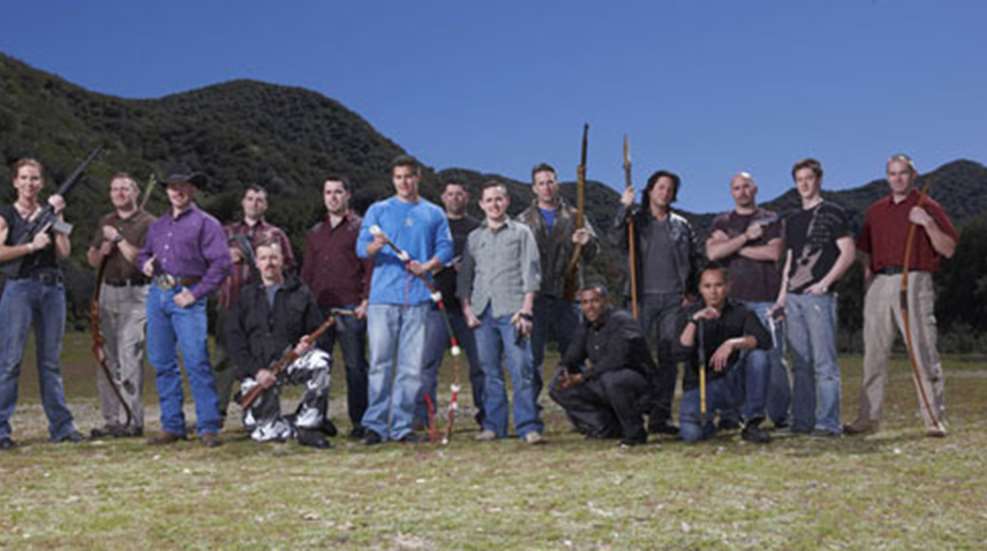
According to Harrison, the cast was locked down for a month while filming was going on, and relied on each other for entertainment and conversations that lasted into the wee hours. As a result, the 9 mm vs .45 debate has finally been settled, the new NATO rifle round designed and the chasm between martial artists and gamers has been bridged.
Here are the top 10 secrets—in no particular order—from Iain's Top Shot experience. Behind-the-scenes shenanigans are included.
1. The show was filmed over the course of 33 days in March/April 2010, in Santa Clarita, Calif. During filming, competitors were not allowed to have cell phones, e-mail, newspapers, books, TV or even music. This was all in an effort to encourage interaction with fellow housemates. This inevitably lead to pranks, such as duct taping people into their bunks and throwing buckets of cold water on showering team members. There were many, many others, but as this might be read by those of a sensitive disposition, I'm going to plead the Fifth when it comes to Frank Campana's rendition of a scene from "Silence of the Lambs." Kelly Bachand still has nightmares...
2. Unlike most reality TV shows, the competitors had a great deal of respect for each other. When one team lost a challenge, the other would cook dinner for them, and Tara baked cakes and cookies non-stop. Since the show aired, there have been numerous viewing parties and mini-reunions around the country where shooters from both teams have met up to celebrate. Brad and Pete recently met up with Blake in New Orleans; Pete, Frank and Adam rendezvoused in Baltimore and Tara and Caleb joined me for the finale in Oregon where we packed out a bar with shooters, friends, family and the occasional bemused passerby. There's talk of a full reunion in November.
3. Question. How many Top Shot competitors can you fit in a pantry? Answer: 15.
4. Chris Cerino's family is in the restaurant business and that seems to have rubbed off on him, as his talents in the kitchen were appreciated by everyone, but most of all by Pete, who's culinary skills almost extend to opening a box of cereal. If you ever run into J.J. Racaza, try to steer him toward a grill, as I guarantee his method of preparing ribeye steaks is the best you've ever tasted. Just make sure you keep a fire extinguisher handy.
5. It took us about an hour to lose all the darts that came with the dartboard in the house. After we were resupplied (and puncture wounds patched up), Caleb and Blake developed a new game called Battleship Darts, based on IPSC scoring and stressing long-range marksmanship from different positions. Most of those projectiles ended up in the neighbor's yard.
6. How did we all end up on the show? The producers put out a casting call in December of 2009 to most of the national shooting sports organizations, as well as some of the most popular shooting websites, asking for applicants. About 5,500 people filled out application forms and sent in videos—of that number, 50 were invited to a week-long audition in L.A., where various mental and physical tests were conducted, as well as interviews and a range day. Those who were successful were offered the chance to participate in the series.
7. Practice sessions were deliberately kept short by the producers. Often, competitors would get only 10 rounds or so to familiarize themselves with a new firearm, or the team as a whole would be allocated a number of rounds and then given the task of distributing them to team members. Blue team made a point of giving as much practice time and ammunition to those less familiar with a given firearm, with the team experts coaching them. Both teams were separated during practice so that the opposing team could only guess at competitors' abilities, should they need to sit someone out. For most of us, the limited amount of practice time was the hardest aspect of the competition, especially if you're used to burning 500 to 600 rounds a week between matches.
8. Peter Palma can hold court for hours on the tactics and equipment necessary to survive the forthcoming zombie apocalypse and will debate the finer points of symptoms, causes, the type of zombie most likely in your area and the best cartridge for dispatching them. Sort of like the inevitable hunting camp conversation about the best round for whitetails, this is one argument where no clear favorite emerges, but everybody has fun showing off their ballistics knowledge.
9. Recreational opportunities were limited, as we were confined to the grounds of the house when not shooting. There was a weight machine (which Blake and JJ quickly broke—those guys could bust a bowling ball) and a treadmill facing out over the valley. The runners among us were Chris, Kelly, Andre and myself, and it was kinda hard with all that beautiful scenery laid out below us not to just turn off the machine, hop over the balcony and keep going across the field.
10. If you ever get the chance to participate in one of these shows, my advice is to go for it. So long as you and your family can handle the separation, it will present a great opportunity to see behind the scenes of a TV show, shoot a few unusual guns and make some lasting friendships. Just remember that the show's audience is comprised of mostly non-shooters, and whether you like it or not, you are acting as an ambassador for the sport we all love. Your behavior reflects on all gun owners. Don't screw it up.