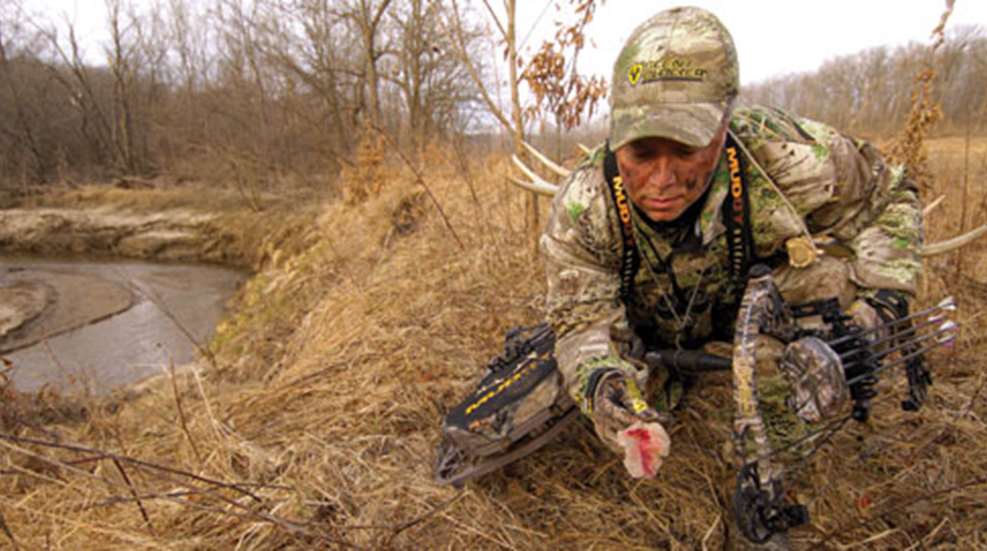
A well-placed arrow is a very ethical tool, but game can run a long way in the few seconds after it’s hit. The hunter’s first objective should be to determine where and how well the animal is hit by gathering clues from visual recollection, the arrow and blood left on the ground. Then he must factor this with environmental conditions such as nightfall, weather and opportunistic predators. Only then can a hunter be advised on the tactics to ensure the best possible chance of recovery. Here are several common dilemmas.
How Long to Wait
The willingness of a person to leave a deer in the woods seems to increase with antler size. The common refrain: “I didn’t want to take a chance on bumping a buck that big and losing him, so I left him overnight.”
That brings up an interesting point of ethics. After all, we are not just trying to kill big deer but also produce meat for the table. It has to be that way; the two goals are agreeable. How and when you make the recovery has a huge effect on the quality of table fare.
In most situations, you have to go after the deer as soon as you think it is dead or the meat will quickly degrade. Sometimes you will make mistakes and bump the deer, but usually if it’s hit hard it won’t go far and you can often stick with it even at night with a good flashlight. It is not legal in most places to finish them off at night, but that would certainly be preferable.
If you shoot an animal in the vitals or the muscle you can go after it right away; you have nothing to lose pursuing both hits immediately. A deer hit in the heart or lungs is going to die quickly whether you pursue it right away. However, you are unlikely to recover muscle-hit deer unless you go right away and get lucky enough to sneak up on them before they get their second wind.
The paunch hit is another story, unfortunately. You have to give them a lot more time—and you will often leave them too long, without trying. The problem comes from the fact that blood spoils fast. Fact is, blood left in a deer’s body cavity spoils even quicker than the richest cream. Keep that in mind. Would you leave a glass of cream out on a warm day and then drink it after eight hours, or the next morning?
“When you shoot a deer in the paunch you end up leaving almost all of the blood in the vessels,” says Randy Burrell, a butcher who handles hundreds of animals each year. “While I have never heard of anyone getting ill from eating meat from paunch-shot deer, they don’t taste as good as deer that were shot through the vitals and bled out quickly.”
The minimum time to wait before following up is eight hours, the maximum is 12. Some will die sooner. It’s a tough call because the venison can hang in the balance. For the best venison, you have to shoot deer clean.
Liver-hit deer are much easier to recover quickly. If you shoot a deer in the liver with a sharp broadhead, it will take about two hours to kill the animal and you will leave less blood in the meat. While liver blood is brighter than paunch blood and not bubbly like lung blood, nor bright pink like artery blood, it is often tough to tell liver blood from paunch blood because the two are often mixed depending on the shot angle. Again, you must factor all this when deciding how long to wait before taking up the trail.
Overnight Recovery
I’ve had bad experiences with bucks I’ve left overnight so I try really hard to avoid it now. I accidentally shot one particular buck in the paunch and left him until the next morning. My reasoning: If left undisturbed, he would die close by, making recovery much easier the next morning. He must have died quicker than I thought because by morning he was stiff as a fence post and his cavity, once opened, filled the air with the foulest of odors.
I struggled mightily to eat that burger. I ate it and I never got sick, but that buck cured me of leaving deer in the field even a moment longer than necessary.
Maybe you’ve heard someone say, “It was a cold evening, so I went for him in the morning.” But what is “cold enough?”
Burrell feels that if the temperature is in the low 30s the deer will be fine even if you leave it for a few hours. “We keep our coolers at 33 degrees,” he says. “You can preserve a deer for a long time at that temperature. Of course, when the guts are still in the deer and the hide is still on, that changes things. You have to do everything you can to get the deer opened up and cooled down as fast as possible, but leaving it for a few hours when the temperature is in the low 30s should still produce good eating.
“Where guys get into trouble is when the temperature is in the 40s or higher,” he adds, “and when it takes them more than a couple of hours after the deer dies to recover it. I have had some bad stuff brought in here; the worst ones were always recovered the day after they were shot in warm conditions.”
From my own experience, I believe it has to be in the teens if the deer is going to lay dead overnight and still produce good table fare.
Beating the Coyotes
In many parts of the country, coyotes will eat at least part of the animal if you let it go even a few hours longer than necessary. To beat them in the evening, I have actually bundled up and waited outside near the area where I shot the deer, listening. As soon as I heard coyotes yapping, I headed in their direction immediately and recovered the animal. If I don’t hear them, I wait the prescribed time and then take up the blood trail.
What if it Rains?
Suppose you hit a deer in the liver right at last light with a drizzling rain; the radar indicates the heavy stuff will be there very soon: Should you go after the deer immediately while you still have blood or wait the normal amount of time for the animal to die with the full expectation that the blood trail will be wiped out? I believe that despite the weather, it makes the most sense to wait the prescribed amount of time then look for the carcass. Any other approach is just too risky.
Conclusion
You can recover marginally hit deer and save the venison too if you know the facts. Do the right thing and go after it as soon as you feel it is most likely dead—whether it be daytime or the wee hours of the night. That’s the key to bringing back the best venison.