
It’s cold, much of the ground is covered in snow, and now that my ticker is ticking hard again I need to get out of the house. So I go rabbit hunting—and by rabbit hunting I am referring to cottontails.
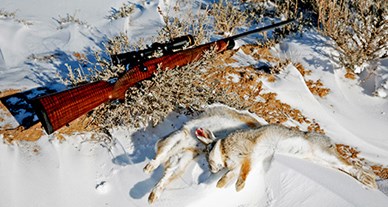 The cottontail is of the family Leporidae, containing some 60 species of hares and rabbits. Hares differ from rabbits in that they are generally larger and bear their young in above-ground nests. Cottontails also bear their young in above-ground nests, but baby hares are born fully furred and with their eyes open. Rabbits are vegetarians, and the cottontail is a bit more fastidious about its food. They have been observed discarding food that is rotting or decaying. The primary mechanism a rabbit uses to detect danger is its outsized ears. That is why when it’s windy few rabbits are seen. The wind interferes with their ability to detect an approaching predator.
My preferred method is spot-and-stalk. It is especially productive right after a snowstorm. Rabbits like to get out for some much needed feed after a snowstorm, and if it is sunny without wind, they’ll catch some rays reflecting off the snow. That makes them easy to spot. Early in the season, or if you are fortunate enough to find an area with light hunting pressure, the bunnies will often sit perfectly still in the hope that any predator will pass them by. A .22 hollowpoint placed as close to the eye as possible settles the matter without much drama. I avoid body shots because they can often run down into their burrow. If I am hunting in tall sage, I’ll often switch to a shotgun loaded with No. 6 shot, because I’ll get almost nothing but running shots.
Cottontail meat is light colored and usually quite tender. My favorite recipe is to bone the rabbits out and cut the meat into bite-size pieces. I then marinate the meat at least 24 hours in a 50/50 mixture of teriyaki sauce and apple juice. Load the meat onto a kabob skewer, alternating the pieces with sweet onion and green bell peppers. Cook on the grill, turning them often until the onions look translucent and serve. You can thank me later.