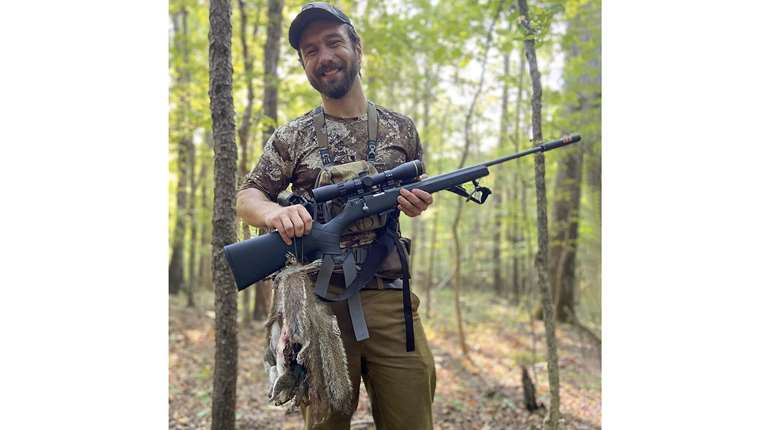
A good fall turkey hunt is a jaunt through a colorful forest ending with a sudden explosion of action as you send a flock into the air. Soon there will be 30 or more turkeys calling from all directions, and isn’t that a heck of a thing! Or, when you’re lucky, you break a flock of toms, maybe a dozen of them. Soon they’ll be gobbling and coming in without any of the war-of-the-sexes posturing of spring. In autumn gobblers are gregarious guys who want to hang out with their pals.
Every fall I wonder why I don’t meet other hunters with the appetite for a wild bird on the table at Thanksgiving. Where legal, this is the chance to hunt the icon of the fall feast; this is an opportunity to get off a morning bow stand and spend the midday scouting and hunting on your feet.
Finding Fall Birds
If you’re interested, the first thing to know is public areas are often great fall turkey spots. These areas tend to be forested, and turkeys go into the hardwoods at this time to feed on acorns and other mast. In spring they might be off strutting in farmlands nearby, but in autumn they flock to natural crops. As most fall turkey seasons open before the firearm seasons for deer, public areas haven’t been pressured yet so they’re almost your own private hunting grounds.
Last October I climbed a ridge in a public area when dawn was just a glow on the eastern horizon. As the morning grew brighter I heard hens talking in the trees far below me. In spring hen calls can make a turkey hunter grimace—hens are obstacles then—but in autumn hens are in season.
My boots stepped quickly on fresh-fallen leaves in dark woods. I’d found this flock on a scouting mission a few weeks before when I’d seen their v-shaped scratches in the leaves and droppings under oaks. The typical range of a fall flock in Eastern hardwoods is 250 to 400 acres, according to Bryan Burhans, director of the National Wildlife Turkey Federation’s land management programs. I’ve found that flocks of hens and their young often have small home ranges when the mast crops are falling. Gobbler flocks, in my experience, cover more ground and take more stealth to bust.
When you don’t hear them at first light, you have to find them. The best way to locate them is to use ridge tops and other topography to peek into fresh areas of forest as you listen for them scratching in dry leaves. The trick is to move covertly. Small flocks—especially the gobblers—will vanish in front of you if you stomp through leaves.
Kill or Bust?
I was hoping to get under the roost early enough to have a turkey fly into my shotgun’s muzzle. Unless you see them roost, however, that’s typically wishful thinking. Turkeys don’t call aggressively until they’re flying down.
I used a crumbling stone wall as cover to stalk closer with my back bent. I wasn’t worried about my footfalls—turkeys also have two feet, so as long as I stepped lightly I’d sound like an approaching turkey. If I couldn’t get a shot, I’d put down my shotgun and run at them to make them fly. (When you do this make sure you’re close enough to get them in the air; if you’re too far away they’ll just outrun you.) I don’t believe in screaming or firing in the air. I’d rather the turkeys didn’t all know who or what busted their flock.
I crawled the last 30 yards and shouldered my gun as I rose and pointed it over the crumbled stone wall. Turkeys 30 yards away craned their necks. They hesitated. I didn’t. I shot and a hen—legal in most places that allow fall turkey hunting—tumbled. Turkeys scattered in all directions.
Calling Fall Turkeys
I carried the hen uphill and took a seat against an oak. I had a second tag. After the bust, the biggest mistake hunters make is hesitating. You should quickly take advantage of the birds’ confusion. Sometimes you can call them to where you busted them, other times you might have to go 300 yards. Just imagine where they flew, and set up just out of sight. They will land in trees.
After 20 minutes some young turkeys began kee-keeing. (Turkeys born the previous spring make a “kee-kee” whistling sound because their beaks can’t quite “break” a yelp.) The trick to calling fall turkeys is to let them call first and then repeat what they say. You can gobble back at toms or give them the throaty, short series of yelps they make. Be aggressive. Turkeys come to the dominant bird.
Soon hens were yelping and I could hear their feet in the leaves. Turkeys were all around me. I didn’t shoot again. I already had a hen and I wanted to find a group of toms. There is nothing so raucous as a dozen toms all gobbling at once.