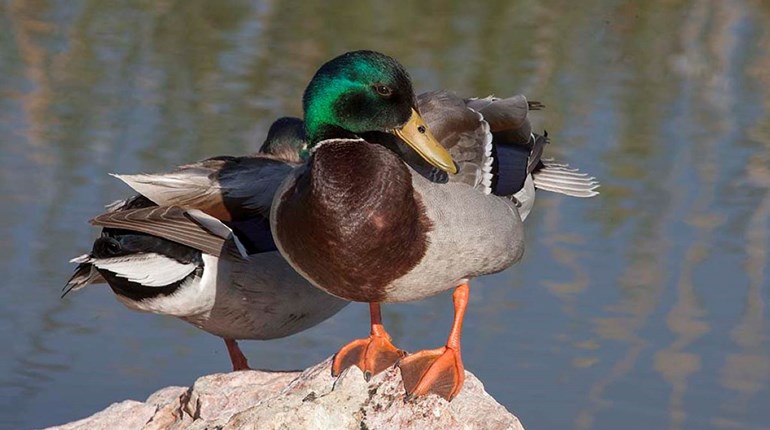
After consideration of letters presenting the concerns of U.S. hunters from Delta Waterfowl, Ducks Unlimited and other conservation partners, as well as a Canadian Parliamentary Caucus, the U.S. Department of Agriculture Animal and Plant Health Inspection Service (APHIS) announced new provisions allowing the importation of hunter-harvested waterfowl from Canada into the United States, amending the recent declaration that effectively banned all import of birds.
The initial rule was issued to help prevent the spread of the highly pathogenic avian influenza (HPAI), though it failed to cite how the measure would prevent the billions of birds that migrate from Canada into the U.S. each fall from doing so.
“This is great news for American waterfowl hunters already in Canada and for those with plans to hunt there this season,” said Delta Waterfowl chief policy officer John Devney. “As The Duck Hunters Organization, we sincerely thank APHIS for reconsidering the restrictions and for doing it so quickly. It definitely puts optimism back into the hearts of hunters looking forward to hunting ducks and geese in Canada this fall following what promises to have been an outstanding summer of duck production!”
The USDA APHIS announcement states that, effective immediately, unprocessed hunter-harvested wild game bird carcasses, originating from or transiting Canada, must meet following conditions:
• Viscera, head, neck, feet, skin, and one wing have been removed; and
• Feathers have been removed, with the exception of one wing—as required by U.S. Fish and Wildlife Service (FWS) for species identification; and
• Carcasses must be rinsed in fresh, clean, potable water prior to packaging and must not have visible evidence of contamination with dirt, blood, or feces; and
• Carcasses must be imported in leak-proof plastic packaging and stored in a leak proof cooler or container during transport and import; and
• Carcasses must be chilled or frozen during transport and import.
APHIS further recommends that boots and any equipment used to process the carcasses should be clean and visibly free from dirt, blood, tissue and feces.
Cooked or cured meat and meat products (for example, sausage, jerky, etc.) will not be allowed import as U.S. Fish and Wildlife Service requirements cannot be met to identify the species of wild bird.
Hunter-harvested wild game bird trophies entering the United States from Canada must be fully finished, or accompanied by a VS import permit, or consigned directly to a USDA Approved Establishment. Hunters may find an approved taxidermy establishment by visiting the Veterinary Services Process Streamlining (VSPS) search page and searching for a taxidermist with the HPAI product code in your state.
To read the full USDA APHIS statement, visit: https://www.aphis.usda.gov/aphis/newsroom/stakeholder-info/sa_by_date/sa-2022/canada-wild-bird-game-carcasses.