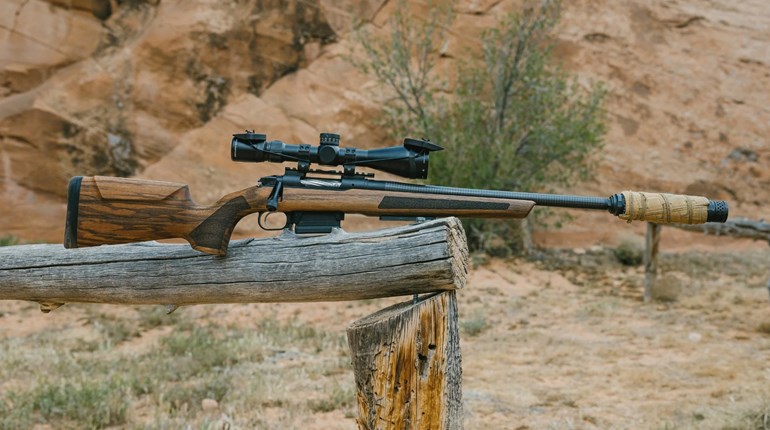
Dawn broke over a blanket of snow and ice that permeated the landscape. The thermometer on the porch read somewhere in the teens but at least there was no wind to speak of. With only a couple of days until the season closed, I grabbed my 7x57 and trudged off into the powder. For many of you, this scene would not be unique—deer hunting in the snow is unremarkable in Vermont or Utah but it was quite remarkable in this place. This hunt was memorable because it was in the Deep South, less than 90 miles from the white sand beaches and warm waters of the Gulf of Mexico. This day was as geographically unusual as hunting Muskox in shorts.
In the southeast, the bulk of deer hunting is done from treestands or ground blinds—one sits and waits, and usually waits some more. The “hunt” comes from knowing where to put the stand, and when to sit it. Deer spooked by heavy hunting pressure and thick, noisy terrain makes stalking nearly impossible. Does, yearlings and immature bucks can be seen at dawn and dusk, as well as tracks on soft ground; otherwise the deer are like ghosts. Big bucks turn nocturnal as summer ends and are only seen on trail cameras and in headlights outside of the rut. But on this day, I track, I stalk and hunt on foot—I could catch a buck off guard. Snow shifts some of the advantage away from the prey and I would do my best to play predator and exploit that weakness.
Between the wild weather and the impending rut, hunting conditions couldn’t have been better. The white backdrop made deer easy to spot and fresh tracks gave away a nighttime’s worth of movement. I sat with a view of a likely hillside until the woods came alive with small game. The fox squirrel, clad in Confederate grey and white, usually the sore thumb of the woods, finally blended in with his surroundings. Everything moved but the deer. When hunting like this, there’s always a dilemma: You can’t miss being in the woods at dawn but cold weather often keeps deer bedded late. By the time they’re ready to leave their beds, you can’t feel your fingers or toes and you start wondering what’s over the next hill.
Partially to satisfy my curiosity, but more likely to get some blood flowing, I started examining the patchwork of tracks that crisscrossed the snow. Among the women and children was the track of a mature buck, splayed open with distinct dew claws and a meandering gait that told me he wasn’t in a hurry to get where he was going. It hardly took the skills of a Kalahari Bushman to stay on this track as it side-hilled and weaved its way into the thicker oaks and pines. Where it crossed a well-worn trail and dove down a steep hillside leading to a creek bottom, I stopped and made a plan. With a layer of ice under the wet snow, I wasn’t exactly moving stealthily—there was no way I was going to sneak up on this guy. Assuming that the deer would be active all day in this weather, I backed-up off and hiked back to the house for breakfast.
By 9:30 I was back on the hill, sitting above a patch of winter grasses that would surely attract does and, by lustful succession, bucks. At 11 I was sure that the deer would show themselves any minute, I sat quietly and searched the trees with my 10x42s. Sure enough, there was movement—two dark, thick bodies moving through the woods with purpose. It only took me a second to realize that these weren’t trophy bucks, but canine trespassers—some neighbor’s hunting dogs out looking for trouble. Nothing will ruin your carefully managed deer habitat like dogs chasing everything in sight but I wasn’t going to punish the dogs for the sins of their owners.
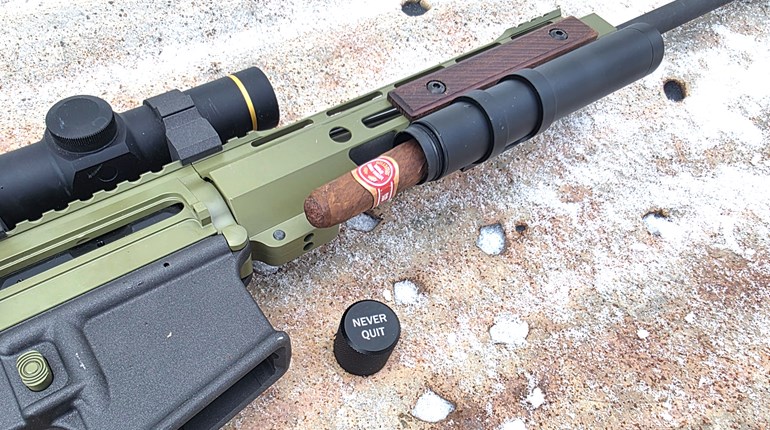
Now that every living creature within a mile knew that I was there, the risk of trying to stalk a deer up-close became a necessity. What did I have to lose? From the patch of winter wheat, an open trail curved around the hillside through the canopy of 35-year-old pines that the children call “The Enchanted Forest.” With the wind in my face and rifle in-hand, I eased my way quietly through the snow hoping to catch a deer moving through the timber. It didn’t take long for my plan to pay off as I spotted a buck angling uphill toward me, oblivious to my presence. His neck was thick from the rut’s hormonal overload and he had the distinctive physique of a mature buck. He wasn’t a booner, but he was old and taking him under these conditions would seal this day in my memory forever. As he trotted by at something like 15 yards, my English-style “stalking rifle” earned its name—having a gun that fits your body doesn’t seem all that important until you have a two-second window to take a shot at a moving target. As if in slow-motion, his shoulder appeared at 1.5x and the trigger broke instantly. He turned sharply downhill and I heard his final crash a few seconds later. The white blanket of snow was stained by splatters of scarlet and the last set of tracks he would ever make on this earth.
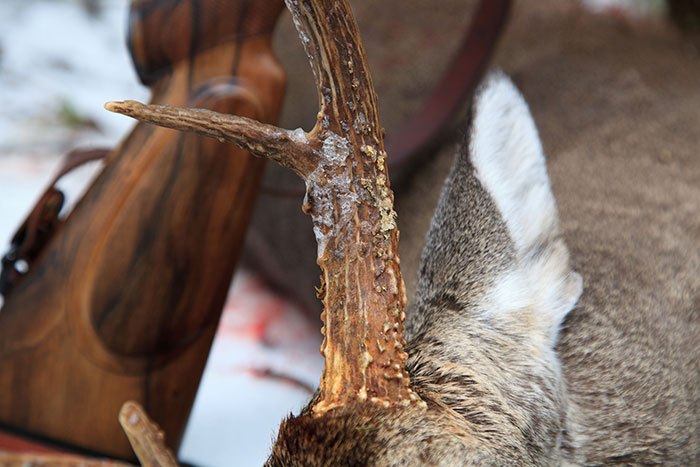
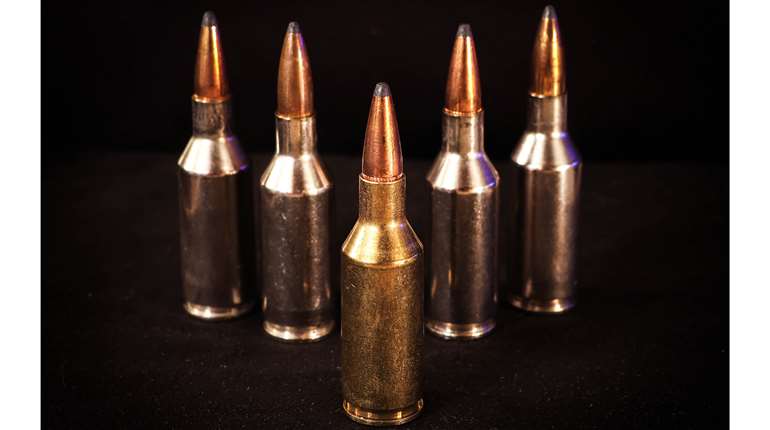
The 122-year-old cartridge with it’s long, 175-grain bullets did its job perfectly—there was no suffering. The buck’s main beams were tall and gnarly with seven worn points reaching upward like a crown. He wasn’t the biggest buck that I’ve ever taken on this hill, but taking him up-close, in the snow, with my feet on the ground makes him a great trophy in my mind. I wouldn’t trade this day for anything.