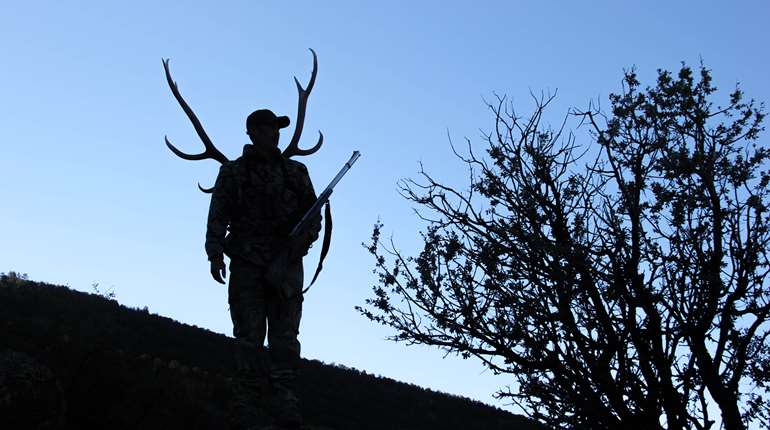
With less than two-weeks before I leave for a 21-day Tanzanian safari, I’m contemplating the prospect of hunting four of the Big Five— the elephant, rhino, lion, leopard and Cape buffalo— on a single safari. So named for their common denominator of being the most dangerous game in Africa, the Big Five have traditionally served as a major milestone in any safari hunter’s career.
Of course there’s always been a debate on whether or not the Big Five really are the five most dangerous game animals on the Dark Continent. It’s undisputed that the croc and hippo kill more natives than all the rest of the Big Five added together, but neither of these aquatic denizens are really what you would classify as a “game” animal.
Croc are invariably sniped at long range as they sun themselves on a river bank. Hippo are usually, although not always, shot in the water where they feel safe and unthreatened, consequently not skedaddling at the first glimpse of man. Catching a hippo out on dry land when he emerges from his riverine sanctuary to feed is indeed very sporting and definitely qualifies the “river horse” as a game animal.
No one disputes that elephant are dangerous as well. Only last month, professional hunter Godson Ole Saitabau, working for Rann Tours & Hunting, was trampled to death by an angry cow elephant. He had been checking out a herd of elephant and didn’t see the cow off to the side. She had a young calf and that, as they say, was that.
Rhino were admitted to the Big Five with a wink-wink. Their sheer physical stature and ferocious horn lend him a prehistoric air of violence and I’m sure that if looks were all that counted, the rhino would be at the top of anyone's Most Daunting list.
However, the black rhino that originally was considered “the” rhino of the Big Five is no longer hunted (other than three or four selected bulls in Namibia and South Africa each year). The white rhino is as docile as a Brahma bull, meaning he’s not going to mess with you unprovoked but you probably don’t want to run up and pull his tail.
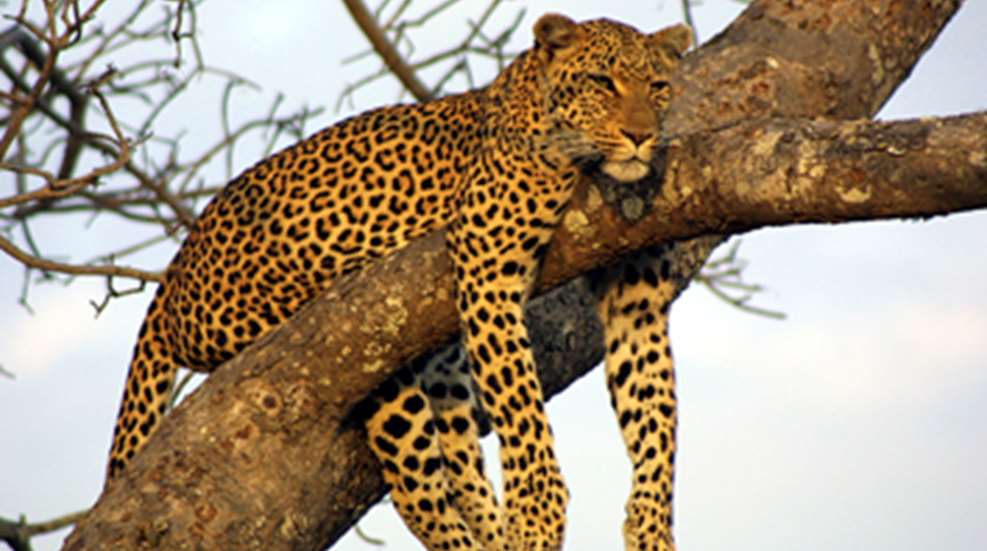
Chui the leopard is nothing to be trifled with as acres of scar tissue on the collective backsides of Africa’s PHs serves as testament to his ferocity— when wounded.
Shy, secretive and reclusive when left to his own devices, the leopard is a nocturnal predator that will never (or hardly ever) bother man. But if you flinch your shot or he moves at the last second and you put a hot, lead, raging pain in his gut, you’ve just turned a non-threatening cat in a tree into a viciously aggressive, hell-bent feline hiding in thick cover. Professional hunters reckon that a wounded leopard is the most likely to reach you of any of the Big Five on a follow-up.
The lion— Africa’s symbol of courage, ferocity and regal bearing— is unquestionably dangerous, but again with the caveat that he will steer clear of man except when he comes to chew on his cattle or make a light snack out of a hapless villager going for water. As a hunter, you’re unlikely to encounter a marauding lion in your camp since you probably won’t have a string of donkeys or herd of cattle in your midst.
But like the leopard, if you wound a lion, you better have paid for medevac insurance as once he launches a charge, a lion is an amazingly tough target.
The Cape buffalo is unquestionably dangerous, but he will not charge unless wounded. However, what makes hunting buffalo so thrilling is that you don’t know who might have tussled with him prior to your arrival. He could have been clawed by a pride of lion, shot with a poacher’s ball or gored by another bull in a custody spat over an eyelid-batting cow.
More hunters and PHs are hammered by buffalo than any of the Big Five but, in fairness, that’s a factor of the numbers game. More buffalo are hunted, by far, than all of the rest of the quarrelsome quintet combined.