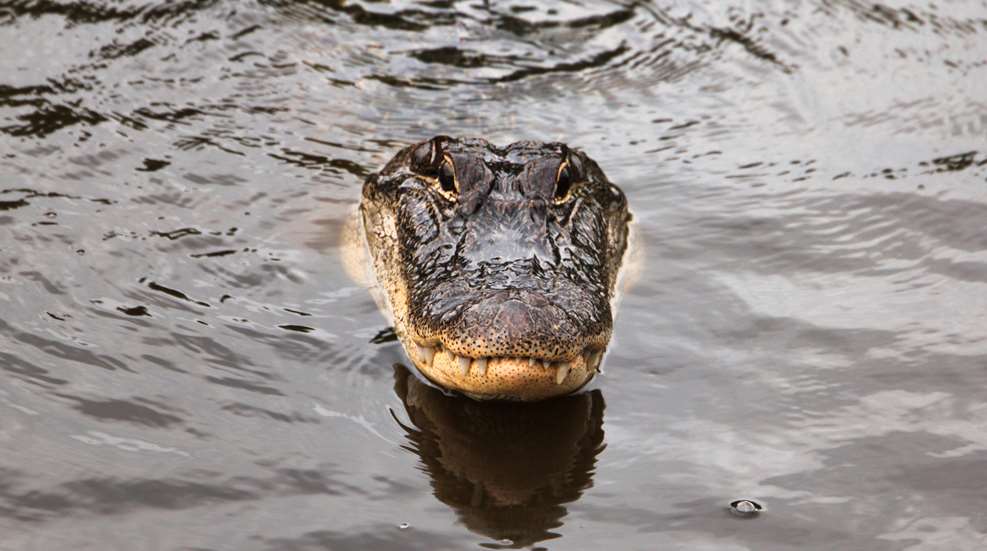
This year, both Florida and Louisiana are expanding or introducing new opportunities for alligator hunts. For decades, Florida has estimated that there are over one million in the state—it is, of course, hard to count alligators. Louisiana now says its alligator population exceeds three million. The two states have managed their alligator populations very differently over the last half century, but now both are expanding hunting opportunities to help manage alligator populations.
Florida’s statewide recreational alligator hunt typically runs from mid-August through early November. The application window is now open. Hunters can apply through a lottery-style drawing for countywide permits or for specific harvest units. Successful applicants will receive an alligator trapping license and two tags.
It is not exactly a low-cost hunt, however. An alligator trapping license is $271.50 for Florida residents, but $1,021.50 for nonresidents.
Florida offers flexibility through countywide permits (available in 65 of 67 counties) and targeted harvest units on lakes, rivers and wetlands. Newer special-use opportunities, approved in prior years, allow selected hunters longer seasons and access across multiple management units, increasing chances for a successful hunt without over-pressuring specific sites.
Louisiana, which has long known for its commercial alligator industry, has launched its first dedicated recreational alligator hunting season.
Gov. Jeff Landry (R) signed Senate Bill 244 (Act 37), authorizing the Louisiana Department of Wildlife and Fisheries (LDWF) to establish rules for up to 5,000 resident hunters to get two alligator permits each. This recreational season is designed to complement, not compete with, the commercial harvest. Commercial seasons open in late August (east zone) or early September (west zone) and run for about 60 days, while the new recreational window is expected to run roughly October 1-31. Recreational hunters will use methods like hook-and-line from riparian property, with no guided hunts allowed and prohibitions on selling hides or meat.
A lottery system will distribute tags across eight zones. This builds on existing programs like the Lottery Alligator Harvest on public WMAs, which already offers thousands of tags to residents. The move addresses returned unused commercial tags and manages a booming population that has grown dramatically from fewer than 100,000 in the 1960s thanks to prior hunter-conservation efforts.
Both states treat alligators as a renewable natural resource. In Louisiana, the commercial program incentivizes private landowners—who control most coastal wetlands—to protect habitat because healthy alligator populations generate income from tags and farming. This has helped restore wetlands that benefit countless other species.
Meanwhile, controlled harvests prevent overpopulation and typically result in the taking of the larger alligators—this is a big part of why we don’t hear about many alligator attacks on people in Louisiana.
By removing a percentage of the population annually—primarily targeting adults—managers ensure remaining alligators have better access to food and nesting sites, supporting overall population health and genetic diversity. Florida’s quota-based system, tied to habitat surveys and population monitoring, in contrast, is data-driven management. Florida uses contracted “nuisance alligator trappers” to deal with problem gators that threaten people, pets, or property.
Hunting also generates revenue that funds wildlife research, habitat restoration and enforcement. Permits, licenses, and associated economic activity (guides, lodging, gear) are a benefit to local economies in rural areas. Meanwhile, especially in Louisiana, harvested alligators provide meat and hides, creating a market that values the resource and discourages illegal poaching.
Most Popular