The Barnes X Bullet

by
posted on March 18, 2010
** When you buy products through the links on our site, we may earn a commission that supports NRA's mission to protect, preserve and defend the Second Amendment. **
2010318141658-barnesx_f.jpg

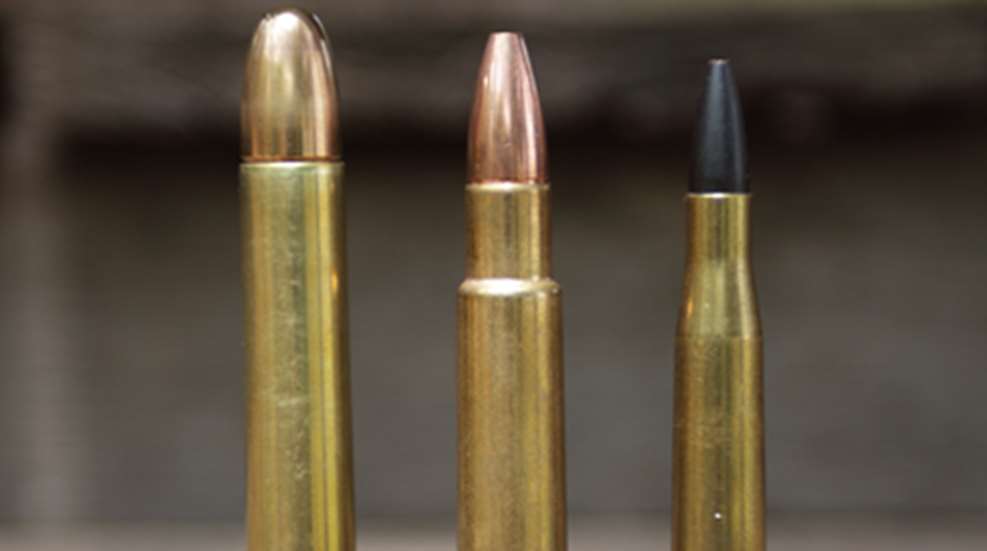
For African rifles and cartridges, there are very few absolutes. The closest I’ll come to making a flat-out blanket endorsement is for a product I’ve never seen nor heard of failing, a product so highly regarded that many professional hunters specify it by name to their clients. It is the Barnes X bullet.

In its updated guise as the TSX (for the triple driving bands) or the tipped TSX (with a polymer tip), the X bullet has been proving itself on tough African game for nigh on a quarter century. I’ve campaigned with X bullets on a dozen safaris and I’ve yet to have a single problem.

An X-bullet is an expanding bullet, often called a “soft” in African parlance, going back to the original lead-tipped or soft-nosed bullets of the Kynoch era. As an expanding bullet, the goal of an X bullet is to retain good penetration of heavily boned, thick skinned game like Cape buffalo, yet also mushroom to create a larger wound channel.

It stands to reason that the faster and more violently a “soft” expands, the better. I recently saw a graphic real-life illustration of just how quickly a Barnes TSX bullet in .416 Rigby (400 grains) expands.

We saw a nice zebra stallion a good distance out and my PH told me to hold on the top of his back. I did, and fired. He ran off but we caught him again at closer range and a shoulder shot put him down. When we examined the zebra, my first shot had hit exactly where aimed—not as much drop as my PH said to allow, obviously. The bullet had hit just at the top of the back, above the spine, where the skin is only about two inches thick.

The entrance hole was caliber sized, but the exit—after only two inches of tissue—was the size of a silver dollar. That was proof positive than a Barnes TSX opens up almost immediately on impact.

On the flip side, I shot a Cape buffalo last year and hit the bull with a quartering-on shoulder shot, again using a .416 Rigby with a 400 grain Barnes TSX handloaded bullet. The penetration was perfect, breaking the massive shoulder joint and plowing on through several feet of tough buffalo muscle.

I’ve hunted with Barnes X bullets many times now and it’s one of the few absolutes I’ll swear to in African cartridges. Pick whatever caliber you like, but make sure you’re shooting for the X.

Latest

Fenson Venison Empanada (1)

Recipe: Venison Empanadas

When Brad Fenson makes venison empanadas, the goal is simple. Keep the meat front and center, add enough flavor to complement it, and make a filling that stays juicy without overpowering the wild proteins. The filling is rich, balanced, and built to highlight venison, whether baked or fried.

Proof Research Unveils Shorter Barrels for Elevation 2.0 and MTR 2.0

Proof Research has announced shorter-barrel configurations for the Proof Elevation 2.0 and Elevation MTR 2.0. Both the Proof Elevation 2.0 and Elevation MTR 2.0 in shorter barrel configurations are available in Tactical Flat Dark Earth (TFDE) and the all-new Midnight color, offering shooters greater customization options alongside Proof Research's carbon fiber technology.

Range Review: Midwest Industries Bounty Hunter Revolver Brace

Thanks to Midwest Industries new Revolver Brace, you can easily mount a stabilizing brace to your favorite hunting revolvers. Check out B. Gil Horman's review of this game-changing product.

First Look: Marlin Mad Pig Customs Model 1894

Marlin has introduced its Mad Pig Customs Model 1894, a rifle developed—as its name implies—in collaboration with Mad Pig Customs. Built on Marlin's iconic lever‑action rifle platform, this model delivers modern, factory‑installed features previously found only on custom builds.

Funding Authorized to Conserve Critical Wetland Habitat

The Department of the Interior has announced that $44.79 million in North American Wetlands Conservation Act (NAWCA) funds have been approved by the Migratory Bird Conservation Commission. They will provide the U.S. Fish and Wildlife Service—and its partners—the ability to conserve, restore or enhance 185,203 acres of critical wetland and associated upland habitat for migratory birds across the United States.

Behind the Bullet: The .30-378 Weatherby Magnum

Curious about one of the original wonder cartridges? A cartridge that literally broke the 6000 fps mark with specialized, lightweight options? Follow along with Phil Massaro as he dives into the .30-378 Weatherby Magnum.

Interests


Get the best of American Hunter delivered to your inbox.