One of the best feelings I get as an outdoor communicator is passing along the things that I learn from true experts on to you, my readers, here on americanhunter.org. If I can let you in on how the guys who hunt for living do their job, it can make it a lot easier for you to use that knowledge and improve your outdoor experiences.
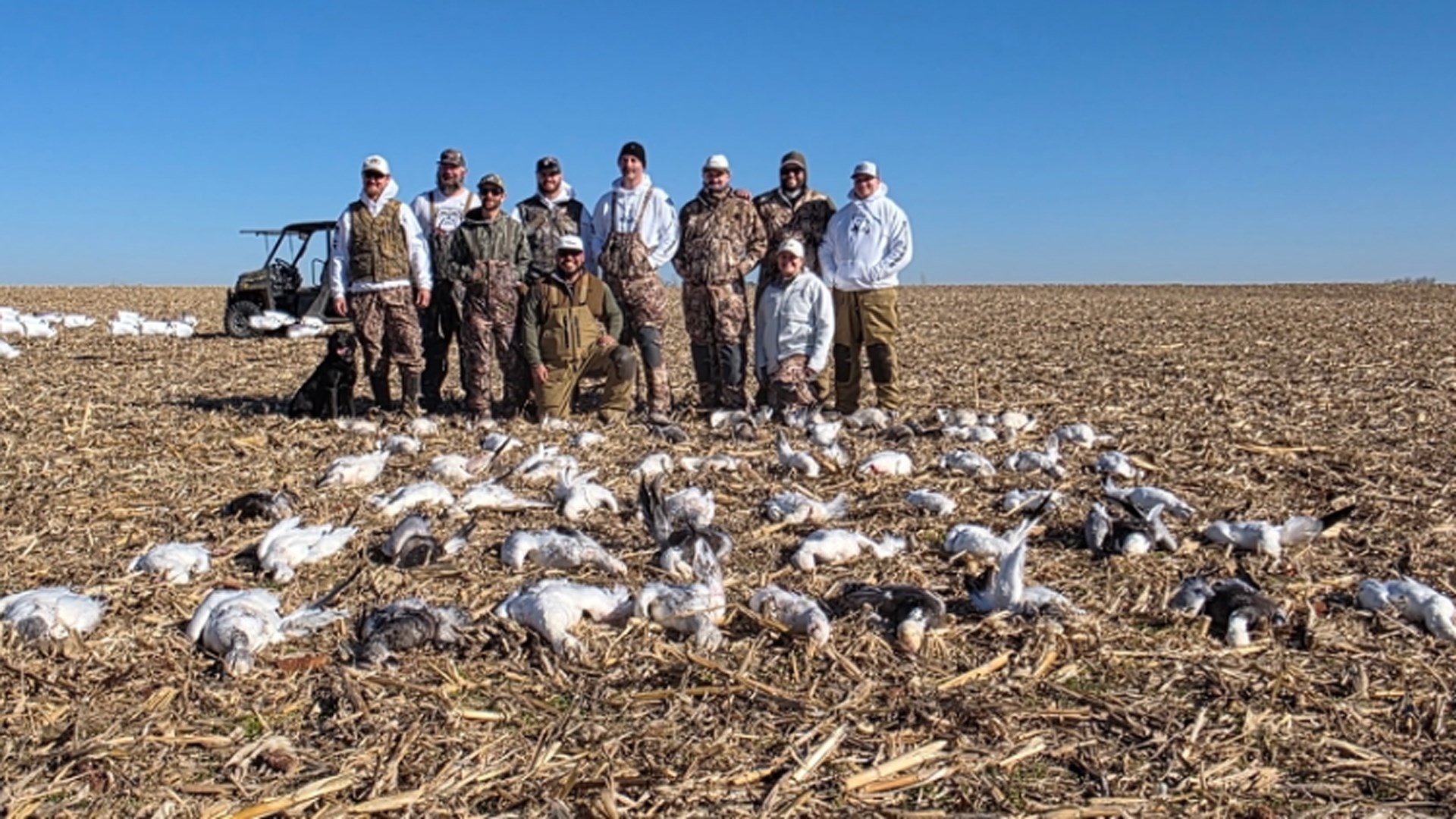
I was recently invited on a snow goose hunt in Central Missouri, as the guest of Walden Chevalier. Mr. Chevalier and his wife Melissa own and operate Central Missouri Wildlife (CMW), an operation that includes not only snow goose hunting in the winter, but also deer hunting in the fall. The snow goose hunting is where I am going to focus today, as I learned a ton.
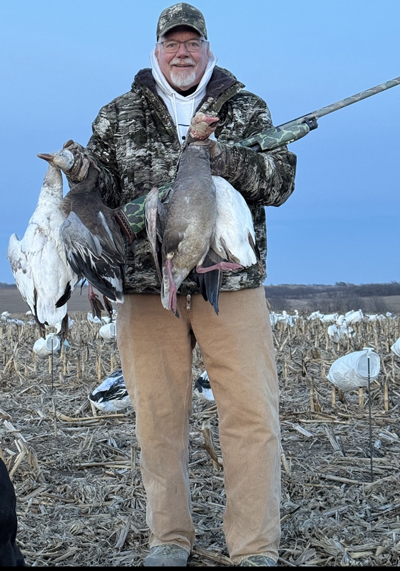
My waterfowl hunting experience goes back many decades. However, I had never been on a snow goose hunt of this magnitude. The things I saw and heard were nothing short of amazing.
Let’s start with the CMW’s decoy set-up, then move to how and why they call the geese. We’ll conclude with an in-depth assessment of how they decide where to hunt and why. As a matter of introduction, Chevalier’s two goose hunting guides are Lodden Axtell and Jacob Minor. I cannot say enough about the knowledge and experience of these two young men. I was truly impressed.
CMW is situated in central Missouri between two massive waterfowl refuges, Grand Pass and Swan Lake. Hundreds of thousands of snow geese, Ross’ geese, Speck and Canada geese, spend much of the winter there. And both of these locations are migrating stops.
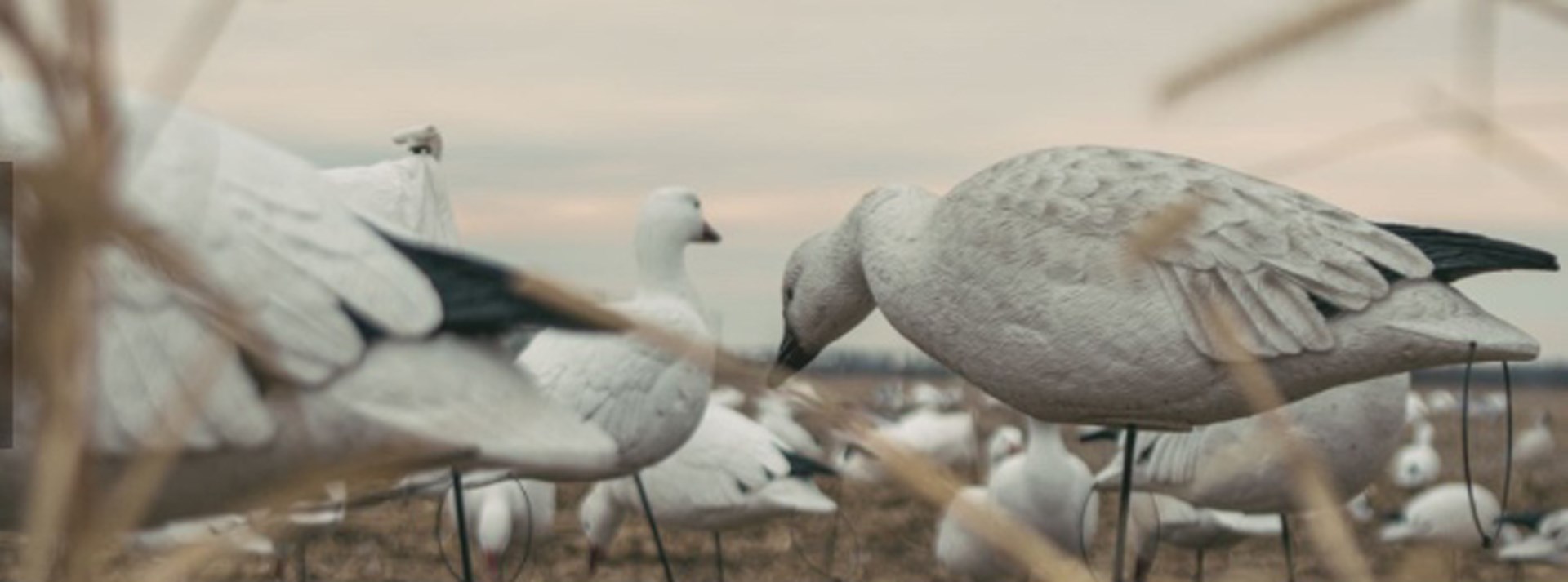
Most of the good places I have waterfowl hunted have a spot near a refuge or flyway. These guys have four separate set-ups in four different locations. This will be very important to my story a bit later. Each spot has between 2,000 and 3,500 decoys. For snow goose hunting, the more decoys the better. They are a combination of sock decoys by Deadly Decoys, and full body decoys by Hardcore.
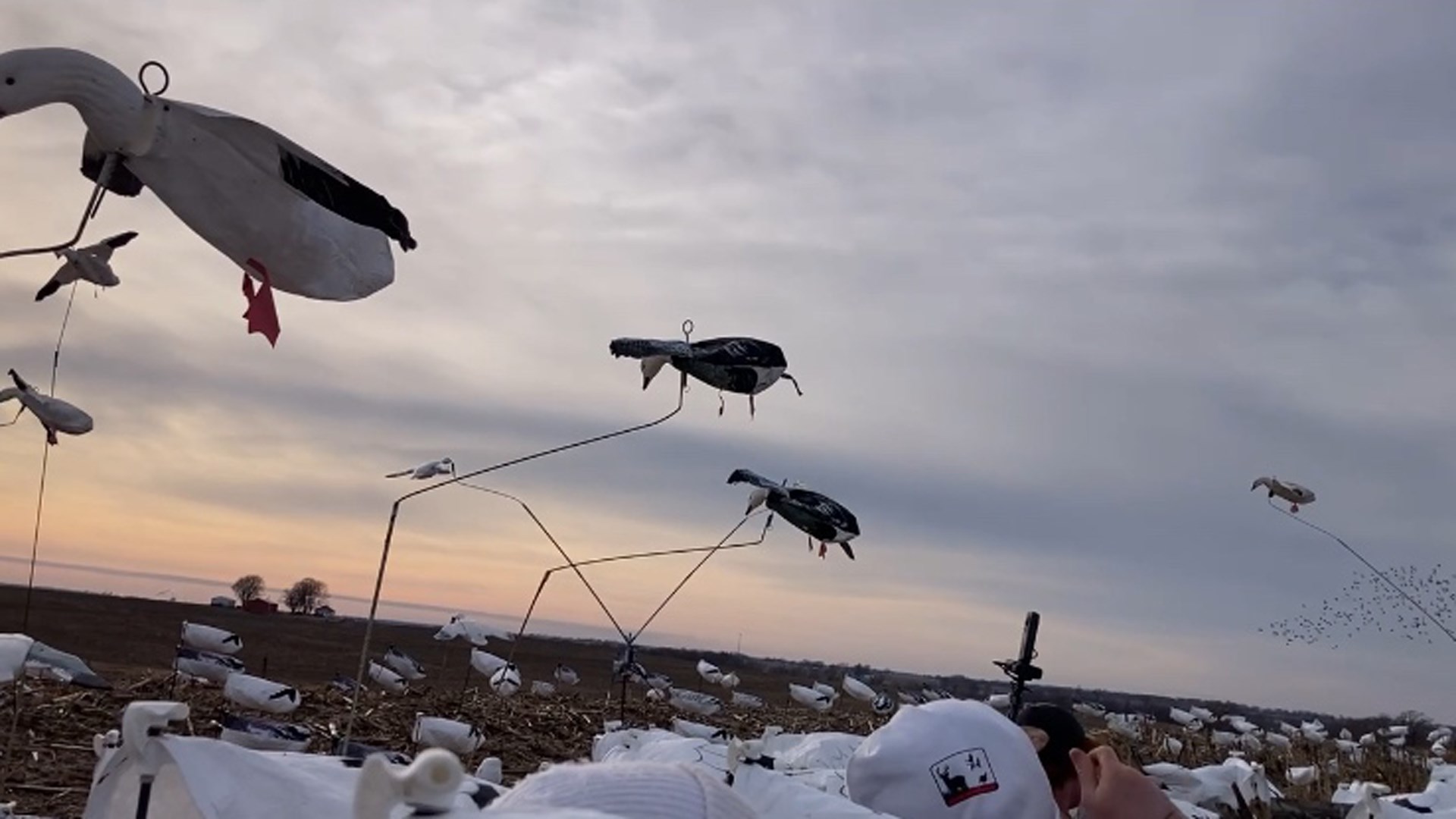
The sock decoys outnumber the full bodies by 100-1. The convenience of the windsock decoys is explained in their name. These cloth decoys are on sticks, and they move with the wind, so when the wind changes directions, they change with it. The hard body decoys must be manually moved—sometimes during the hunt—if there is a change in wind direction. Obviously, full-body floating decoys also take care of themselves in a wind change.
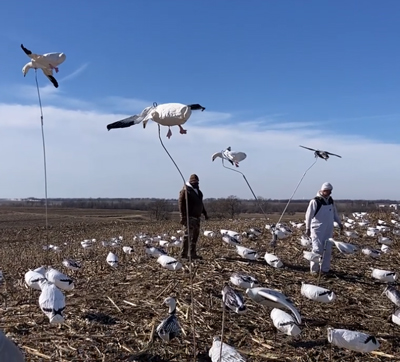
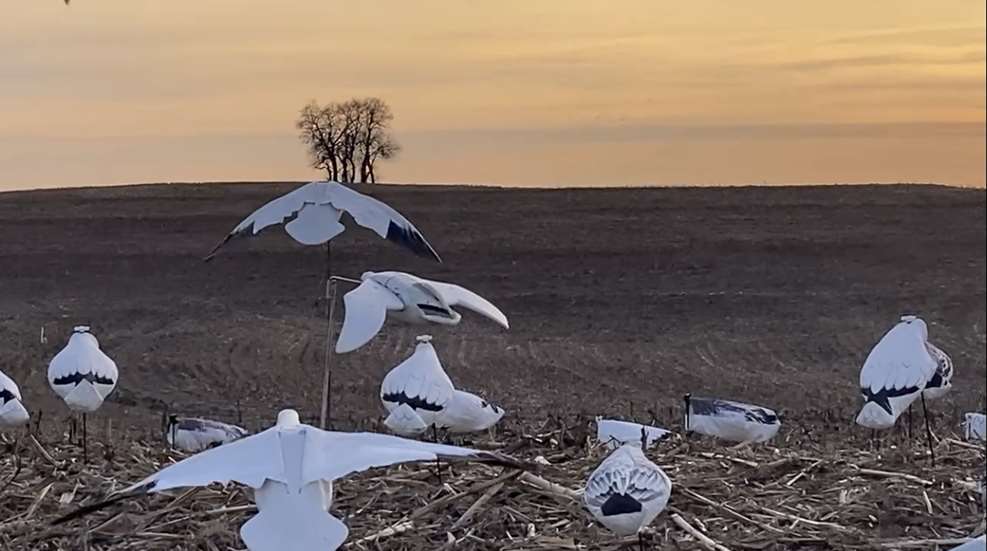
As you look at photographs of snow goose decoy spreads it may look random. I found out it is not. If these decoys were live geese in the field they would be there to feed. There are feeding patterns that can be identified if you were to fly over a field of feeding snows in an aircraft or with a drone. These guides have figured those patterns out and place their spreads accordingly.
Here is some more decoy science. The several ways Walden and his crew add movement within the decoy spread is nothing short of amazing. I learned that movement is crucial to fool these geese into shotgun range. I mentioned Deadly Decoys previously. This company also produces flying decoys on poles.
Throughout the spread these elevated decoys have cloth wings that flutter in the wind. They are very realistic. They are placed on poles of varying heights and are usually placed close to the layout blinds, where the hunters lie in wait. The movement of these flying decoys masks the movements made by the hunters and guides. The guides also have soft-wing flying decoys on 10-foot flexible poles that they flap to attract incoming geese to come closer.
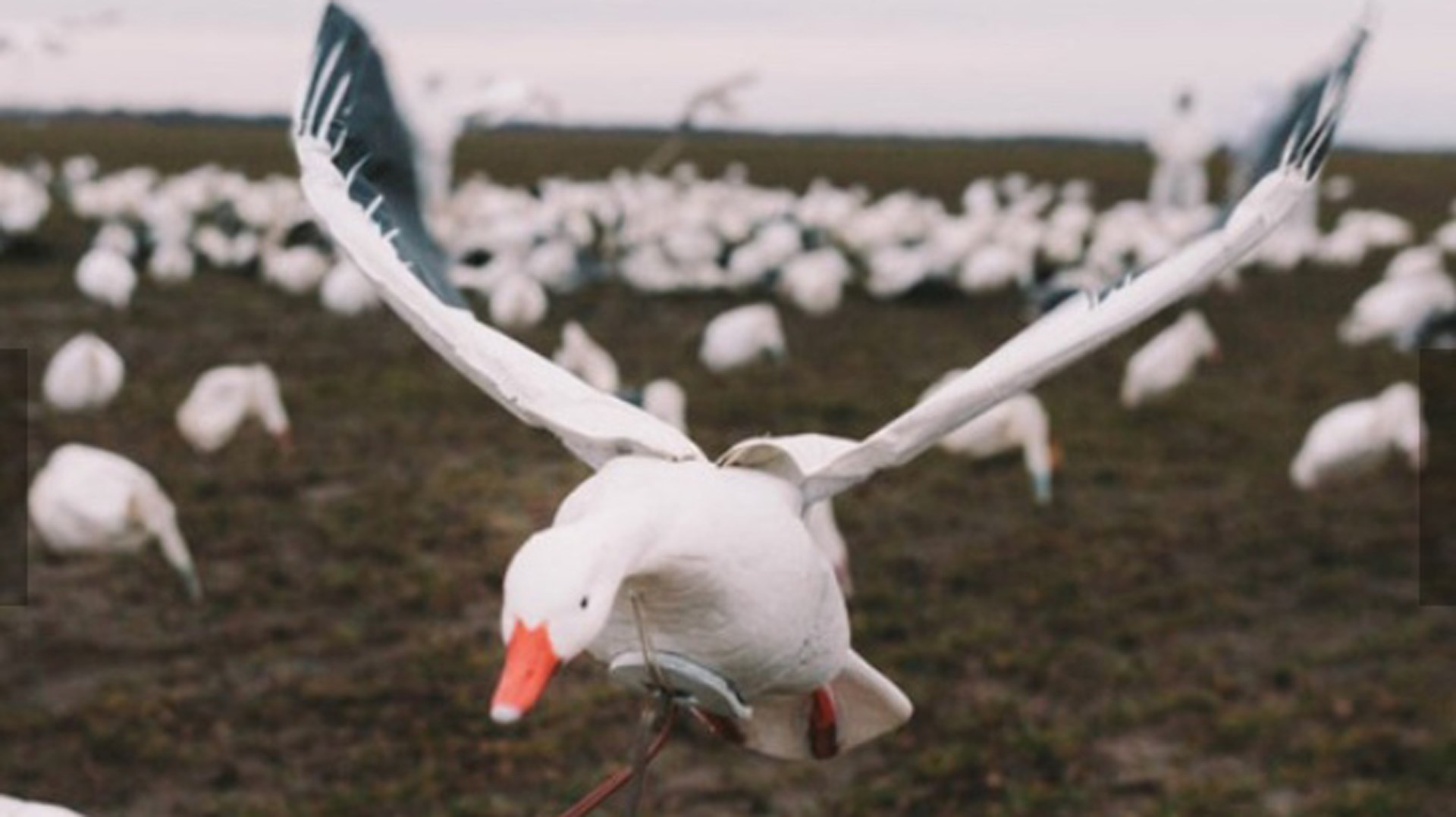
The final (and in my opinion the coolest) of the decoys are the Motion Decoys, by Higdon. The Clone Snow Goose decoys are electric and on poles like the other flying decoys. However, these are connected to a 12-volt battery, and their wings flap and cup, just like landing geese. They are very realistic. These too, are scattered around the blind area.
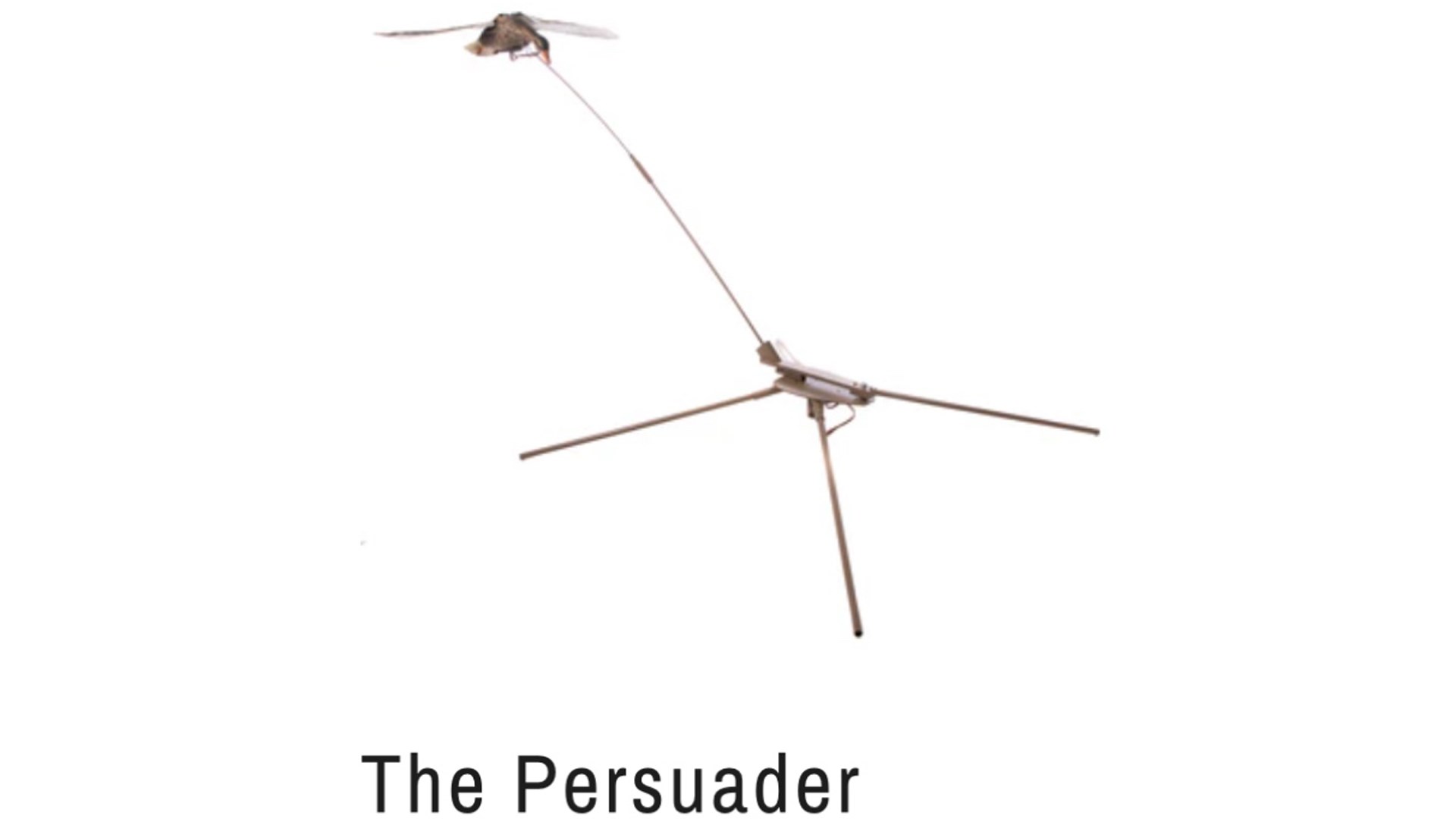
Also from Higdon is the Persuader goose rotator. This is powered by the same 12-volt battery and has two long poles on a mechanical rotator with a flying decoy of the end of each pole. The wings of these decoys are also cloth to give them a realistic look. With numbers and different styles of decoys in the CMW spreads, it is no wonder why they attract so many geese.
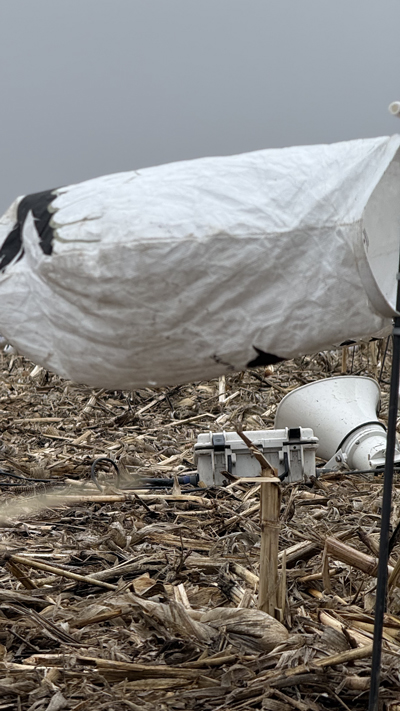
But fooling their eyes is only half the battle. You must also attract them with sound. It is very well thought out by the Missouri Department of Conservation to allow hunters to use not only electric decoys, but electronic callers as well, in the Conservation Goose Season. Fox Pro is the preferred call of my new goose-hunting buddies.

They use the snow goose sounds played at a very high volume with several speakers, all positioned very close to the layout blinds. I asked what I thought was a legitimate question. “With all of the noise being made by the thousands of geese right above us, how could they possibly hear these callers?”
Once again, the vast experience of these professional goose hunters, under tutelage of Walden Chevalier, was evident. They did their own experimentation and collected their own data. They proved to themselves that the location of the callers makes all the difference in where the geese decide to land in the decoy spread.
They put their Fox Pro speakers way at the end of the spread, and that is where the geese tried to land. They switched ends, and the geese moved to the sound. Once these smart guides completed their in-the-field research, they surrounded the blinds with the speakers. And boom, the geese want to land right in the hunter’s laps.
The final piece of the snow-goose hunting science puzzle is learning how they decide, each day, which of their four fields to hunt. Walden told me, “The decision to hunt a certain field is based a lot upon past hunts.” He continued, “We watch the wind and how the birds have been flying. We have hunted these fields for several years. That’s a lot of data to analyze.”
He went on, “We must put the hunt into the context of the season. The weather, the wind direction, the timing of the migration, the reverse migration and the concentration of mature birds vs. juvenile all play a role in the decision. The variables are endless.”
What I learned, most of all, is that the experience and knowledge of this group of guides allows them to put hunters on snow geese on a very regular basis. If you want an unforgettable snow goose hunting experience, give Walden Chevalier a call at 660-631-0142 or check out centralmissouriwildlife.com.