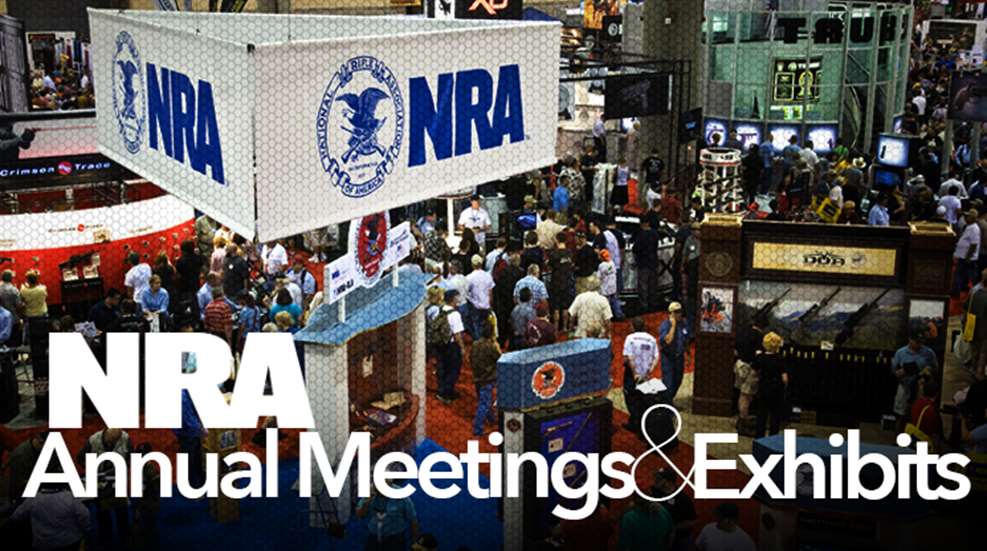
 One of my favorite must-sees at every NRA Annual Meetings & Exhibits is the collectors' aisles, where antique and unique firearms—and often the guns' owners—are on display and available for NRA members to peruse. Ask a question: The folks who set up these marvelous displays will happily share their expertise with you.
One such display was "Machine Guns of World War I," curated by The American Thompson Association and the Dallas Arms Collectors.
The U.S. Colt Automatic Gun Model 1914 was invented by John Moses Browning. It was the world's first practical gas machine gun. Browning perfected a gas impingement system for his Model 1895 machine gun; he drilled a small gas port on the underside of the barrel to divert some expanding gases to drive an external lever beneath the barrel and thus operate the gun. Thus the "Potato Digger" was born. Improvements made by Browning later included a finned, removable barrel, which resulted in the Model 1914, shown here. This model was not used in combat by U.S. troops during World War I, but it was used by British, Canadian, Belgian and Russian troops to great effect.
The Doughboy uniform at left is fitted for an American soldier in the U.S. Army's 1st Division—the Big Red One." The soldiers of the 1st Division were the first American troops to land in Europe for World War I, and the last to leave. The buttons on this uniform are made of celluloid, not brass, thus it is likely a parade uniform. During the war there were shortages for brass, namely because so much of it was used to manufacturer ammunition; brass was used only on uniforms meant to see combat, as the metal was more durable. The Big Red One painted on a British helmet was typical of equipment used by American forces during the war; since they were rushed into combat, Americans were outfitted with whatever was available. The painting on the helmet is original. The insignia indicate the trooper was in the Machine Gun Battalion B, assigned to the Big Red One.