Know-How: Does Your Bow Need Super-Tuned?

by
posted on May 24, 2016
** When you buy products through the links on our site, we may earn a commission that supports NRA's mission to protect, preserve and defend the Second Amendment. **
super-tuned_bow_f.jpg

Most target archers obsess over bow tuning, while hunters are often satisfied with whatever tweaking was performed on their bow moments after purchasing it. It should be the opposite.

Why? Because minimal tuning is needed to make target (field) points fly great, while broadheads exacerbate any slight tuning issue and therefore degrade accuracy. So it’s actually hunters who stand to benefit more by spending the time or money to have their bows “super-tuned.”

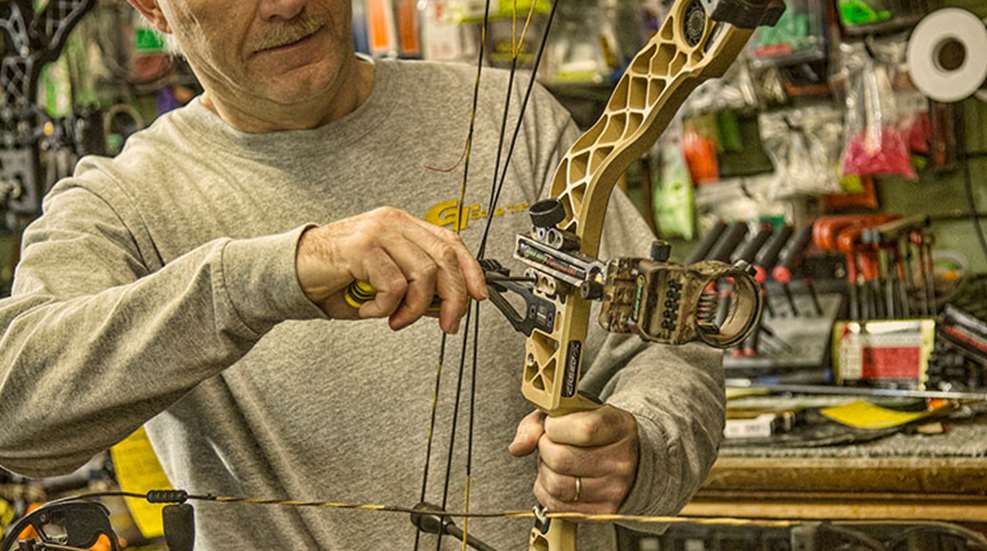
Super-tuning is a term for adjusting a bow and arrow until the pair is perfect. It takes knowledge, tools, time, and trial and error. While trained professionals spend years mastering the art, here are the basics:

With your bow set up as well as possible and your arrows spined properly, paper-tune using a bare-shaft arrow at 15 yards. (Fletching is used to correct minor flight errors, but the goal here is to allow the fletching no errors to correct.)

Using a paper-tuning chart for guidance, adjust the arrow rest until your fletch-less arrow makes a clean “bullet hole” and the shaft does not tear the paper. If this proves impossible, it means something else is out of whack. Perhaps the nock or the cable guard needs tweaking. Sometimes it’s due to cam lean, a problem that’s frequently remedied by twisting or untwisting one of the bus cables or adjusting the yoke. Often it’s a combination of all.

Keep in mind, however, that if your shooting form isn’t perfect, you’ll never get a bow to show that it’s perfectly tuned—even if it is. That’s why professionals often use mechanical shooting equipment, and they never attempt to tune bows outdoors in the wind.

Will super-tuning make you a better shooter? Probably not, but it can allow hunters to reap the maximum performance potential from their bow.

Latest

375 Setup
375 Setup

Is Wildcatting Right for You?

Dennis Bradley explores the potential benefits of going with a wildcat cartridge, using the .375 Raptor as a case study.

New for 2026: The Chiappa M1-22 Bushranger

Chiappa Firearms expands its rimfire lineup with the introduction of the Bushranger M1-22 Semi-Auto, a .22 LR rifle built to bridge familiar sporting ergonomics with modern accessory capability. The Bushranger is intended for recreational shooting, skill development and range use, but could also excel in the hands of any small game or varmint hunter.

Savage Updates 212 and 220 Slug Guns

Savage Arms has upgraded its 212/220 Harvester and Harvester Woodland slug guns. These models now feature the AccuFit V2 stock system, providing shooters with all sorts of customizable options.

Science Behind Mountain Lion Management and Hunting

Across North America, agencies responsible for the conservation and management of native mammals, including large carnivores, employ science-based tools to manage wildlife populations. It’s a delicate balance too often compromised by emotion at the ballot box.

Wild Game Recipe: Venison Empanadas

Want to cook up some empanadas with last year's deer? Look no further than the "Know When to Fold 'Em" venison empanadas, by Chef Holly Hearn of Game Girl Gourmet.

Federal Ammunition Expands Options in 6mm ARC

Federal Ammunition is offering more options int he 6mm ARC cartridge for 2026. Designed for the AR-15 platform, the short-action cartridge pair low recoil with high potential accuracy. Federal's new offerings in this cartridge will include American Eagle TMJ 110-grain, Fusion Tipped 110-grain and Gold Medal Berger BT Target 108-grain.

Interests


Get the best of American Hunter delivered to your inbox.