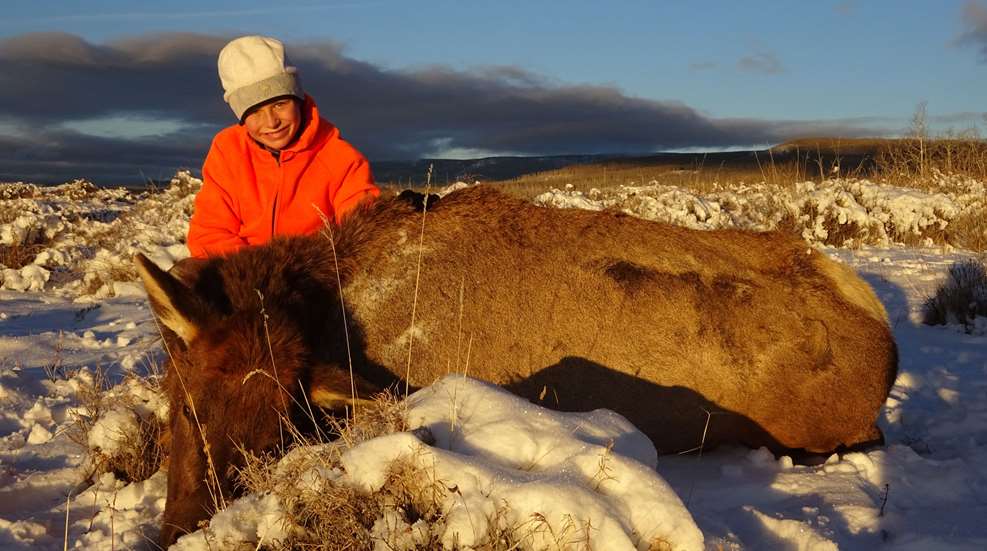
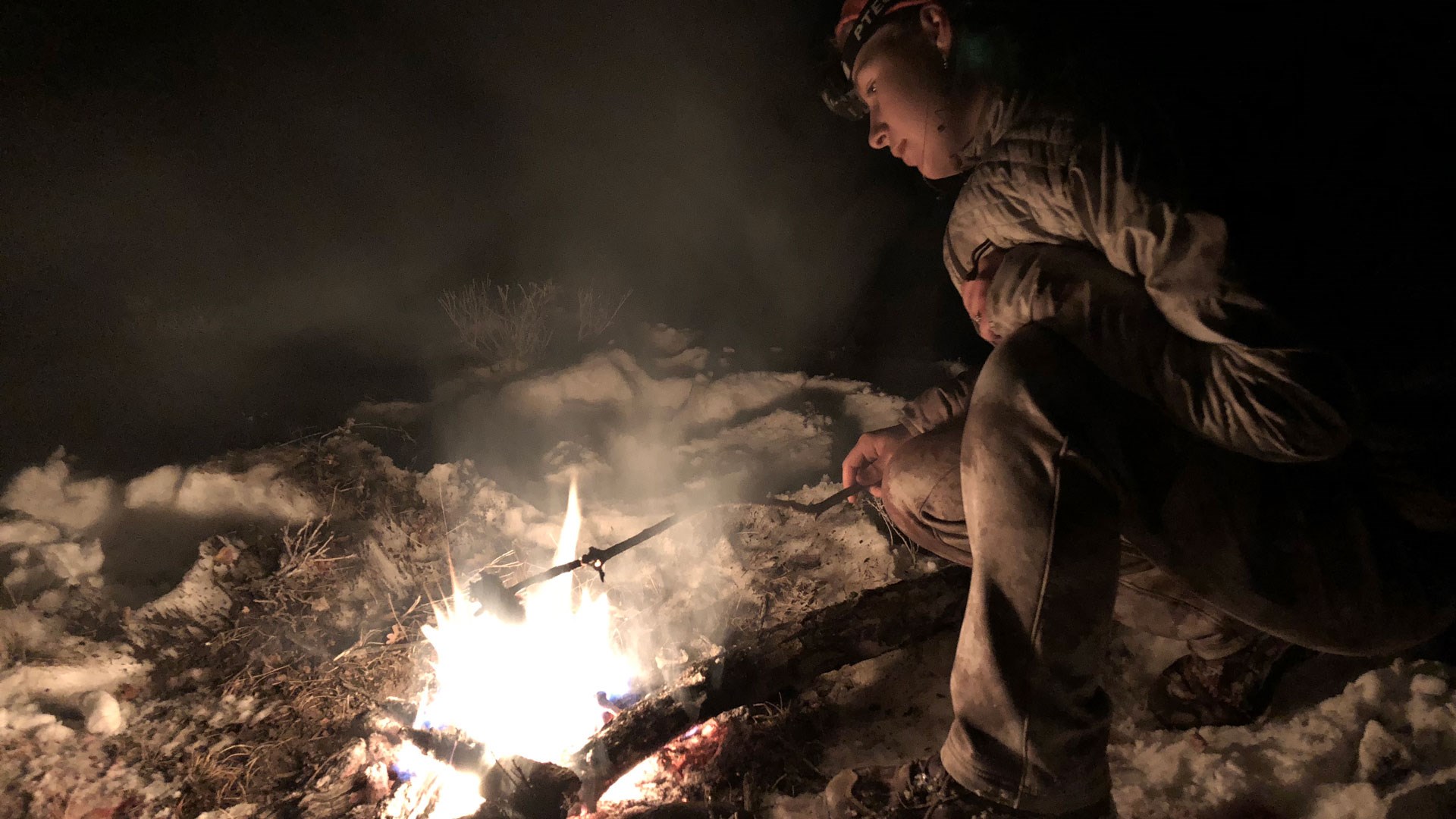
“Can we roast some meat on a stick over a fire?” I looked at my daughter, her nose red, her gloves, pant legs, and boots graveled with snow. I smiled.
“You bet! Start a fire right over there by that patch of scrub oaks.” The fire would help warm our hands while we skinned and quartered the cow elk she had just shot. Once the meat was safely hung in the oaks, we skewered small chunks on long green sticks and hunkered down by the fire, roasting the steaming meat to perfection. A sprinkle of salt from my pack made it mouth-watering good. I watched Cheyenne eat, looked at the star-studded sky above, and knew contentment.
Several hours earlier, we had loaded into my old Dodge and pointed the hood toward the mountains, knowing that if we could cut elk tracks in the snow we’d have a great chance of filling Cheyenne’s antlerless tag. Snow had fallen all night and most of the morning, so any tracks found would be smoking hot. And that’s just what happened. A sizeable herd had crossed the road, leaving a path through the snow like a D9 Caterpillar. Only an hour of daylight remained, so we hurried along the trail, breath rising in clouds through the frigid mountain air. The sun set over the far ridge, turning leftover clouds a wild array of red, pink, and orange. A small valley lay just ahead, and my gut told me the elk would be there, filling their bellies toward the cold night ahead. As usual, my gut was right.
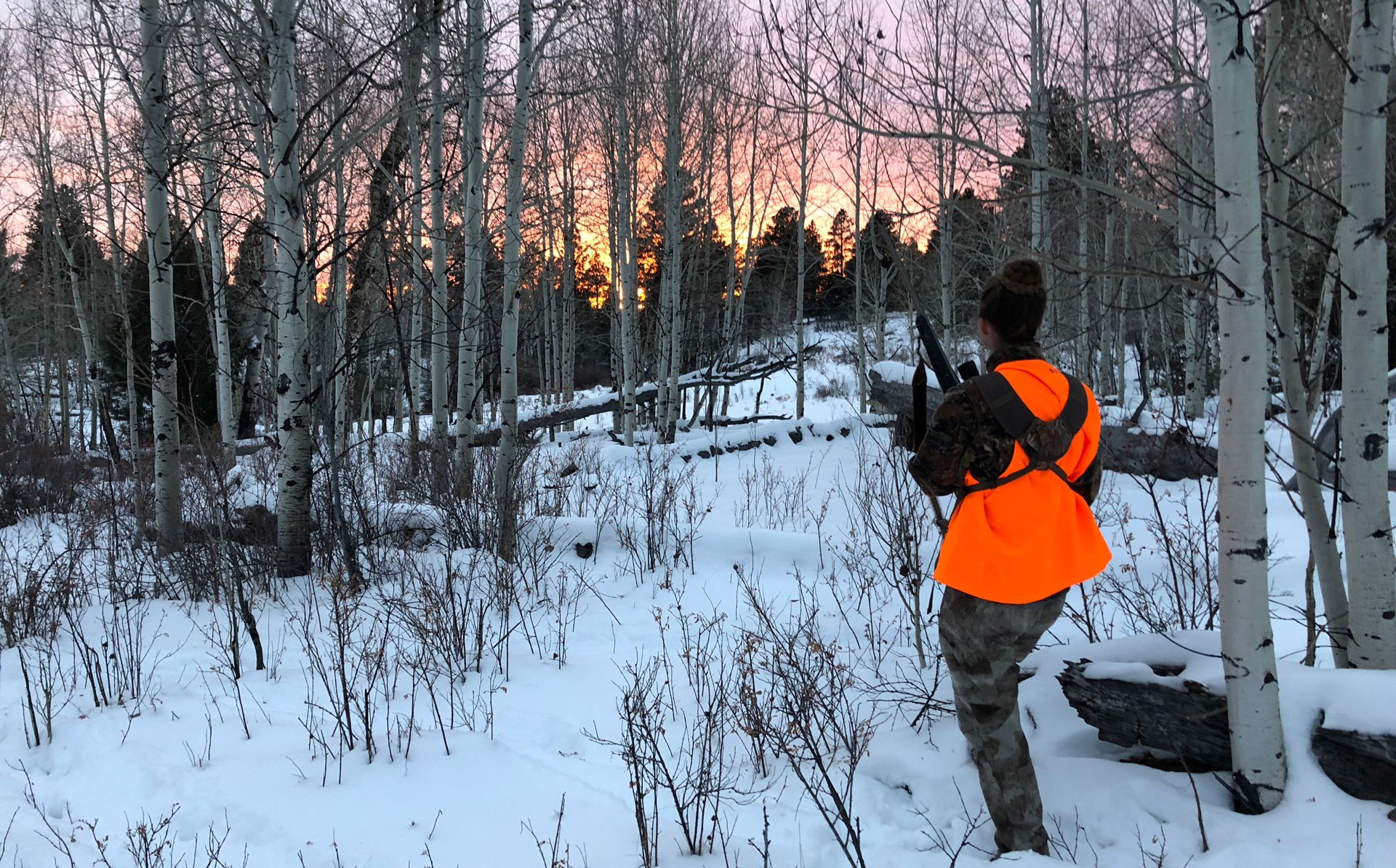
Several cow elk fed along a copse of scrub oak, 315 yards away and just visible through a lane in the Aspen trees. Cheyenne sat in the snow, rested her rifle across my upright backpack, and placed a perfect shot through a broadside cow. As we approached, our boots plowing twin furrows through the calf-high powder snow, she asked if we could roast some meat over the fire.
Why Hunt Antlerless Elk?
Packing deep into wilderness territory, hunting spectacular mountains cut by rushing streams, and harvesting a big six point bull elk is a dream owned by many, if not most, red-blooded American hunters. It’s a worthy dream, and worth pursuing. But good bull-elk tags are growing hard to get, guided hunts are becoming more expensive, and access is getting more elusive.
A good cow-elk tag, on the other hand, usually only takes one or two years to draw, and in some cases they are available over the counter. These hunts often take place in the same spectacular places that bull hunts do, and believe me; it’s a lot easier to find and harvest a nice cow elk than a six-point bull. The meat tastes as good or even better. The only thing you don’t take home from an antlerless hunt is, well, a set of antlers. But think about it; hunting cow elk will give you great elk hunting experience and “practice.” When the time arrives to sally forth in search of that big bull, you’ll feel a lot more ready.
Antlerless Tactics
Cow-elk hunts usually take place late in the season. I like that, because it means the weather will be cool or even cold, which is great for meat care. It also means you have a chance of snow.
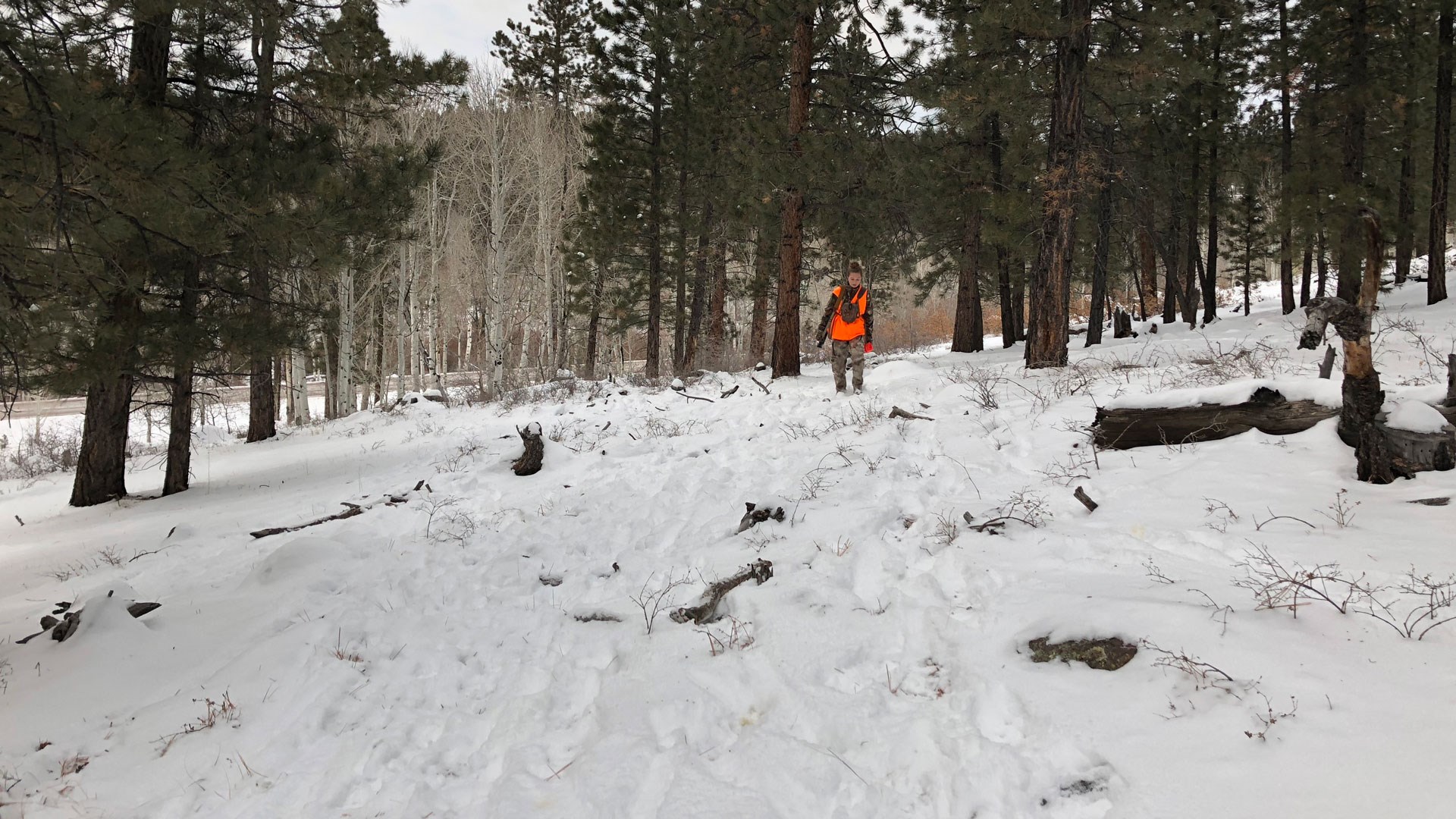
Tracking elk in snow is a time-honored method for filling tags, and it works especially well for hunting antlerless wapiti. They are usually gathered into large herds this time of year, and leave massive, easy-to-follow sign. Cut the fresh tracks of one of these herds, and your chance to fill a tag becomes very, very good. Don’t follow old, melted-out elk tracks. You’re too far behind them, and likely will run out of daylight before catching up. Instead, look for fresh, crisp tracks that tell you the elk are not far ahead.
Simply follow the tracks, keeping a vigilant eye ahead for the elk themselves. Try to gauge the mood of the herd by their sign; are they traveling, leaving a straight, well-beaten track toward the horizon? Better move briskly so you catch up. Are they meandering from bush to bush, feeding and hungry? Slow down and try to spot them ahead. Are they wandering aimlessly, leaving droppings and urine everywhere? Proceed very carefully; they’re likely bedded close by. Obviously these are somewhat time-dependent; expect elk to bed during midday, feed morning and evening, and travel anytime they feel like it.
Once you spot the herd be very careful to not spook them. If they are already spooked don’t worry too much, thanks to the snow you’ll likely catch them again. Get set up quickly as they depart; often they will stop and look for a moment, giving you a shot opportunity.
If the herd is undisturbed, take your time. It’s an awesome experience to just watch elk. If you need to close the distance, stalk carefully closer, minding the wind. Try to pick out a fat, dry cow to shoot, and when the moment is right place a careful shot through her vitals.
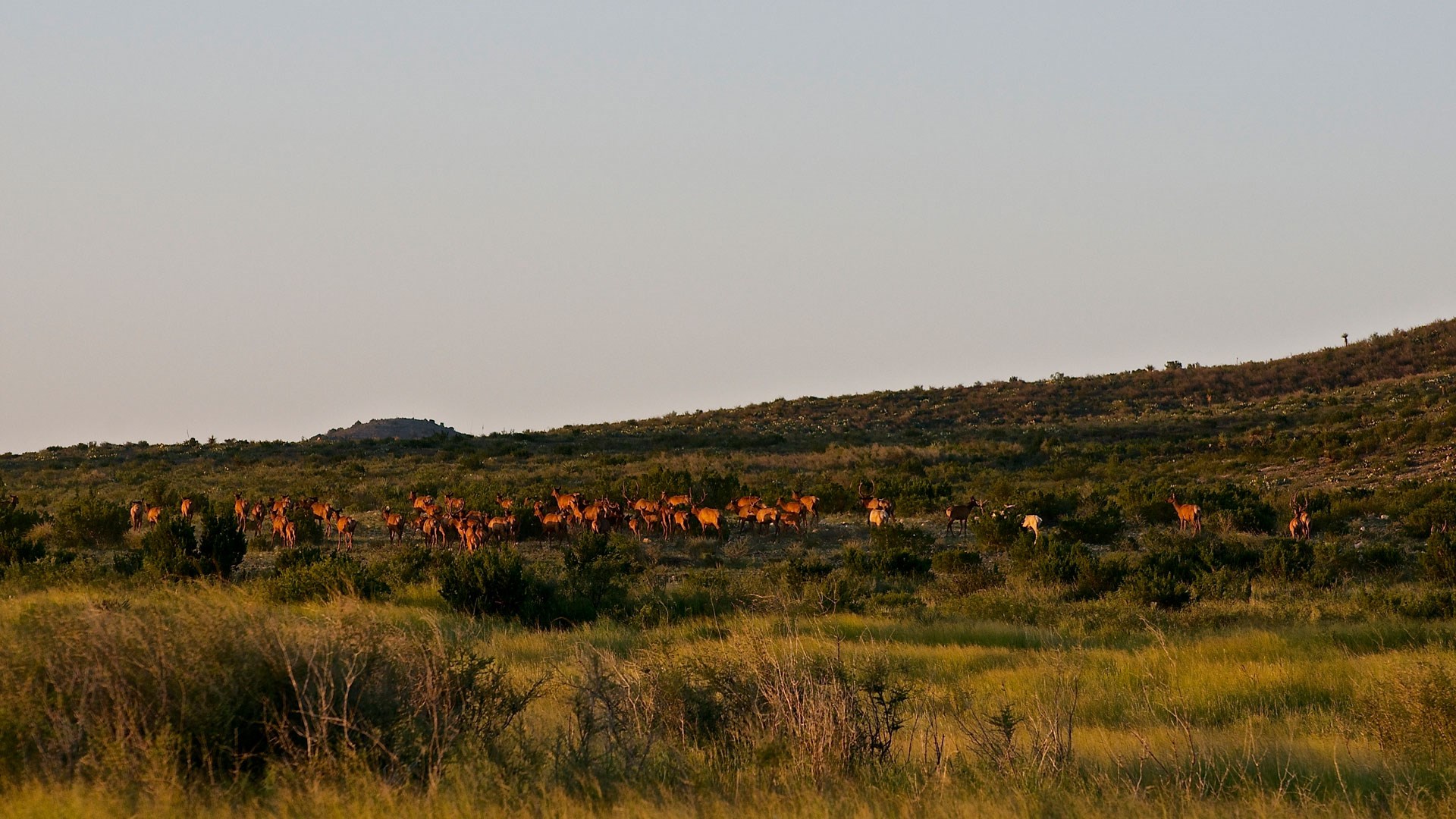
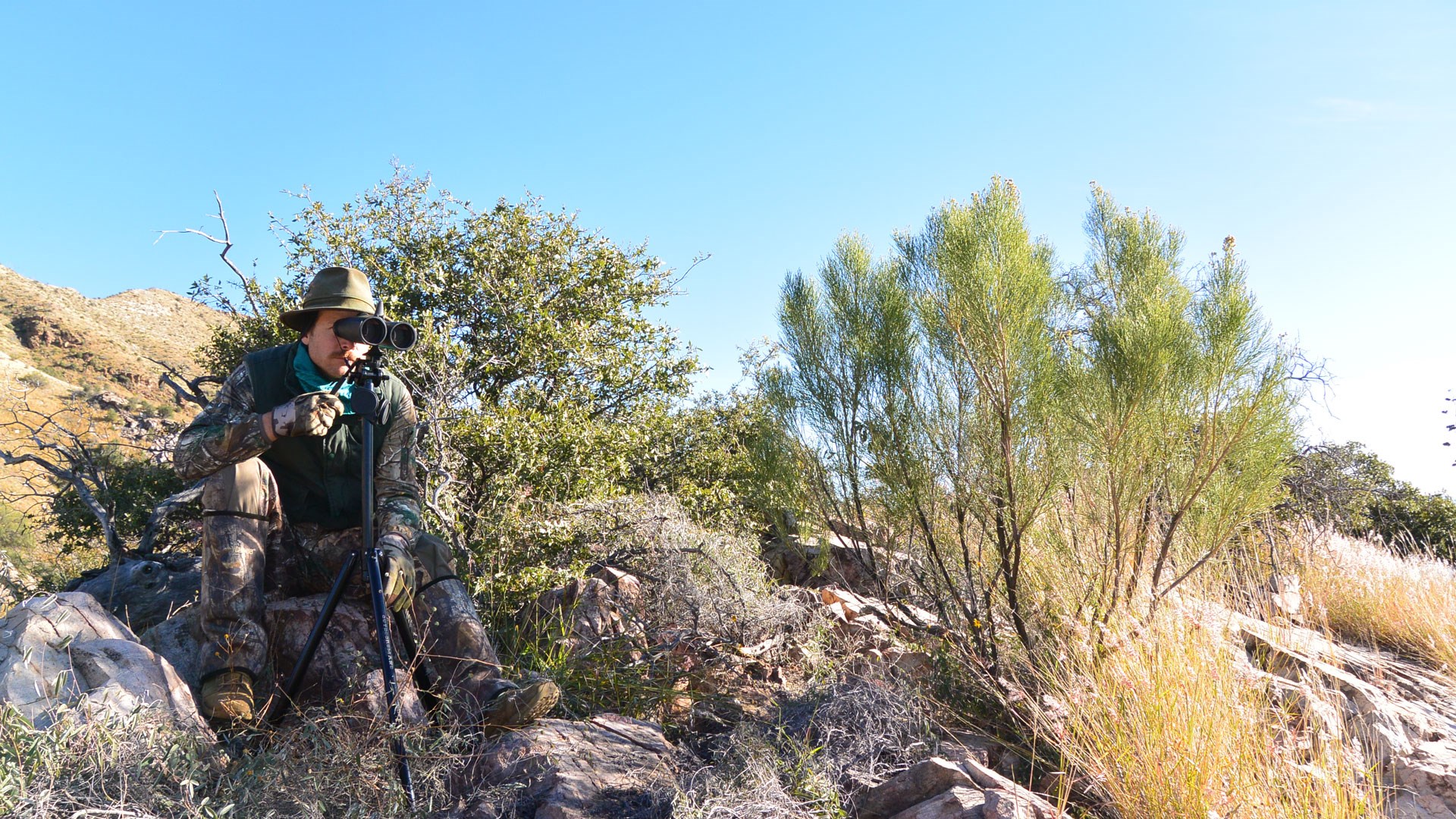
My other favorite method for hunting antlerless elk is spotting and stalking. As previously mentioned, wintering elk herds can be massive – I’ve seen herds numbering hundreds of animals. (Of course that’s not always the case, and I’ve hunted small groups of cows as well.) Glassing from a good vantage point can be a very effective way to find elk, especially during early morning and late evening hours. Snow on the ground is great, because dark-bodied elk stand out and are super easy to spot. And don’t disregard tracks; if you see a broad pathway of distant elk tracks in the snow you can swap modes and go tracking.
Often, distant cow elk herds can be spotted from roads or highways. This is helpful when hunting during super-cold weather, or when hunting with a youngster. Don’t hesitate to drive and glass, moving from one point of vantage to the next.
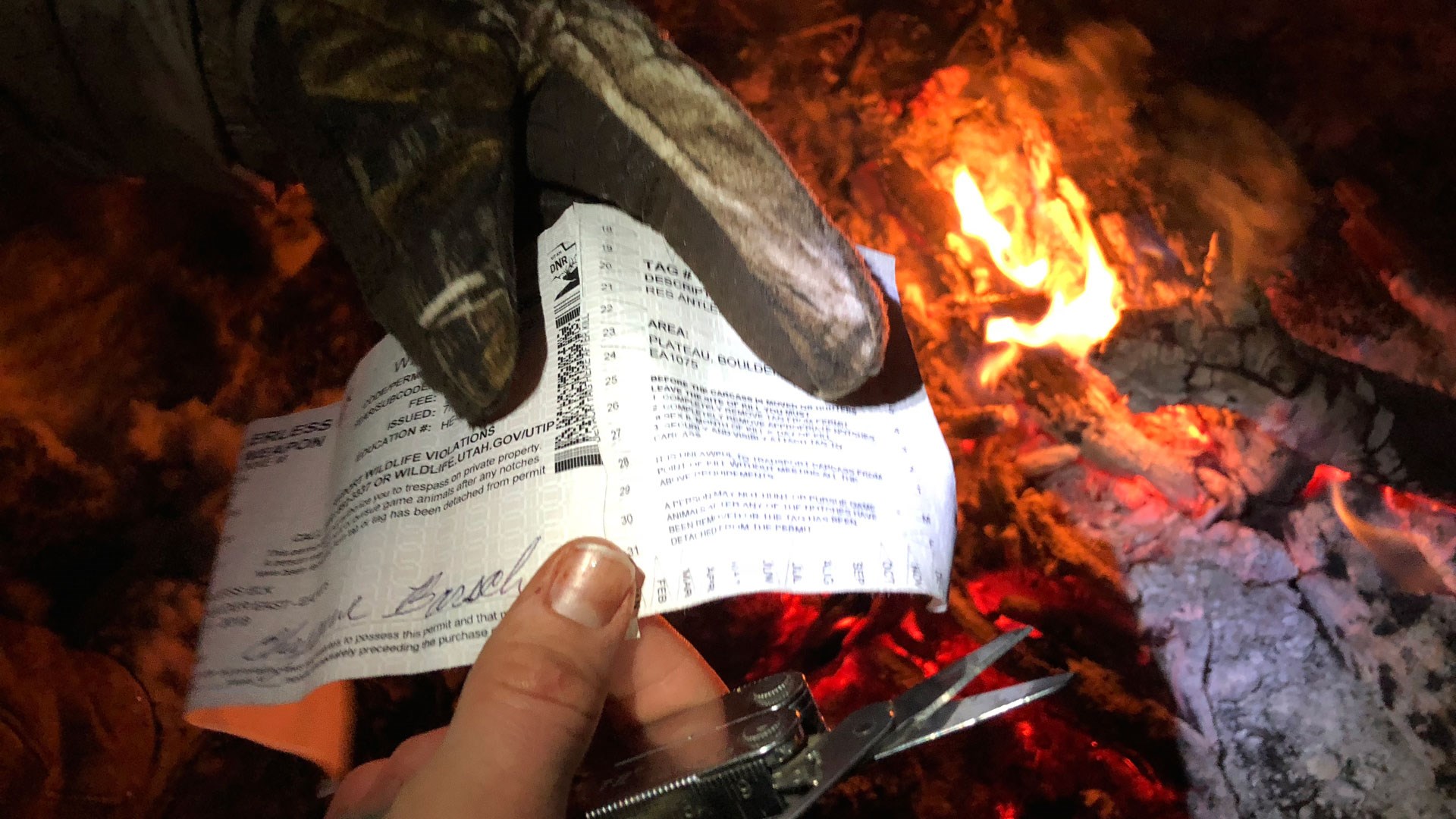
Once you spot a herd grab your gear, study out a route and memorize some landmarks, and get stalking. Use every available bit of cover, and keep the wind in your favor. Close within good shooting range, find a steady field position, and drop a nice cow. Now, start a fire to warm your hands while you skin, quarter, and hang the meat. Next, find a straight green stick. Skewer a small chunk of meat, sprinkle it with a bit of salt from your pack, and hunker down by the fire. You’ve earned it.