Sliding the rifle into the tripod shooting sticks, I couldn’t get on the bull fast enough. My unsteadiness was startling. Not the norm. But this wasn’t a normal hunt.
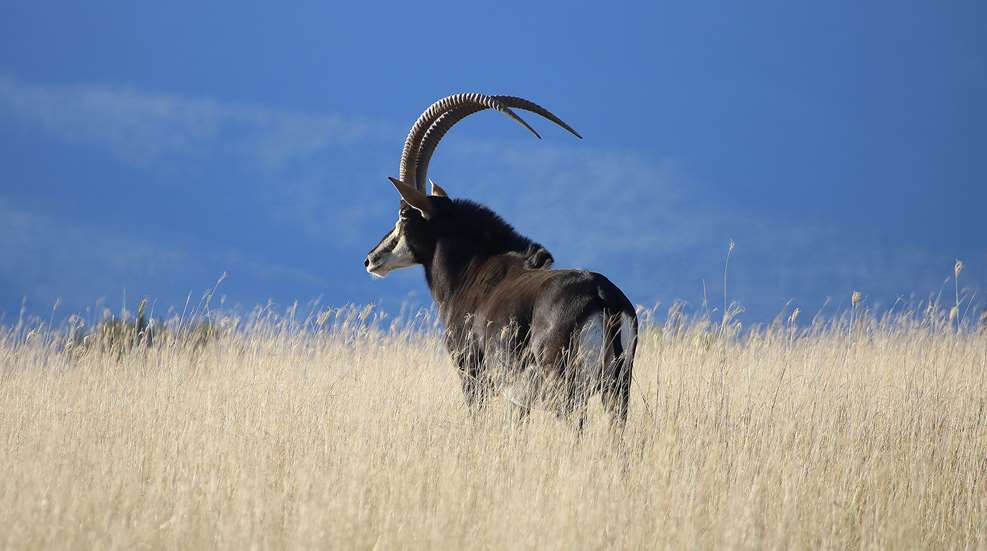
When the sable stepped from behind a thornbush, it took my breath away. The sleek, black coat and stark white facial markings were more magnificent than I had ever imagined. The backward-sweeping horns were massive. The deep-chested, narrow-waisted bull exuded power. Its thick neck tapered to a pointed muzzle. Its dainty lips plucked grass. It had no idea we were near.
“I’m shooting,” I whispered. “Wait, wait,” Pieter came back. “It’s a good bull, but I think we can do better.” “Is it 40 inches?” I followed, asking about horn length. “It’s close,” Pieter confirmed.
Truth is, I didn’t care how big it was. I was staring at a mature bull and wanted to shoot. The 130-yard shot would have been simple. “We have three days left, let’s not get in a rush,” Pieter winked. He was right. I didn’t want the hunt to end, not this fast.
“Let’s go check the trail cameras then glass a couple more draws,” Pieter suggested.
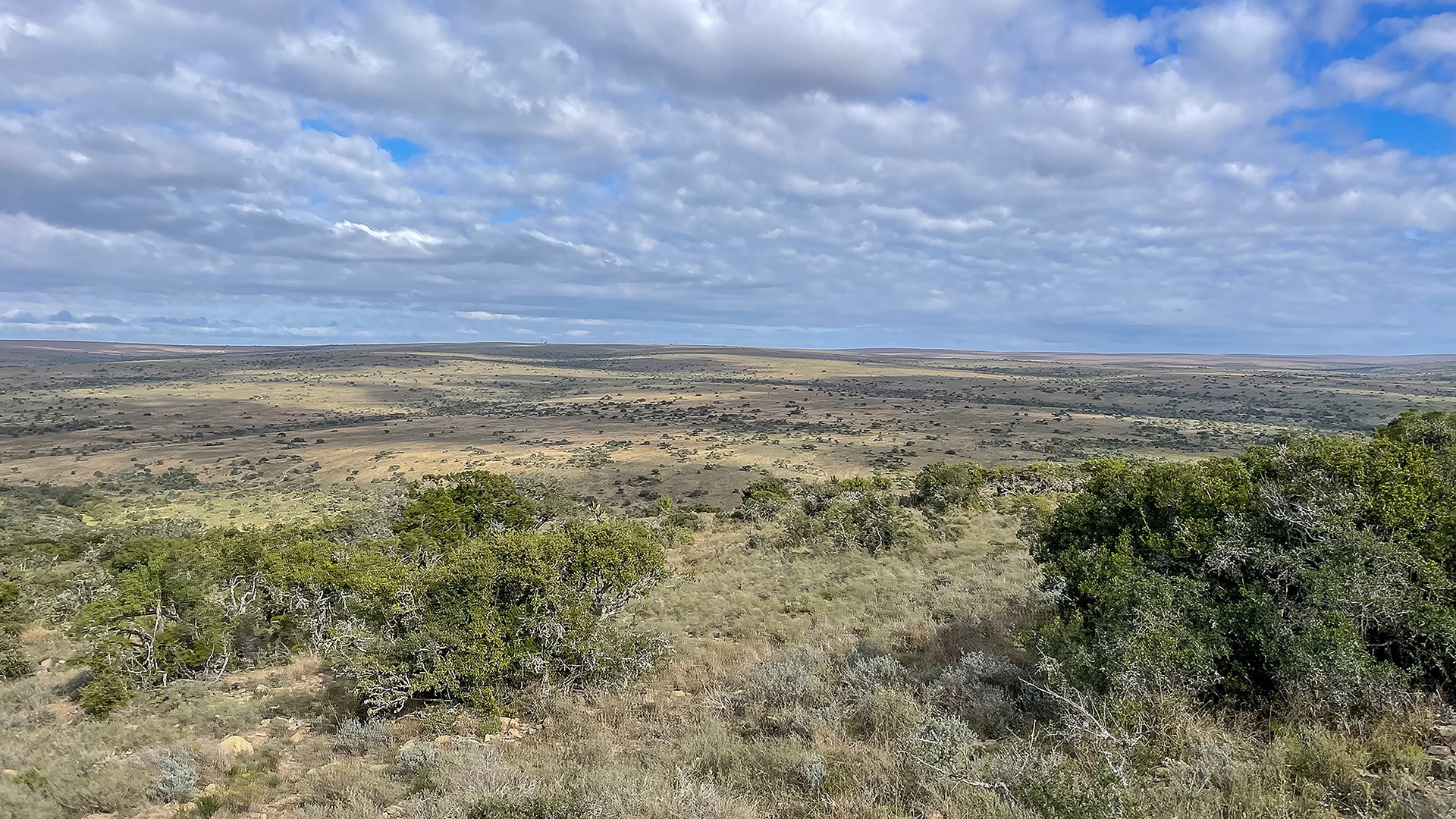
The Setting
My sable guide was Pieter Zwiegelaar. Pieter has worked for Charl le Roux, owner and operator of Rosedale Safaris in South Africa, for nearly a decade. Sable are a favorite of Pieter’s.
I’d hunted with le Roux before, near his home in Grahamstown, not far from Port Elizabeth. He has access to some of the most diverse habitat I’ve hunted, where the quality of animals is among the best I’ve seen. Giant Eastern Cape kudu, nyala, waterbuck and eland are just the start. When I saw some exceptional bull sable the last time I hunted with le Roux, I vowed to return.
This was my 16th African safari. It was the third time targeting sable. My first safari took place in 1993. While I yearned to hunt sable, my meager salary as a high school teacher didn’t warrant spending $13,000 on a bull.
I first hunted sable in Namibia in 2010. Intense drought had claimed many animals, including sable. I saw one bull on that hunt, a youngster. The PH did try getting me to another concession, but with the decline in sable numbers their price soared. I wasn’t going to spend $15,000 on one.
In 2012 I headed to Zimbabwe. Sable were atop my wish list. A run-in with poachers who’d wiped out the herds with snares and spears, along with local police who turned their backs, led to a disaster. We were lucky to get out alive.
This time, in 2024, we were hunting the Karoo region of South Africa, a place I’d been to many times over the years. “We’ve been having an unusual amount of rain this year, the most in decades, and the land is lush,” shared Pieter as we drove to check trail cameras. It was the greenest I’d ever seen it.
I’d brought four trail cameras. We set them out a few days prior, when heading into the hills in search of other plains game. We caught young bulls moving along brushy fringes. We also captured some nice sable bulls as they came to drink in various areas. One creek in particular would become our target area as that’s where the most, and biggest bulls, frequented. The following morning we were in position, glassing the vast, desert landscape as a rising sun warmed our backs.
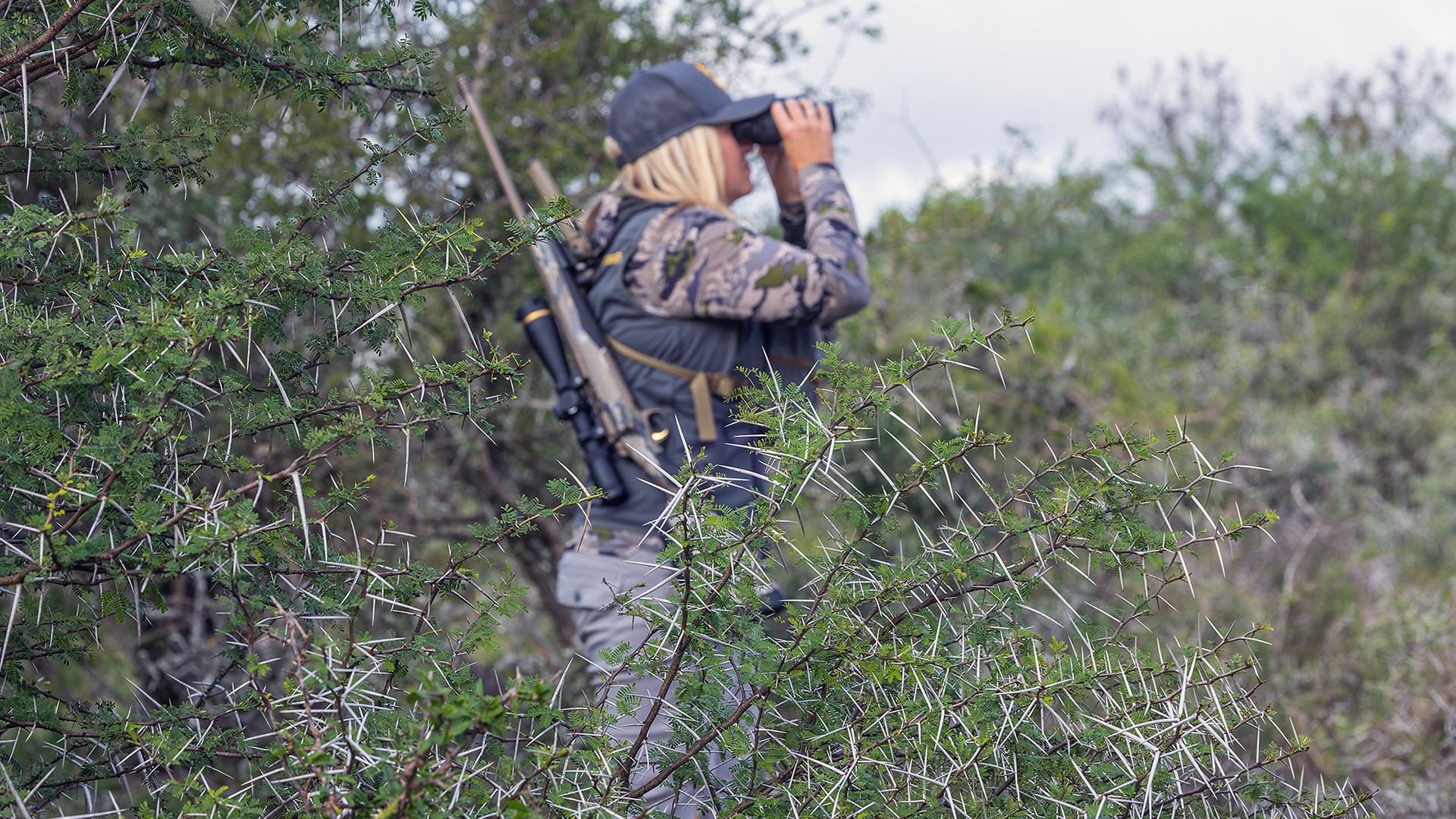 Browning’s Shaundi Campbell dreamed of hunting Africa, and sable topped her wish list. In South Africa she learned prime sable habitat requires a lot of glassing. After much work, she and PH Pieter Zwiegelaar stalked within shooting range.
Her First
Joining me on the hunt for sable was Shaundi Campbell. It was her first African safari. Sable topped her wish list. The only thing more exciting than experiencing your very own hunt in Africa is watching it through the eyes of a first-timer. The evening prior, Campbell hunted with le Roux. They saw some cows and young bulls. With le Roux taking other members of our party to the distant hill country for a few days in search of kudu, nyala, waterbuck and more, it was just Shaundi, Pieter and I chasing sable.
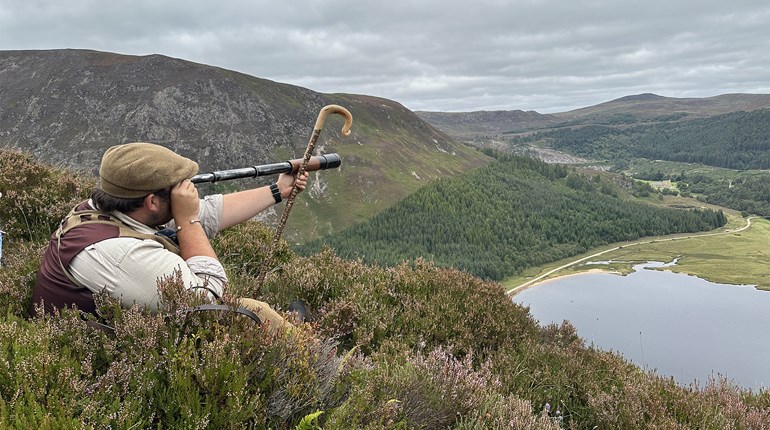
Across the rolling hills, Pieter caught glimpses of a sable’s back as it moved into a shallow draw. Setting up the spotting scope, we waited for the bull to emerge. It did, along with two others. “They’re nice, but not what we’re looking for,” Pieter muttered, eye still in the scope.
“Well slide over, I wanna see,” Shaundi snarked, jabbing him in the side with an elbow. When she came out of the scope, her big eyes looked at mine and her jaw dropped. “Those are incredible,” she remarked. We took turns looking and dreaming.
Two hours and three ravines later we were still searching for sable. Shaundi was up first. She and Pieter led the way, weaving up a gradual draw laden in thornbushes. As we reached the sparse, head end of the draw, Pieter spotted a bull. “He’s worth a closer look,” he made clear.
The instant he dropped the bino, Pieter’s pace quickened. There was a sense of urgency in his step, and his eyes. Shaundi knew what was happening. “We must get to that flat before the bull heads over the ridge,” Pieter pointed. “You can get a shot from there.”
The pair hunkered low, walking as fast and quietly as they could. The wind was in their face. Just as they seemed to be struggling to gain ground on the moving bull, it stopped. It turned sideways—that’s when I looked at it for the first time. The glossy, black pelage shined in the morning sun. I couldn’t get over how thick the chest seemed. Then it started grazing.
Shaundi belly-crawled behind Pieter. Prone, her rest was rock solid. At just over 200 yards, the bull had no idea what hit it. It spun a half-circle and died on the spot. The Browning 6.8 Western had just claimed its first sable.
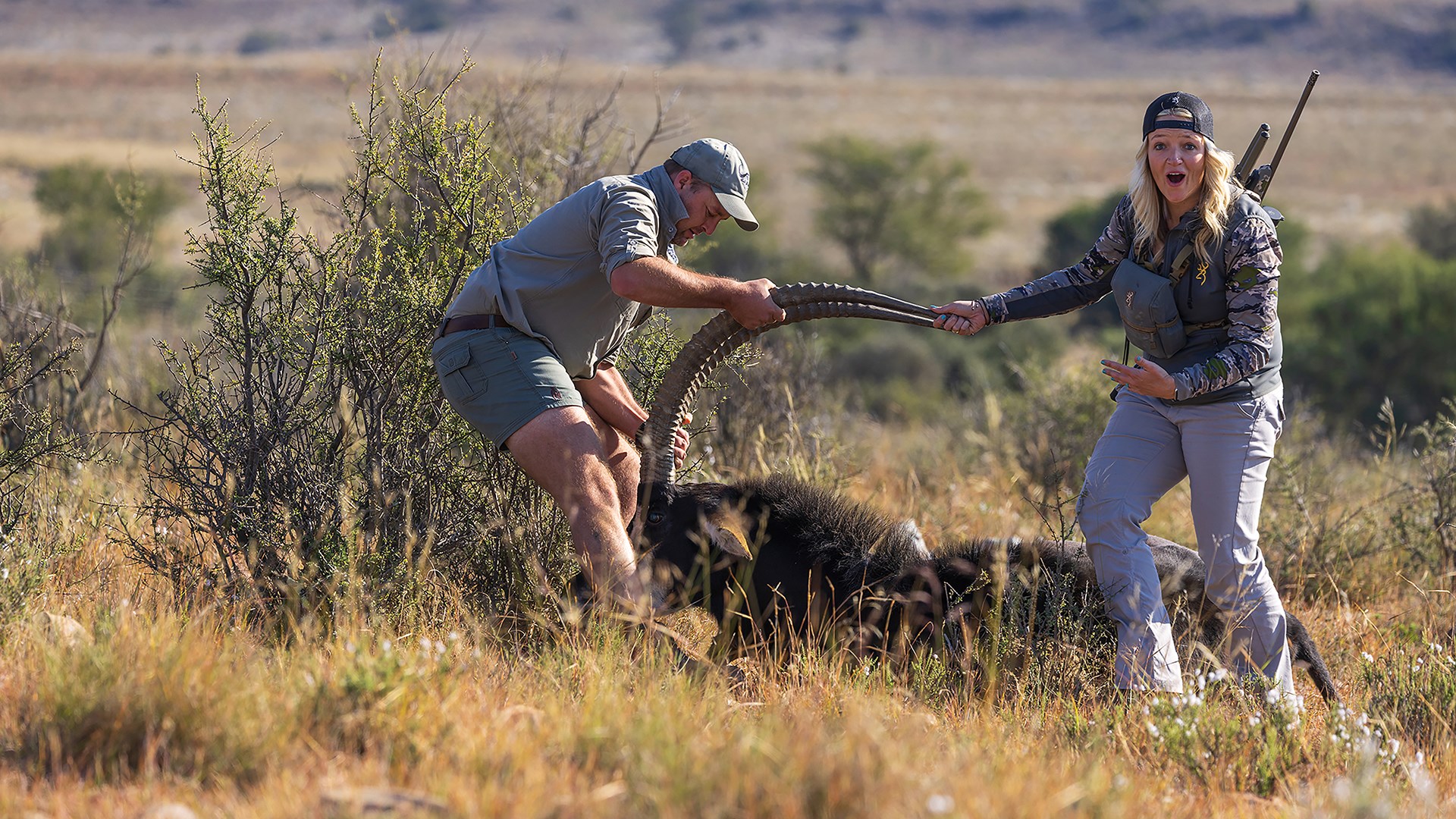 The breathtaking moment a sable bull appears can never be forgotten. Likewise, the moment a hunter lays hands on her long-sought sable bull cannot be replicated, as Shaundi Campbell’s expression displays.
Pieter was quick to get to the bull. “This thing is a monster!” he shouted as he began to run. “The biggest sable I’ve ever seen,” he continued, wrapping his thick fingers around the heavy bases. His excitement was contagious.
Pieter whipped out a little measuring tape. “Nine inches on the bases … 46 inches on the length … this thing is a smasher!” he whooped. Shaundi knew she had something special.
“Let’s get this thing back to the skinning shed, go grab lunch then we’ll head out this afternoon to try to find you a bull, Scotty,” Pieter suggested. I was in no rush. It was Shaundi‘s moment. Of the hundreds of African animals I’ve seen taken over the past 30-plus years, this was among the most captivating. More than ever, I wanted a big bull of my own.
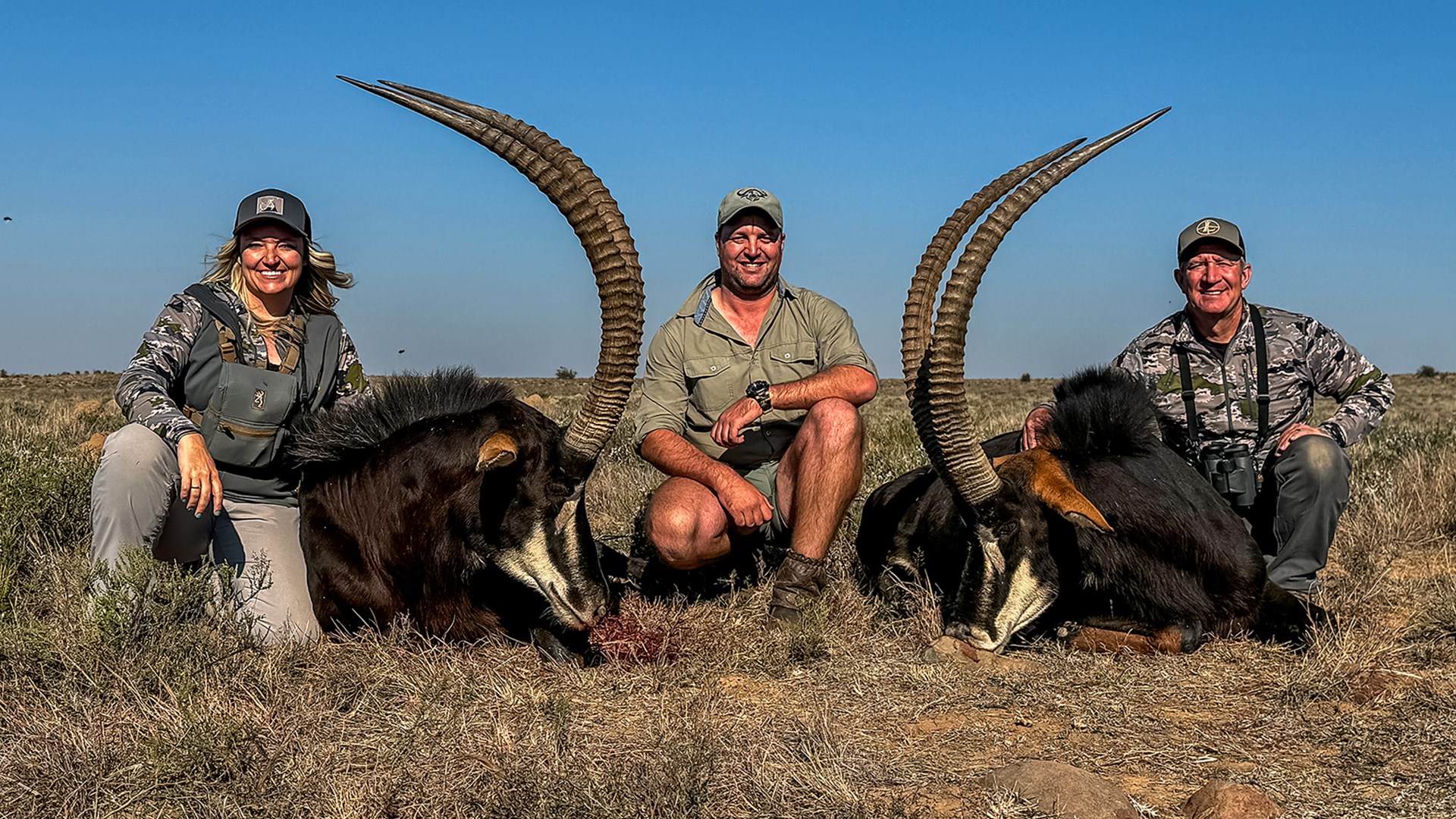 Two world-class sable bulls fell in once-in-a-lifetime moments to the Browning X-Bolt 2 Speed in 6.8 Western.
The History
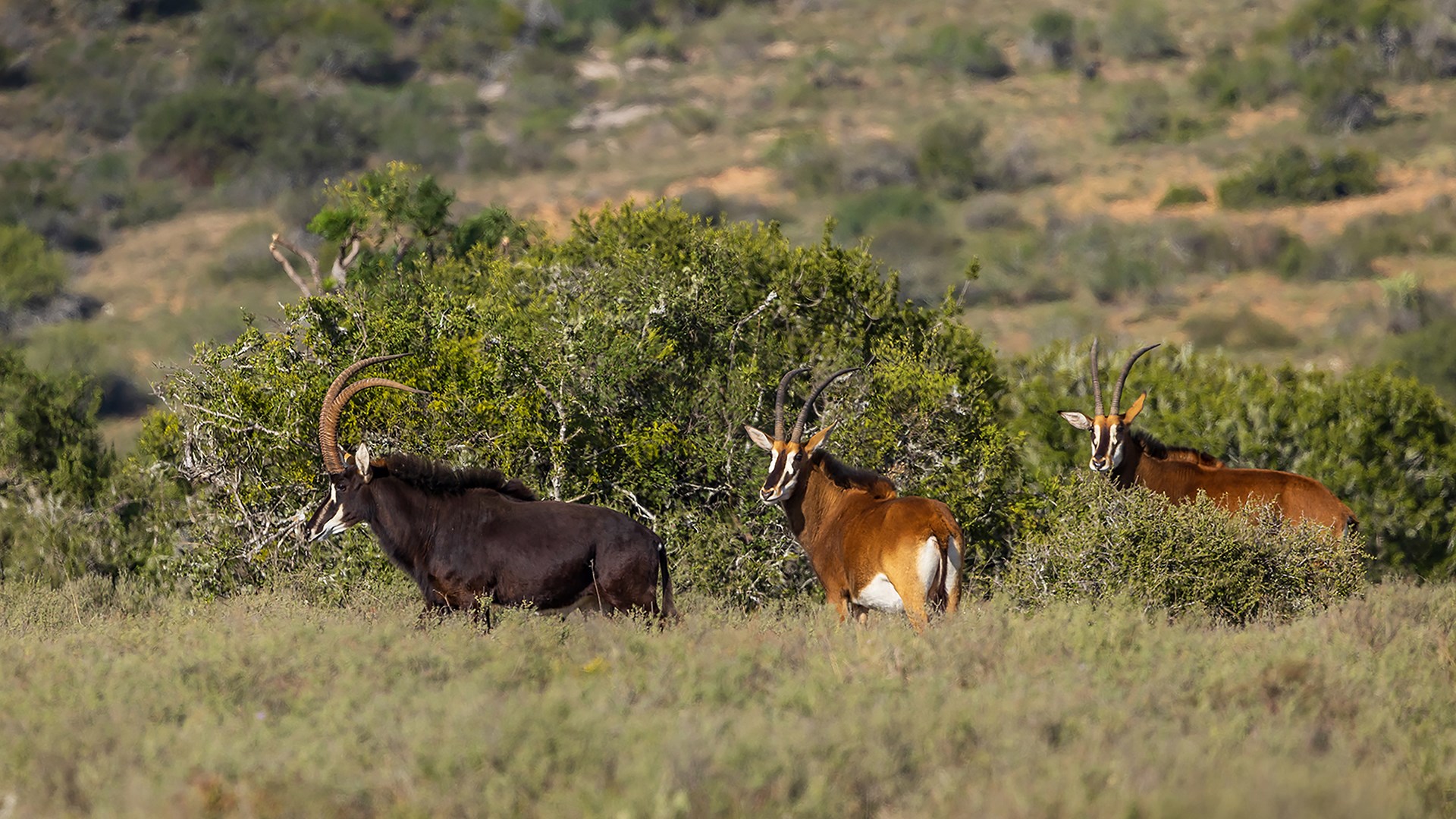
Regarded as the prince of Africa, sable are one of Africa’s most iconic animals. As a kid I was enamored with how writers like Theodore Roosevelt, Robert Ruark and others tried capturing their beauty in words. Their physique and stark colors command your attention. A mature bull will weigh 500 pounds. You have to see them in person to truly appreciate them.
From the 1950s through the 1970s, tsetse fly outbreaks greatly reduced sable numbers throughout their range. By the 1980s sable numbers were on the rebound.
Unlike many of Africa’s antelopes, sable routinely stand their ground when confronted by predators. They’ve been known to impale lions and leopards with their sharp, lyre-shaped horns. Their fearlessness to stand their ground frequently leads to the sable’s demise at the hands of poachers who hunt them with dogs and spears. The dogs corner the sable, which are then killed with spears. Poachers also snare them. Entire herds are often killed at once. Poaching has wiped out sable in many of their native habitats.
Sable are an edge species, living where grasslands and wooded savannas overlap. They rely on water, visiting pools or small streams daily. They graze on green grass and also feast on dry grasses, forbs and leaves.
Sable live in lowland habitats from Tanzania to South Africa, meaning they’re often in competition with farmers. Farming has led to the degradation of much of the sable’s habitat. Today, private landowners and parks are to thank for decades of effort that has restored sable populations. Hunting opportunities surpass what they did 30 years ago.
Since the COVID pandemic there’s been a surplus of sable throughout South Africa due to a lack of hunting pressure. This means prices are at an all-time low, or at least they were during the time of my hunt. My trophy fee on a sable was a mere $3,800. Pre-COVID, a bull fetched $12,000.
When I first hunted Africa, a bull with 36-inch-long horns was the holy grail. Today, that number has pushed to 40 inches. Anything over 40 inches is spectacular. Horns stretching the tape to 45 inches or more, like Shaundi’s bull, are simply extraordinary.
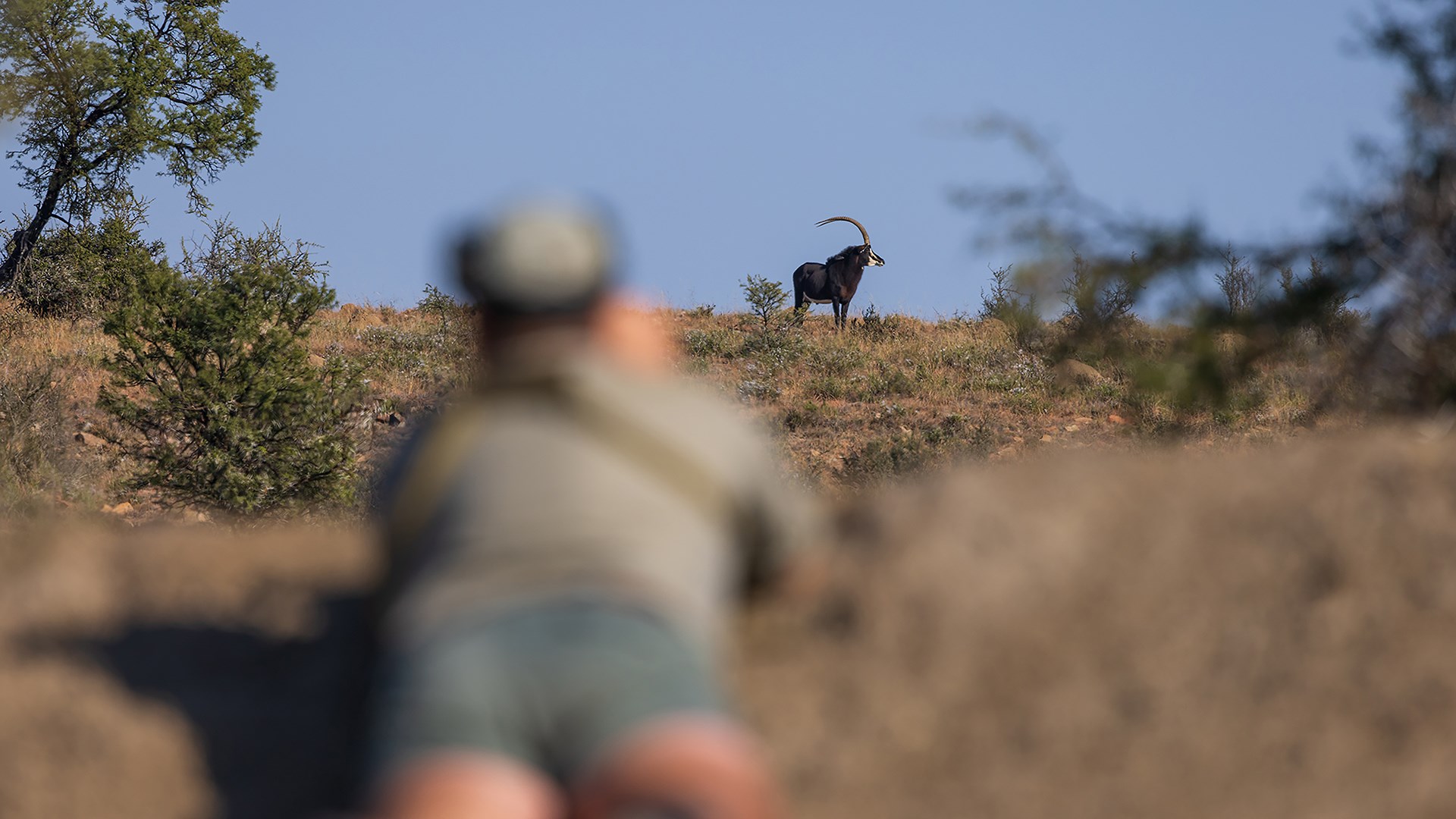
Third Time’s A Charm
With Shaundi’s bull in the back of the truck, we headed cross-country toward camp. Music played. We laughed and celebrated.
“Hey, isn’t that the draw where we have the trail cameras?” I asked, turning down the volume of the radio. “Yes, sir,” Pieter confirmed. “Wanna have a quick glass?”
He slowed the truck to a quiet stop. We got out and glassed from afar. We saw nothing.
“It’s getting warm and we have to go through that draw,” Pieter pointed as we eased down the backside of a rolling hill. “Let’s have a quick walk, just in case they’re in the shade already, or heading to water.”
We hadn’t gone 300 yards when Pieter spied a bull standing in tall thornbush in the bottom of a draw. While Pieter sized-up the bull, I wasted no time getting set in the sticks. The bull stood facing us, head sharply turned over its right shoulder. It looked magnificent in the scope. “It’s a nice bull, about 40 inches, but let’s keep looking,” whispered Pieter. “Besides, now you have to get one bigger than Shaundi’s,” he smirked. I knew the reality of that happening was slim. “I’m fine with a 40-incher,” I said. It was too late. Pieter had already folded the shooting sticks and started walking.
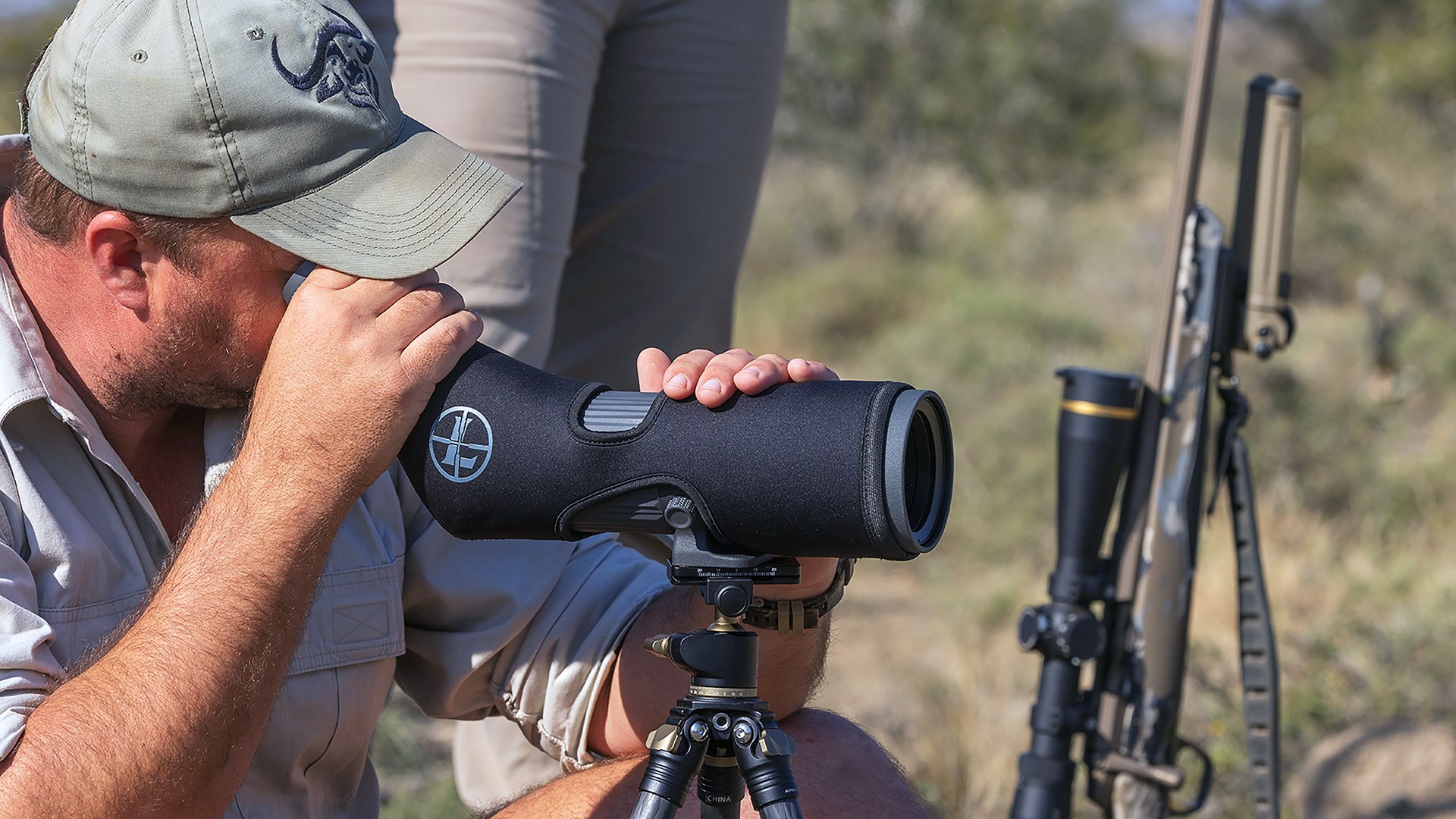
We found a couple more bulls in the distance. They were small, as was a bull with a harem of bright orange cows. “Let’s finish walking out this little ravine then we’ll take a lunch break,” Pieter said.
We went 15 yards when Pieter instantly stopped. I almost bumped into him. He glassed in front of us. My view was blocked. The thornbush grew tall and thick. “This is a massive, massive bull,” Pieter whispered, his breathing growing heavier. “I need to see how long the horns are, though. Stick tight behind me and be ready.” We tediously tiptoed 5 yards. It took forever. I still couldn’t see the bull.
Then Pieter slowly widened the legs of the shooting sticks. I slid the gun into position, just off Pieter’s left side. He was diligently studying the bull.
It stood in a narrow trail in the trees. As I looked at it for the first time through a binocular, its mass instantly commanded my attention. It was the thickest-horned sable we’d seen. From my view, the leaves on the trees hid more than half the bull’s headgear. Pieter got low and saw the bull’s horns when it turned sideways.
“This is a giant bull and you must shoot it right now,” he said quietly but with insistence. The Browning 6.8 Western was solid in the sticks. To thread the bullet through encroaching limbs on each side, I cranked the Leupold VX-6HD scope to full, 18X. The distance was 177 yards. The FireDot glowed red on the bull’s black hide. “Hit it square in the chest,” Pieter whispered.
The sound of the 175-grain bullet was solid, as it should be when entering the brisket. The bull sprinted through the trees and into the open. For the first time I laid eyes on its horns. Long, sweeping, glistening in the African sun—it was an image I’ll never forget. The bull ran 40 yards and tipped over.
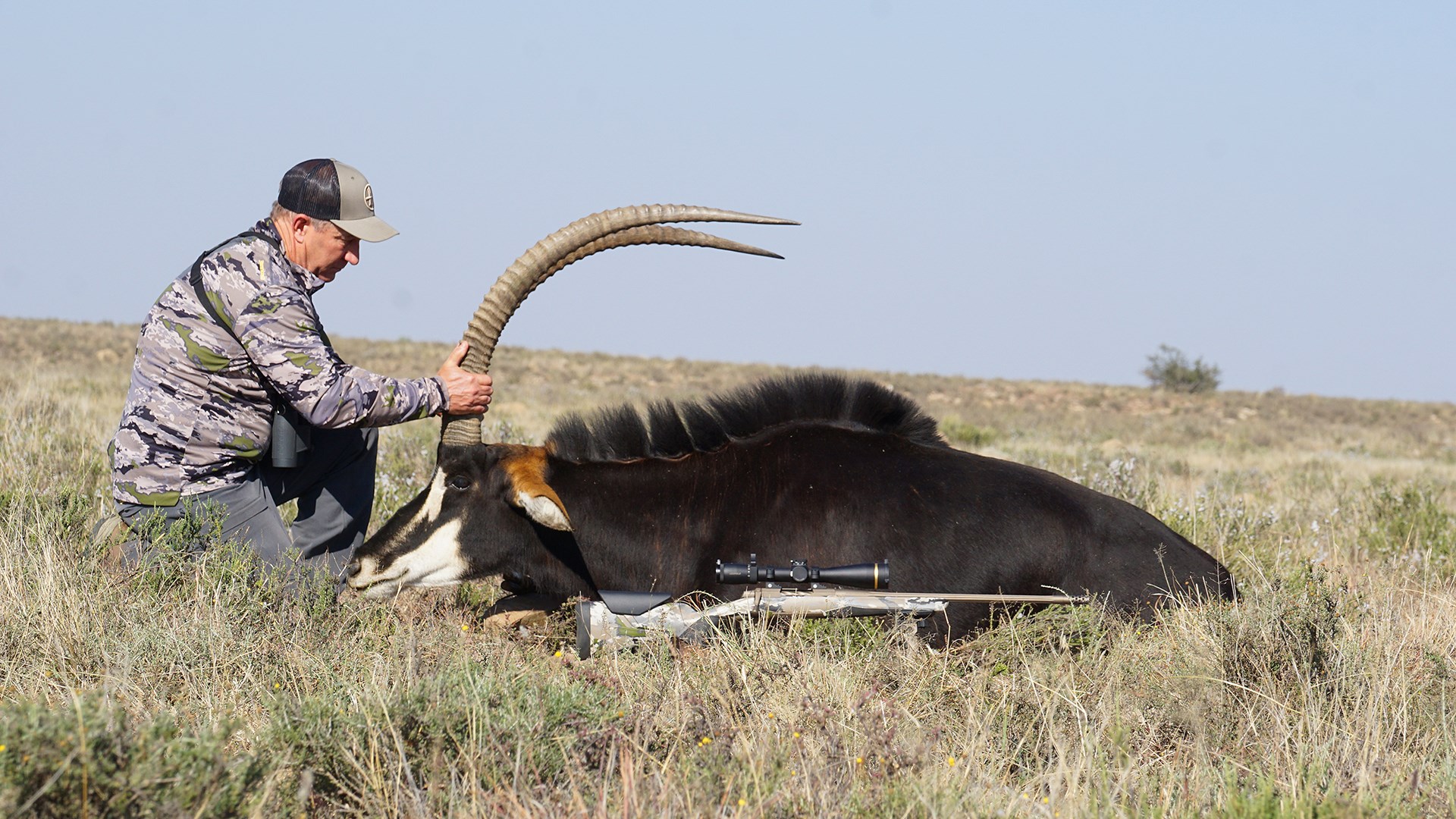
Wrapping my hands around the bases of the bull’s horns, it was even bigger than I’d thought. The horns were sharp, the bull’s contrasting white-and-black features striking to run my hands over. It was one of the most awesome animals I’d ever seen.
Pieter and I shook hands, then embraced. It was a special moment for both of us. The horns measured an astounding 45 inches long with thick, 10-inch bases. My lifelong dream of hunting sable had just become reality. We had two world-class bulls heading to the skinning shed. Life was good.
Roan Quest
On this safari I went with the intent of firing only two shots from my 6.8 Western. I had one left.
High on my bucket list for decades has been a roan. As with sable, lofty trophy fees kept me from even considering a roan on those early safaris. Until now. As with sable, supply exceeded demand and roan prices were at an all-time low.
We’d seen the odd roan here and there while hunting sable. “The best roan hunting isn’t far from here,” smiled Pieter over lunch. I’d planned on hunting roan with le Roux upon his return, but with two-and-a-half days until then there was no reason to wait.
That afternoon we glassed the countryside. We saw cows and small bulls.
Then, moments before dark, Pieter spotted a good bull roan. There were three of them. All looked the same to me through a binocular. “Here, have a look through this,” Pieter said, moving away so I could look through the spotting scope. They all looked big to me. “Wait for the one on the right to turn,” Pieter suggested. When it did, its mass made the others look small. “This is where we’ll start in the morning; we can’t get to them before dark,” Pieter said.
That night Pieter grilled fresh sable tenderloins over an open fire. It was delicious. As flames slowly turned to glowing coals, we relived the momentous day. Then the coals faded and the heat dissipated. It was time for bed. There was no need for headlamps to illuminate the path to our cabins; the bright stars of the Africa night did that. The starlit skies of Africa are unmatched, worth the price of admission alone.
Between the adrenaline still flowing from the sable hunt and the anticipation of the big bull roan we’d seen, sleep didn’t come easy. I was up early, drinking tea and crunching rusks, envisioning what the day might hold.
Shortly after sunup we were back on our high spot, glassing for the three roan. We hunted all day. We saw two cows and a calf but not a single bull roan. Finally, minutes before dark, we found the bulls we were looking for. We tried catching up to them but failed. Again, another restless night, but a memorable one shared with friends around the campfire.
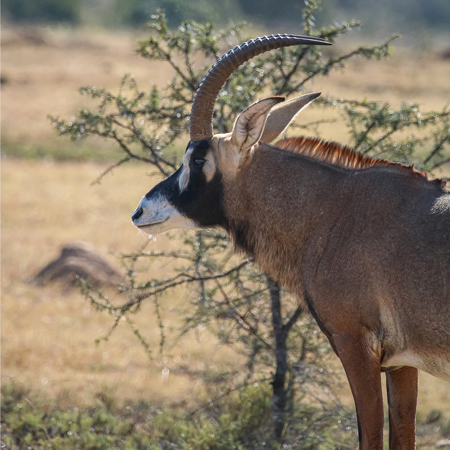
On the final day of the hunt we were in the hills early. We laid eyes on some nice bulls, but the big one eluded us. Finally, with less than 30 minutes of daylight left, Pieter spotted the bull we’d been looking for.
We scrambled for nearly a mile amidst thornbush and swales, staying hidden from the bull as we moved closer. At 400 yards we found the bull atop a ridge. The two smaller bulls were with it.
“Quickly, let’s move up to that rise and get ready,” Pieter nodded. I was sweating, breathing hard. “They’re going to come out of the thicket to feed in the grass.” We got set up and through the scope I found the bull. All I could see was the throat. It was too brushy to chance a shot.
I took several range readings. All came back at 195 yards. Finally, the bulls began to move. The small bulls led. The bigger bull hung back. It reminded me of how big black-tailed deer move back home; the wise bucks let the younger ones feed out, then they emerge after dark. I was willing this not to happen.
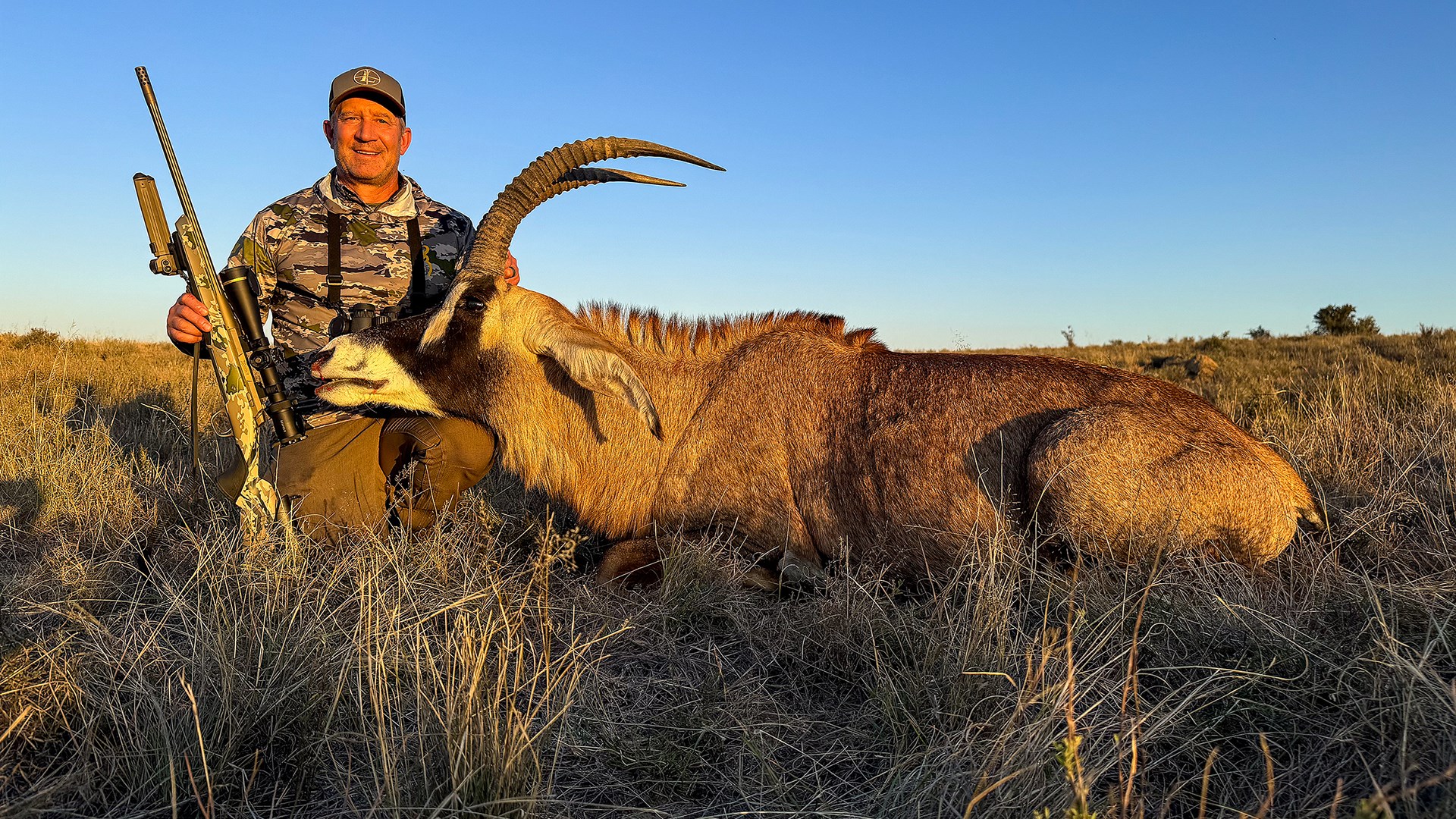
Finally, the big bull slowly moved. It followed the same trail as the young bulls. When it stepped into the open, then stopped, one bullet behind the shoulder was all it took. The 600-pound roan was down.
Approaching the downed bull was surreal. Its oversized ears, stunning colors, waterbuck-like coat, and sheer massiveness, left me spellbound. There was no shouting. No celebrating. No animated high-fives. This was a hunt I’d anticipated for years. I was never sure it would happen, not even on this hunt. I grappled for words to express my feelings. I failed.
On the long flight home I couldn’t sleep. I didn’t watch movies, as usual. All I could think about were two of the most memorable hunts I’ve had the honor of experiencing on the Dark Continent.
As with all safaris, I went with the mindset that this could be my last. But before the plane touched down on American soil my next safari was being planned Africa grips you in a way no place can. Go once, and it won’t be your last.
Editor’s Note: Follow Scott Haugen’s adventures on Instagram and Facebook.