 Georgia is a chef, author, and hunter who has worked at some of the country’s best restaurants. She is the author of the critically acclaimed book"Food Heroes,"and the upcoming book "Girl Hunter." She blogs about her travels at GeorgiaPellegrini.com.
------------------
I recently went duck hunting for several days near New Orleans, on Bayou Terra Buff. More than anything, it was the thought of a crisply roasted duck that woke me at 3 a.m. on a Saturday morning. It was the thought of the sweet and salty tang of thinly sliced duck prosciutto that made those early dark mornings worthwhile.
The ducks came in waves, high in the sky and far in the distance; sometimes they flirted with our decoys, but never enough. There were green winged teal and blue winged teal and a cinnamon teal from time to time. Once there was even a pintail. Their silhouettes against the panorama and quiet were impressive. There was nothing but glowing violet sky and water and the burning green outlines simmering above the shoreline of New Orleans.
While my friend and I sat watching the glow of the marsh and the occasional darting cloud of snipe, we talked about what is endlessly satisfying to us-the place in the world where the outdoors and food collide. He declared that the canvasback was the best eating duck, and we debated how to make New Orleans duck taste better, since it is fishier than ones you would find in places like Arkansas.
The beauty of cooking wild animals is that it doesn't just start with you and the cutting board, it is the whole cycle of life you have to consider. What did this duck eat? And what was the thing that it ate eating? All of this affects how you eat it and what exactly you eat from it and with it. Maybe the duck should be brined to remove the fishiness from the skin; maybe the skin should be removed and the meat cured in salt. At the very least, it is always eaten rare.
One of my favorite methods of curing duck and goose is called "confit." It is a centuries-old method for salt curing a piece of meat, usually goose, duck or sometimes hog, then poaching it in its own fat.
Meat curing was widespread among prior civilizations because it prevented waste and guaranteed a food supply in the case of a poor harvest. The French and Italians were the first to raise this skill to an art form. Local craftsmen formed guilds and produced a range of cooked or salted dried meats, which varied from region to region. The only raw product they were allowed to sell was unrendered lard. These preservation methods ensured that meats would have a longer shelf-life than even in more modern times.
Duck confit is simple to make at home, and is a perfect way to store meat when you don't have time to cook it, and you just can't fit another thing in your freezer. All that it requires is salt and duck fat. In fact, if you get into the habit of freezing duck skins, you can easily render duck fat yourself, which is quite a bit cheaper than buying it in the store (I'll show you that technique in a future post!). Rendered hog fat will also work in a pinch. It is ideal to confit legs with the skin on, but with wild ducks you can't always be picky. If you don't have skin, simply use extra fat and rotate the meat more often while it cooks. You can also confit the gizzards, hearts, necks, livers and any other bits that you might otherwise discard. The breasts, though, are best left seared or turned into prosciutto.
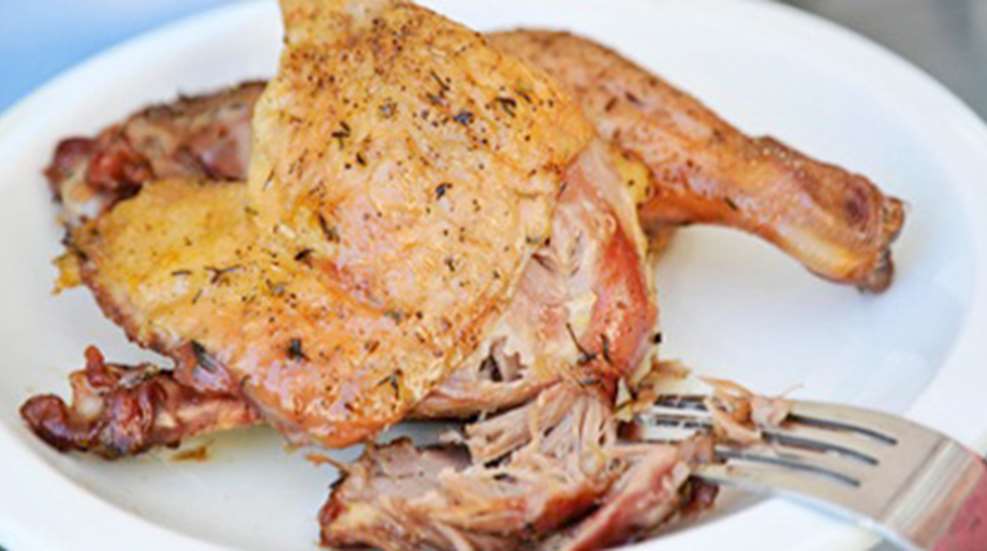
When you create the salt cure for your confit, you can keep it simple or play with flavorings-add rosemary, thyme, garlic, orange or lemon zest, star anise or whatever else makes it more interesting to you. In the end, once the meat is cured, cooked and cooled, it can be removed from the bone and stored in a glass jar in the fat for up to six months. The gizzards and other offal are great used in a cassoulet or casserole, as is the leg meat. Or the whole thing is perfect eaten cold in a salad, or right off the bone while still warm! Either way, the meat shreds and melts in a buttery kind of way.
Duck Confit
(Serves 4)
4 mallard or speckled goose legs (about 16 oz) or the equivalent in smaller duck legs, or gizzards, hearts, and necks
4 cloves garlic, crushed
1 tablespoon Kosher salt
Zest of 1 orange
Zest of 1 lemon
1 sprig rosemary, picked
2 sprigs thyme, picked
1 teaspoon black peppercorns, cracked
½ teaspoon fennel seeds (optional)
1 piece star anise, crushed (optional)
1 teaspoon juniper berries (optional)
6 tablespoons duck fat
1. Make the confit salt by roughly chopping the herbs and combining all of the ingredients except the duck and duck fat, together in a small bowl.
2. Rinse the duck and pat dry. If using a leg, expose the leg bone with a paring knife to help the salt cure evenly.
3. Place in a baking dish or skillet and rub on all sides with the salt mixture. Cover and refrigerate overnight.
4. Preheat the oven to 300 degrees F and remove the duck from the refrigerator.
5. Rinse the legs or duck parts very well under running water for several minutes. Pat dry with paper towel. Wipe out the skillet and return the duck legs to it.
6. Scoop the duck fat into the skillet and cover with tin foil.
7. Place in the oven and cook for 2 to 3 hours. If there is skin on the legs, remove the foil for the last 30 minutes, if not, turn the meat over halfway through cooking. It is ready when the meat is very tender and has a shredded quality when pulled with a fork.
8. Remove the skillet from the oven and let rest for 10 minutes. Serve hot or eat cold over a salad. It is also excellent in a terrine or a cassoulet.