In typical whitetail country much of the debate over where to hang a stand revolves around wind direction. However, once a likely stand location is chosen predominate wind direction will most likely be the only thing left to ponder.
Not so if you happen to be hunting the rugged mountains of the east. You see, hanging a treestand in hill country offers many challenges. Simply determining wind direction and erecting a stand won’t work. There are other factors to consider.
Problems With Mountain Treestands
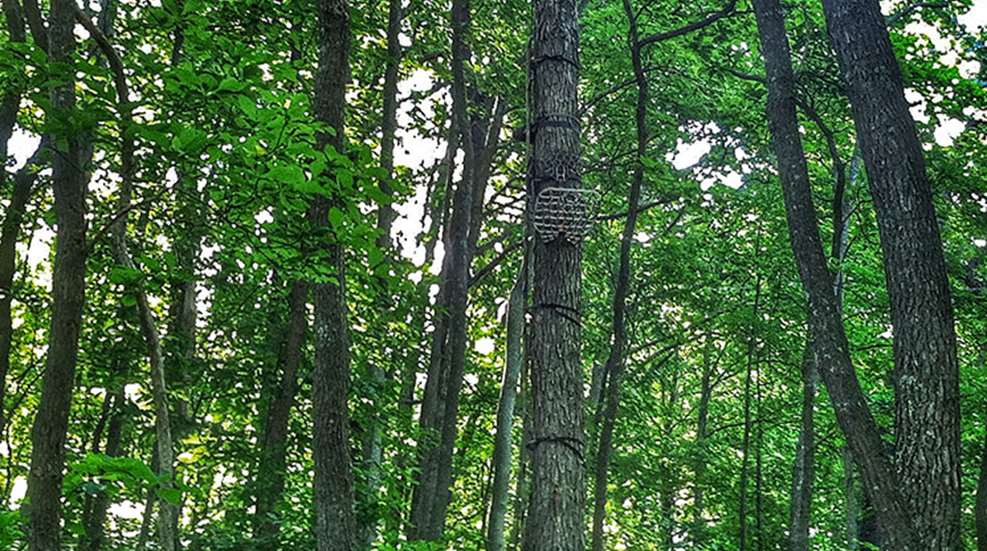
The biggest obstacle when bowhunting “Mountain” bucks is, well, the mountains. For example, on one side of your stand you might be 20 feet above the deer’s eye-sight, while on the other you might very well be eye level; depending on the slope of the terrain. Personally, I have shot a number of bucks at eye level from my treestand. I know that sounds crazy but it is a very common occurrence in the mountains.
When fluctuating terrain angles are combined with an elevated shooting position all sorts of problems begin to show up; most notably awkward shot angles. Not to mention the headaches associated with trying to find a tree that provides both stealth and a good position to make the shot.
Use The Sun
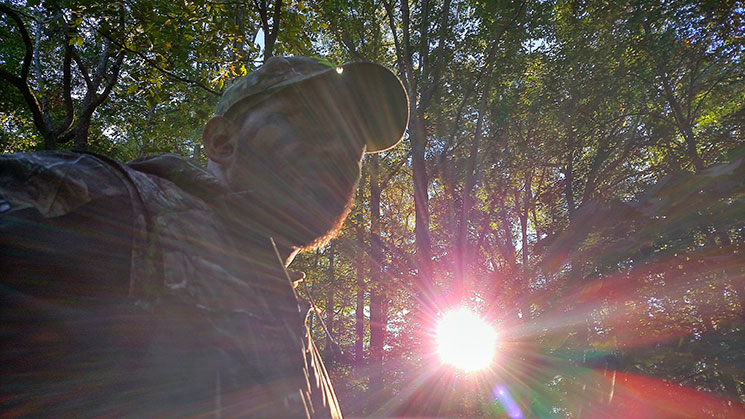
Since you can’t change the terrain and you must often hunt where the sign leads you, you are going to have to use other methods to remain undetected. One way to do that is to keep the sun at your back. Any approaching buck who happens to look up in your direction should be greeted with a face full of the rising sun. This will increase the likelihood that he won’t see you as he makes his way past your stand.
Distract Them With Scent
When you can’t get the sun at your back consider using some sort of deer scent or attractant to distract the approaching buck long enough to reach full draw. A drag rag and some doe estrus placed in just the right spot can sometimes make that buck take the path you want him to. Just be sure not to walk directly to your treestand when laying down scent. Instead, circle around your stand in order to expose said buck to predetermined shooting lanes.
Use Funnels
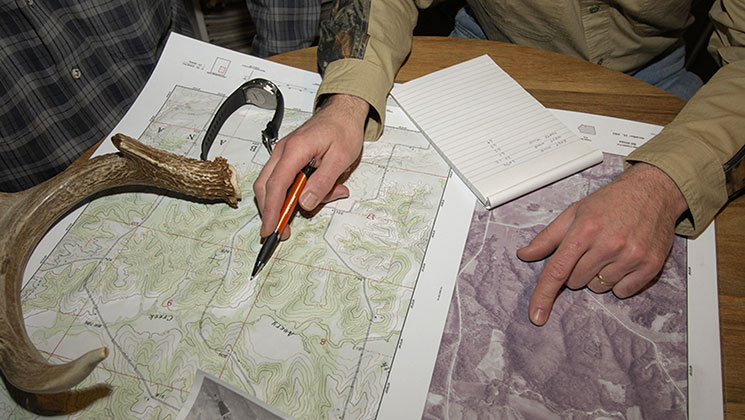
The same terrain that gives you headaches can also be your greatest ally simply because it can be used to funnel deer into certain areas. Most often, anywhere steep and gradual terrain collide is a great place to start formulating a plan of attack because deer are lazy and will typically take the path of least resistance. The bowhunter who concentrates on funnels and pinch points (instead of random locations in a sea of timber) can greatly narrow down the possible travel routes of approaching deer and then hang treestands accordingly.
Once a good funnel is located, and predetermined travel paths assumed, things can be taken a step further by putting the tree between you and approaching deer. In other words, try hanging your stand on the backside of the tree to further conceal your location to approaching deer and then make the shot once the target buck has stepped into range.
Participate In Situational Practice
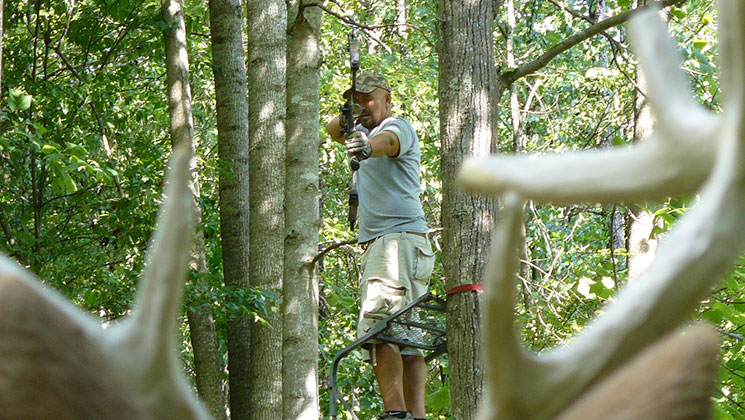
When it comes to shot angles, mountain bowhunters can remedy many of the problems by practicing exclusively from an elevated position. After the initial bow tuning and sight-pin set up is complete, shooting in the backyard should become a very small part of the “Mountain” bowhunters overall practice regimen. In fact, you should strive to practice under the most radical conditions possible because that is what you will most likely face in the field.
Also, practicing under “field-like” conditions can help the mountain bowhunter better understand shot placement and how angle and terrain both can affect not only where the arrow impacts but, more importantly, where it exits.
Conclusion
Certainly there are other points to consider when it comes to hanging a treestand in a mountain backdrop; too many to cover in a single article. However, next time I will expand on some of them as I discuss the six key factors to killing a mountain buck”.