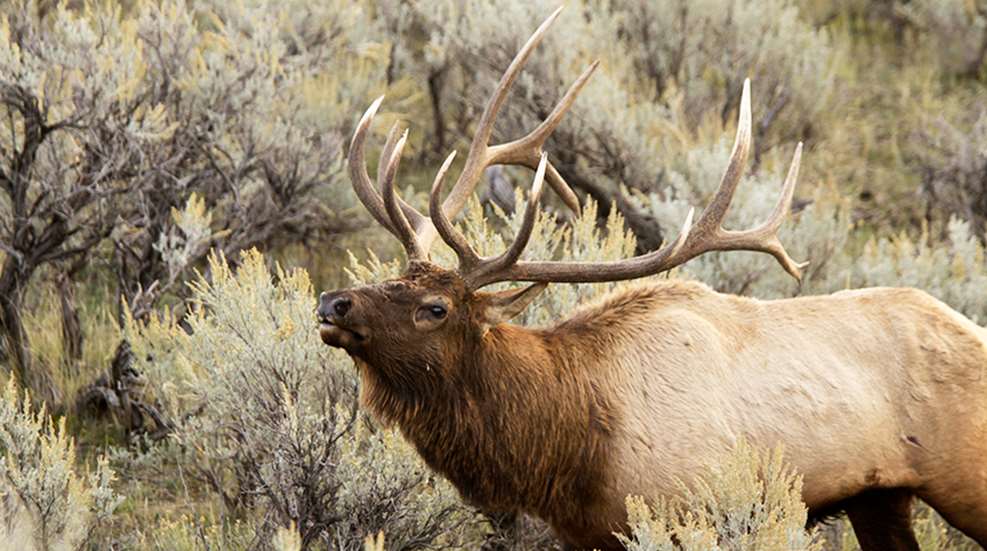
It’s “Mission Impossible” to stay scent free during the September elk season. Sure you’re in the cooler mountain air, but daytime temperatures can still exceed 70. And don’t forget about all the uphill scrambles as you chase evasive elk. Add it up and you’re demanding more than is advertised from your deodorant.
If you struggle with the task to be as scent invisible as whitetail season while chasing elk, put a few of these strategies to work this season.
Change It Up, Slow It Down
Pack your hunting clothes. A 1,000-foot ascent or more greets me on nearly every morning hike to my elk locations. Most are undertaken under cover of darkness so instead of soaking my hunting wear with perspiration I pack my camouflage and ascend in lightweight, poly-based layers. Most hikes may only require you to switch out shirts, but if the climb is outrageous, consider swapping out pants to avoid sweat saturation. Under the cover of stars you also won’t need your hat for sun shade. Stow it. It’s a major sweat trap.
Next, slow down. Set your wake-up alarm to give you plenty of time to unhurriedly make your climb. Stop often and let the cool, predawn air lower your body temperature between stops. The hiking breaks also give you quiet time to catch distant bugles for a target starting point.
Once you hit hunting elevation take a few minutes to finish cooling down. Subsequently, put some hunting technology to use. Various companies make unscented field wipes. Have a package handy and wipe down your body before you dress for success.
Dry It Out and Spray It Down
If things go as planned you should be sweat-soaked again by midday. Elk have long legs and a long-range vision of where they want to bed after a night of feeding. Most mornings begin and end with you trailing far behind an elk dust trail. When you decide to break out the PB&J take off your outer layers and allow the breeze to air dry the garments.
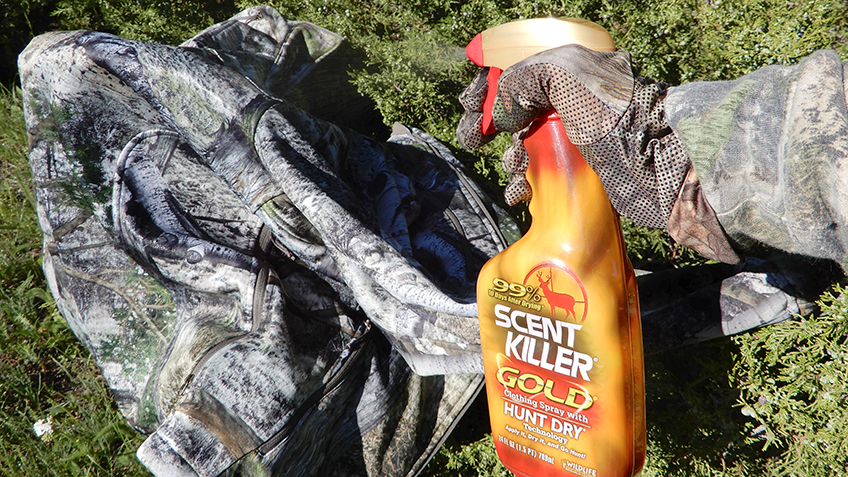
This is also perfect timing to spray down your clothes and gear again with a scent-eliminating spray. If you don’t want to tote the weight of a 12-ounce spray bottle you can always pour half into another container. You may also opt to pre-spray with products designed to keep protecting for up to 20 days like Wildlife Research Center’s Scent Killer Gold. Either way, get dry.
Rub-A Dub-Dub
Maybe you go light and don’t carry spray or believe in its powers. Nevertheless, you can boost your success with nature. On warm days look for a mountain water source and rinse out any perspiration-soaked apparel. Give yourself a splash bath at the same time. Hang up the clothes to dry and then go one step further. Use a pine or cedar branch, and rub your dried clothes to add in the overpowering scent.
There is one last thing you should do. Stay downwind. Good luck.