Although it may seem premature to be contemplating a crossbow purchase now for the upcoming fall hunting season, it’s not. Consider this: some whitetail deer and antelope seasons open in August, and September is primetime for pursuing elk with archery tackle. Given that time must be allocated to practice, too, now is the time to choose your fall companion. But, with so many options available how do you make the right choice? Read on.
Design
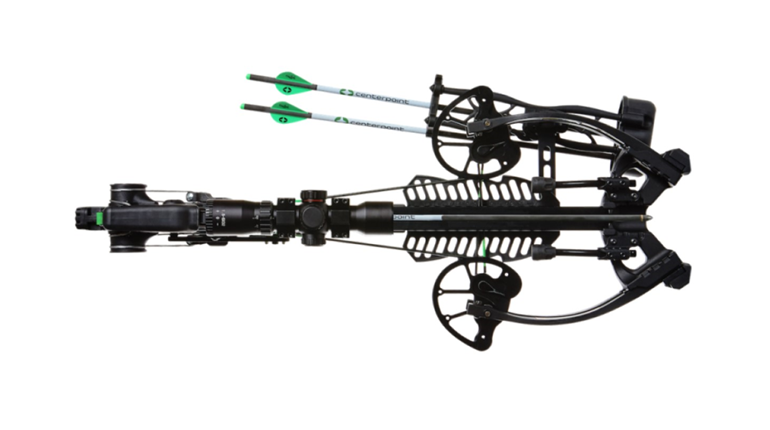
Crossbows follow one of two formats—conventional or reverse draw. Conventional-draw models have their risers attached to the end of the barrel and are drawn in a manner identical to a vertical bow. Reverse-draw crossbows have the riser affixed beneath the barrel, near the trigger/trigger guard, and are cocked in a direction reverse of their “conventional” counterparts. Each design has pros and cons.
Positioning the riser near the shooter greatly benefits the shooter. First, it places the at-rest position of the string near the end of the barrel for a longer power stroke without increasing the crossbow’s overall length. This is why reverse-draw models oftentimes have longer power stroke lengths than conventional-draw crossbows despite similar or shorter overall lengths. Why power stroke is important is covered the subsequent section.
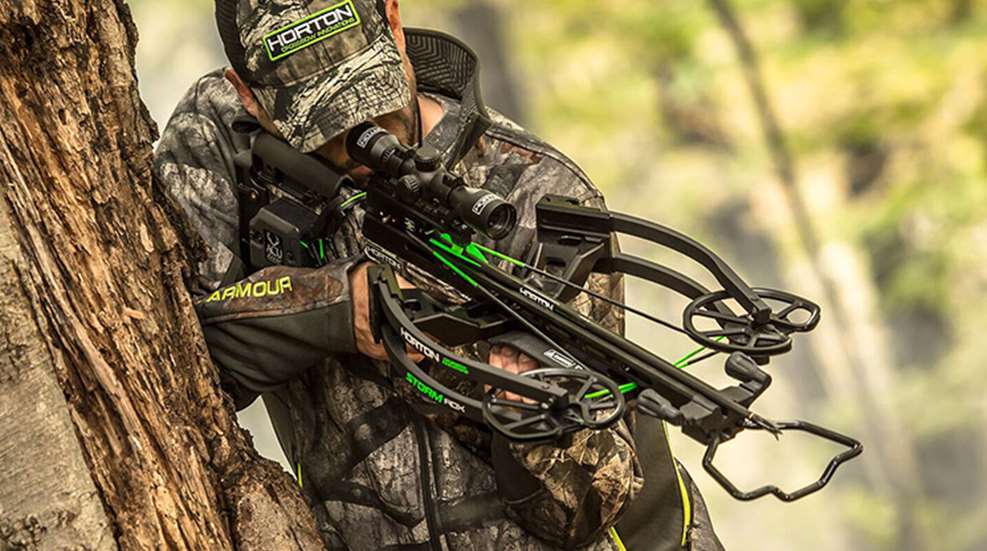
Secondly, with the weightiest portion of the crossbow (i.e. the receiver) near the shooter’s body, reverse-draw crossbows have a better balance than conventional-draw models. This is beneficial for freehand shooting. Moreover, the parallel limbs associated with this design reduce the axel-to-axel (ATA) length. Both treestand and ground blind hunters will find its smaller footprint helpful. It also affords easier maneuvering and transport. But, reverse-draw crossbows do have downfalls; they are typically heavier and pricier than conventional-draw models.
Because the string’s at-rest position is well shy of the end of the barrel of a conventional-draw crossbow, there’s much lost potential power than must be accounted for elsewhere, such as the limbs, cams, power stroke, draw weight and/or some combination thereof. Concerning the latter, cocking aids, such as TenPoint’s AcuDraw, alleviate the burden of the extra draw poundage. Also consider that, as the ATA lessens the crossbow’s poundage increases—especially in options with recurve-style limbs. For example, Excalibur’s Micro 335, which has a scant 10” power stroke and 25” ATA width, yet still attains 335 f.p.s. with a 350-gr. bolt, has an impressive 270-lb. draw weight. That’s about 100 lbs. more than most crossbows. But, using Excalibur’s rope cocking aid reduces the difficulty immensely. In general, ATA lengths will be slightly longer on a conventional-style crossbow.
Attaching the riser to the end of the barrel of a crossbow changes its balance; holding a conventional-draw model instantly reveals its forward-heavy feel. Does this affect performance? It would for free-hand shots, where the shooter could experience accuracy-affecting fatigue. That being said, most conventional-draw crossbows are lighter in weight than reverse-draw ones—thereby easing transport—and often cost considerably less.
Power Stroke
Power stroke is simply the measurement from the string’s at-rest point to its cocked position. Displayed in inches, it’s a good indicator as to the bow’s velocity; in general, the lengthier the power stroke the faster the bow. However, know that it’s one part of an interrelated system, as cam and limb design and draw weight affect the speed, too. As such, don’t select a crossbow solely on this measurement; instead, take into account its velocity, draw weight, dimensions, etc. (i.e. the total package). Also, before selecting a crossbow ensure that it’s legal for use where you intend to hunt. Some states and Canadian provinces have minimal draw (or power stroke) lengths in addition to minimums/maximums for draw weight and bolt length.
Safety
Safeties on crossbows fall into two categories—automatic and manual. The difference between the two is obvious; one automatically engages when the crossbow is cocked, while the other requires human interaction. Some crossbow enthusiasts decry anything but the automatic safety; however, a manual safety is no different than those on a firearm. Do you load a gun and not engage the safety? No. Same action applies with crossbows. Additionally, all safeties should be visually checked frequently to ensure that they’re engaged.
Be sure that your crossbow has an anti-dry-fire feature that requires a bolt to be loaded before it can be fired. Dry-firing a high-performance crossbow is a sure way to damage it. Similarly, ensure that there’s a measure (i.e. guard, extra-wide fore-end, etc.) that prevents fingers from reaching the path of the forward-moving string. Given the hefty draw weights of modern crossbows, at a minimum fingers will be broken if they are in the string’s pathway.
Stock
Each company has its own unique stock design. Keep in mind that comfort and functionality trump aesthetics. If possible, hold the crossbow and see how it feels. I prefer a stock with a wide fore-end and a palm-filling pistol grip. Pick something that fits your preferences. Keep in mind that, as season progresses, the bulkier clothing you’ll be wearing. This will affect length of pull. A multi-position, “tactical”-style stock is a good choice because as your layers become thicker you can quickly and easily lessen the length of pull.
Bolts/Nocks
Before swiping that credit or debit card, consider the type of nock that your crossbow requires. Of the four types—flat, half-moon, capture, and Omni—of nocks, the first two are the most prevalent; however, that’s changing somewhat as more radical crossbow designs require alterations to nocks. That’s the very reason for the existence of TenPoint’s Omni-Nock. Whereas bolts with equipped with flat and half-moon nocks are available from both crossbow manufacturers and aftermarket sources, such as Cabela’s, capture- and Omni-Nock-equipped bolts are available primarily from Parker and TenPoint, respectively.
Price
Undoubtedly, price will arise as a prime consideration when purchasing a crossbow. As with most things, you get what you pay for when purchasing a crossbow; however, some great models can be had in the sub-$600 range. These won’t be reverse-draw crossbows—which start around $850—but perfectly functional models nonetheless. More important than price, though, is fit and features. As with a firearm, the crossbow needs to feel comfortable in the hands and offer performance that meets your expectations, such as for velocity. Once that is decided, then you can begin looking for the features that help achieve said performance. Buy the best that you can afford.
Now that you have starting point in selecting a new crossbow, it’s time to begin the search. Remember, hunting season starts soon. Don’t procrastinate.