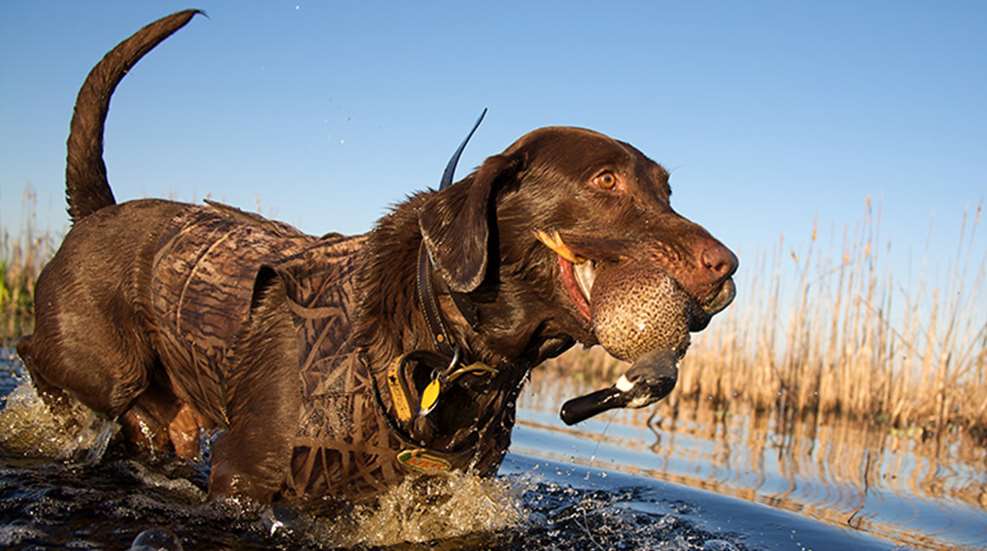
Stay. Fetch. Here. If your retriever can obey those three basic commands, you’ve got a winner and you’re way ahead of the pack. A dog that turns on the whistle, takes hand signals and executes triple blinds to perfection is a beautiful thing, but in my long decades of waterfowling I’ve seen precious few master this outside of field trials.
It’s not the dog’s fault.
The simple truth is too many hunters are too wrapped up in the fun of the hunt to pay full attention to dog handling. So the following advice is directed more toward you and me than our retrievers.
The smart waterfowler hits the field with half a mind to hunt, half a mind to handle his dog. (Do what I write here, not what I do.) Adopt this approach for the first season or two, and you’ll have plenty of chances to hunt more and handle less over the next eight. But let a young dog get away with cutting corners, and you can expect more of the same for the rest of his days.
Concentrate on the basics and insist Dog execute them. Nip in the bud all the pacing, twirling, whining and barking—even if it means you leave your gun unloaded while your buddies get all the shooting. Someone has to be the responsible for half of the team, and it’s not likely to be an 18-month-old golden.
There are some rewards that are more immediate than a well-behaved older dog. You’ll get to stay in the blind and handle Pup while your buddies are setting and wrapping up the decoys. This will teach him to sit calmly and stay. If he starts fidgeting and whining, stop him. It helps if you sit calmly and quietly yourself. Exude calm. Put your hand on fur if necessary, and comfort your charge. As you see success, begin moving away from the blind, carefully watching to make sure Dog stays and remains calm.
It may not be time to start splashing and throwing decoys yet; that will come when Pup displays consistent steadiness and ability to sit calmly. When she does, start by gently tossing a decoy or two from inside the blind. Gradually work your way out, always insisting Pup stays on her station. Reward her for obeying the sit-stay command. There’s nothing wrong with a small chunk of hotdog as reward. That’s better than aggressive petting and loud verbal praise, which could only serve to rile Dog up. Calm and steady wins this race.
When the action starts, Pup will sense the tension. Here again you must restrain him. By all means allow and even encourage him to watch flying birds and mark their fall, but don’t let him rise, whine or bark. Observing calmly is his job. Let your partners do the calling and even most of the shooting. This, too, could excite Pup and cause him to bolt. Sit. Stay. Watch the sky. Don’t whine.
As things progress, you’ll want to blow your call, but always do it while watching Pup’s actions. Try raising your empty gun as if to shoot, but keep your eye on Pup. Control him as necessary. Allowing him to cheat at this stage will cost you down the road.
Now for the retrieve. This may be where most of us screw up. We get a duck down and we’re as excited as any new pup. We want not only to get and see that bird, but we want our dog to do what we hired her to do—fetch.
Be careful. Too much retrieving can actually ruin a dog. She will become so fixated on getting every bird that she loses control. This is particularly bad in a blind where several hunters might drop multiple ducks at once. You’ve probably seen this in dogs that splash from the blind every time a shot is fired, duck or no duck. They swim and circle and resist returning because, by golly, they’re going to find that bird!
Your job with a new recruit is to teach her that a bird isn’t always there. She should only be allowed to leave the blind to retrieve when you command it. So set up that first shot, fall, splash and retrieve for perfection. Have one buddy take the bird with one shot while you control Dog. Let her see the hit and fall if possible. Then give her several seconds to remember who’s in charge before launching her. She must realize that she goes on your command, not when her instincts tell her. As she retrieves, watch carefully and voice control only if necessary, but make sure she returns promptly without dallying or making an extra pass around the decoys. Go through the entire retrieve-sit-hold-drop sequence. Calmly praise and reward her, and let her rest contentedly for at least a minute for the excitement to die down before shooting again.
A season or two of such controlled training does wonders for building a retriever that performs not only in the yard in the offseason, but also in the waterfowler’s world during the real season. Stay. Fetch. Here. Good dog!