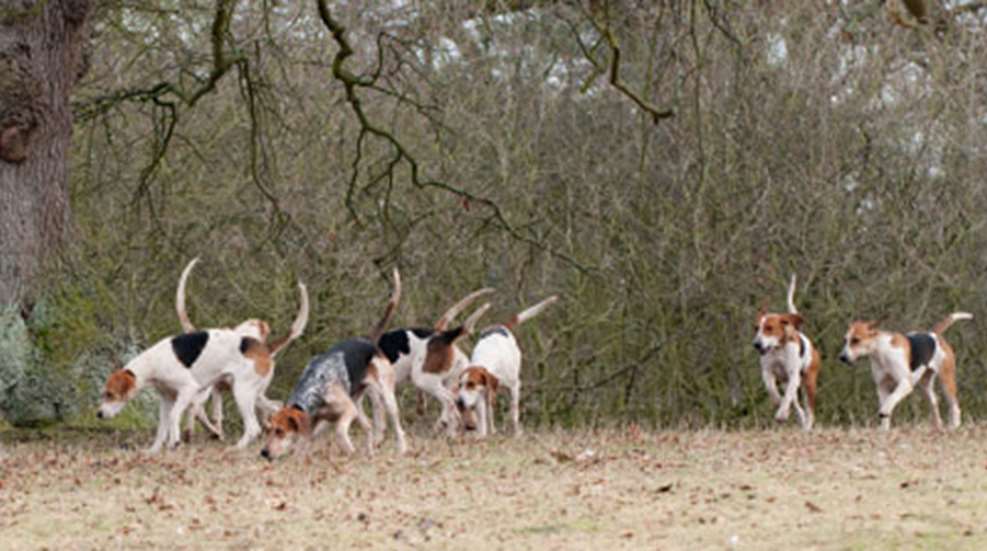
The hounds bounce out of the box and dive into the woods, noses on the ground searching for the first whiff of prey. In moments, they’re out of sight in the early morning gloom as their handler patiently waits to see what direction they’re going to head.
Soon, a dog sounds off with its mournful cry signaling that he or she is on a scent. Another dog quickly lets go with short, choppy barks saying it too likes the scent it has found. Suddenly, the dogs take off, howling their joy of the chase to the world.
“They’ve got ‘em up. Sounds like they’re heading north,” comes over the CB radio mounted in the truck. “Somebody get around there and cut em’ off,” is the reply.
Trucks roar to life as hunters rush to get in front of the dogs to see what they’re chasing.
This isn’t some prison-break movie, or all-out man hunt. This is the Saturday before Thanksgiving. One of the most anticipated days of the year in the Magnolia State—practically a sacred holiday—it’s the opening day of Mississippi’s deer dog season.
Nine Southern states allow hunters to chase deer with dogs. While each state has different rules and traditions regulating deer dogging, the principal remains the same in each: The dogs push deer to waiting hunters.
In Mississippi, as in some other states, deer dogging is the most popular form of deer hunting because of its adrenaline charged atmosphere. Hunters love to hear the dogs chase their prey. They like racing around to get in front of the dogs, and saying “that’s my Jake dog leading the pack. I know his bark.”
Of course, dog hunting traditions among the Southern states differ as much as the food. In Mississippi, hunters use trucks, ATVs and CB radios to move with the dogs on backcountry and logging roads, trying to catch deer as they cross from one patch of woods to another. In South Carolina, deer dogging is similar to a highly organized drive where hunters are placed in stand locations, usually by lottery, while handlers turn loose the dogs in predetermined areas.
Both styles of deer dogging have advantages and disadvantages, and proponents of each proclaim their way as the best way to chase deer. While both ways are effective and rooted in traditions, there is no certain way to hunt deer with dogs. As with most forms of hunting, it’s a case of each to their own.
The Good, the Bad and the Fun
Deer dogging got its start because it’s an effective and fun way to hunt the thick pine plantations of the South, and over the years, it has been passed down from parent to child.
“I inherited hunting with dogs from my father and grandfather,” said Van McWhirter, president of Toxish Hunting Club in Pontotoc, Miss. “We mostly hunted birds and small game back then. Later I hunted fox and then deer with dogs after the population came around in the 60s.”
Deer dogging is as much about the dogs as it is the hunting. It’s about the excitement of hearing a good pack of dogs and having fun with people.
“I like to hear the dogs run,” McWhirter said. “The sound of dogs coming through the trees and knowing they’re yours is just a thrill.”
Deer dogging is a social sport. Dog hunters don’t have to sit alone for hours in a deer stand. Instead, they are interacting with other hunters through CB radios or while driving around the hunting lease. Often they gather for lunch to talk over the day’s activities and decide where they are going to let out the dogs for another race, making it a great way to introduce newcomers to hunting, especially children. The elements aren’t quite the challenge when there is a truck cab with a heater and tasty snacks just a short distance away. Also, it’s easy to bring books, magazines or even video games to keep young people occupied when nothing is happening. And it’s a good place to answer questions about hunting, conservation and life since talking in sparse whispers isn’t mandatory.
It’s this social aspect of deer dogging that contributes to its popularity, but it has also generated its greatest complaints. Deer dogging is highly visible to others, including non-hunters. Dogs often bypass hunters and encroach onto other people’s property or near roads, which forces hunters outward to catch their dogs. Many property owners don’t appreciate dogs running their land, especially if they are managing their property for wildlife. Thus wildlife agencies and state legislatures are fielding complaints.
Landowners charge that dog hunters ignore property lines, damage private property and disregard safety rules. Deer dogging advocates counter that dogs can’t read posted signs and that hunters are just trying to catch their dogs. Hunters also say that deer dogging is a time-honored tradition, and that outsiders are trying to change something they don’t understand.
There have accusations by both sides of property damage and retaliation. This puts public officials, especially game wardens, in the middle of a hot-button issue. Most of the time, game wardens must witness a violation to issue a citation. This makes it an issue of one person’s word against another’s.
“Even though they try, often game wardens’ hands are tied,” said Louis Cole, Alabama Conservation Advisory board member.
However, as complaints have risen, legislatures and wildlife agencies have changed rules regarding the use of dogs to hunt deer. Georgia requires dog hunters to have at least 1,000 acres to run dogs, while other states such as Florida and North Carolina allow dogs for deer hunting only in certain parts of the state.
Alabama is another prime example. For years, complaints about deer dogging flooded Alabama’s Conservation Advisory Board, which prompted the board to ban deer dogging in six counties and implement a permit system in five other counties. In the permit counties, deer dogging groups can only run dogs if they’re willing to keep their dogs off of other people’s property. Each time a dog is found on another’s property the group is issued a warning citation. Multiple violations result in a withdrawal of the permit and the end of that group’s deer dogging.
According to Coles, the permit system seems to be working. “Dog hunters in Alabama are making a concentrated effort to regulate themselves. They’ve realized that they have to work with their neighbors if they want to continue their sport.”
While numbers suggest deer dogging may be dropping in popularity, there is still a strong group of advocates promoting this sport. They do it because they love it, and because it’s a tradition that dates to George Washington.
Keep Your Dogging Clean
• Get to know the local landowners and let them know your group is made up of responsible hunters.
• Get to know your game wardens. Let them know you’ll help them any way you can.
• Enforce state game laws among your group.
• Make sure everyone in your hunting party understands that property rights and safety can’t be compromised.