Few sounds are more synonymous with spring than the gobble of a wild turkey. Like a dinner bell signaling “soup’s on,” this call of the wild says “let the games begin” as hunters anticipate matching wits with North America’s largest, most elusive game bird.
The crafty wild turkey is first runner-up to the bald eagle as America’s national bird. Prized for its keen senses and fabled intelligence, it can reach 30 pounds or more with a wingspan pushing 5½ feet. The ancestor of the domesticated turkey, it is native to North America and separated into five subspecies based on regional adaptations. It is the only poultry species native to the Western Hemisphere and one of only two turkey species worldwide. The second, the Ocellated (Meleagris ocellata) of Central America, is significantly more ornate.
Native Americans hunted turkeys as early as 2000 B.c. They used wing bones to make calls, spurs to make arrowheads and feathers to stabilize arrows and adorn clothing. In the 1900s, overhunting and habitat loss impacted populations. By the 1930s only 30,000 birds remained, spurring reintroduction and management efforts that were so successful turkeys now live outside their original ranges—including Hawaii, Europe and New Zealand—and number more than 7 million.
Turkeys have excellent hearing and a 270-degree field of vision detects movement out to 100 yards. They can fly 55 mph for short distances and run 20 mph.
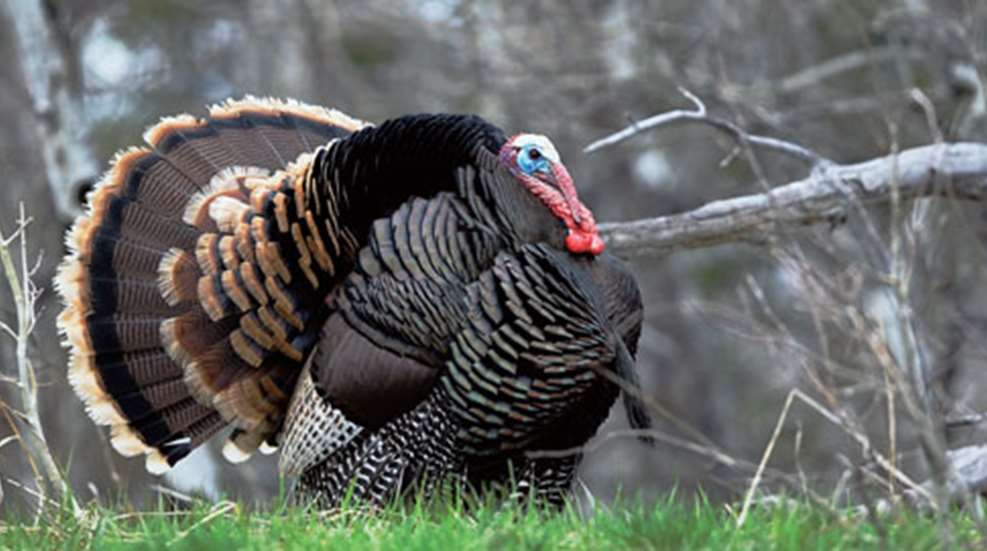
Mature males, called toms or gobblers, have caruncles (skin folds) on their heads, snoods, wattles, fan-shaped tails, spurs and beards often exceeding 10 inches. While both sexes have button-like spurs on their scaly legs, males’ spurs begin growing after birth compared to 10 to 20 percent of hens.’ Spurs can exceed 1½ inches and are used to fight predators and other toms when breeding. Toms have iridescent feathers from purplish-red to green, copper, bronze and gold. Hens are brown or gray and typically do not grow beards.
Turkeys thrive in hardwood forests, pastures, grasslands and swamps. They roost in trees, take dust baths to clean their feathers and forage for food by scratching the ground. In spring and summer, they search fields for insects. In fall and winter, they feed on acorns, tree fruits and grains.
Turkeys communicate through sight and sound, conversing while feeding, when separated or to signal danger. The most brazen communication is a tom’s gobble—a distinct, high-pitched ring that may echo a mile away. Toms gobble mostly in breeding season to challenge other toms, attract hens or let off steam. Hens make clucking and yelping sounds.
A flock’s social system involves a pecking order. Males and females have separate hierarchies. In summer a flock consists of a hen and its brood. By late summer/early fall, single-family flocks merge. Young males, or jakes, cause pecking-order unrest and leave to form separate flocks while gobblers and broodless hens form flocks of their own.
Same-sex flocks merge prior to breeding between February and April. Breeding is triggered by lengthened daylight, though temperature changes also impact activity. Breeding season is marked by two peak gobbling periods as males strut and drum to attract hens. Their heads turn red, white and blue as part of their showy courtship ritual. When a hen selects a gobbler for mating she crouches, signaling it to copulate.
As harems establish, gobbling wanes. Hens seek nesting sites and lay up to 12 eggs that they incubate for 28 days. Alone again, gobblers enter a second gobbling phase. For millions of hunters, it is the thrill of that chilling gobble—and the suspense that comes as a tom struts within range—that make turkey hunting an obsession.
Turkey Tibits
Key: Merriam's///Osceola///Rio Grande///Gould's///Oscellated///Eastern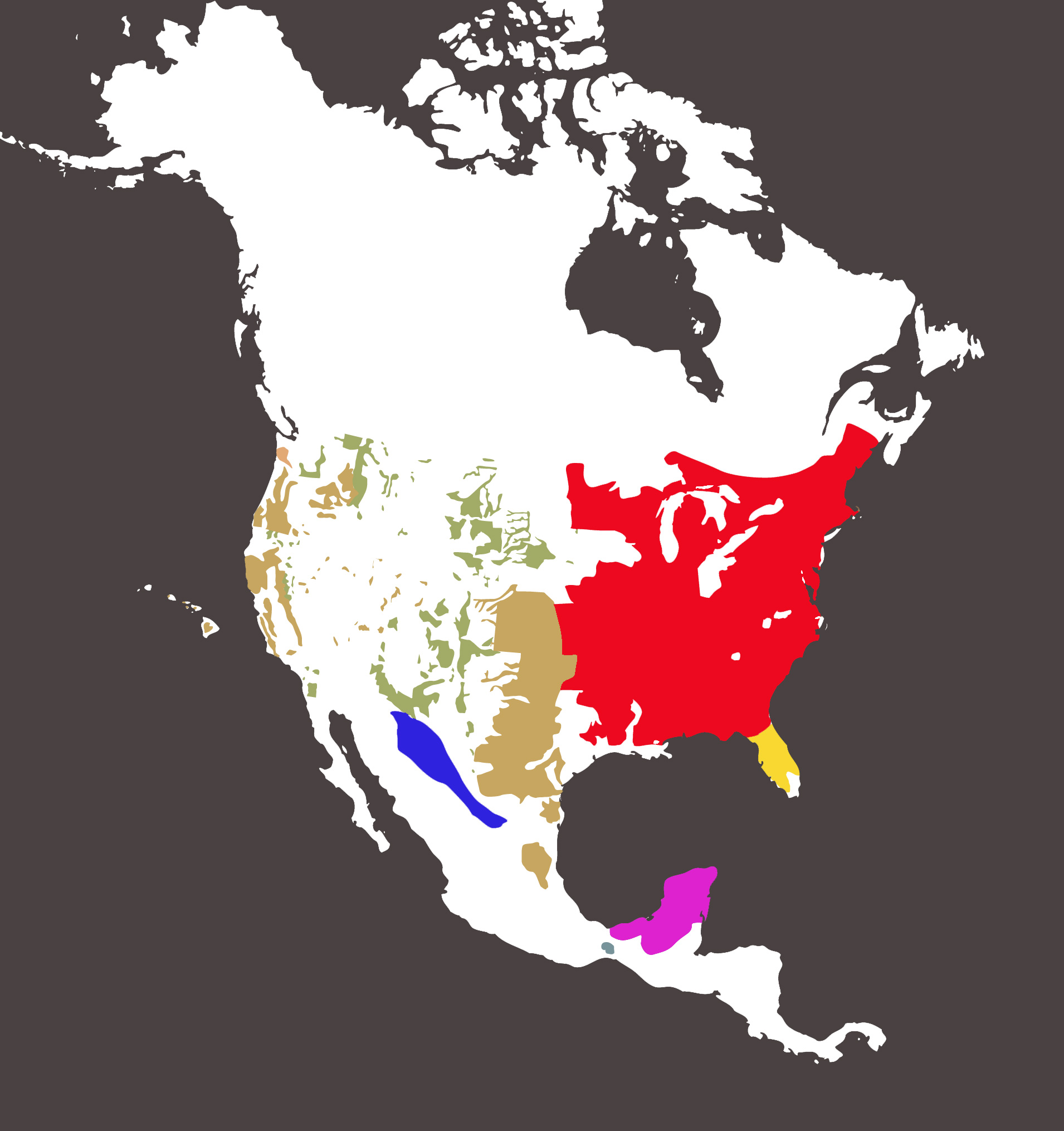 ■ Turkeys in fields near Air Force testing areas where the sound barrier was broken dropped dead from heart attacks from the shock of passing jets.
■ “Wild Turkey” whiskey got its name after distillery executive Thomas McCarthy took samples on a turkey hunt in 1940. Friends soon requested more of that “wild turkey whiskey.”
■ Pennsylvania has the most turkey hunters (369,000) nationwide. Tennessee has the highest proportion (36 percent) of turkey hunters per capita.
■ Many hunters once considered the pursuit of breeding gobblers to be too easy and perhaps even unfair. Pennsylvania closed its spring season in 1883 and did not reopen it until 1968—95 years later. In 2000 the tables turned, and the state’s number of spring hunters has exceeded fall numbers ever since.
■ According to the most recent U.S. Fish & Wildlife Service survey (2006), more than 2.5 million Americans ages 16 and older hunt the wild turkey.
A Bird of Courage
Congress debated for six years whether to choose the wild turkey or bald eagle for the national emblem. After the turkey lost, Benjamin Franklin wrote this to his daughter, Sarah Bache, on Jan. 26, 1784:
“… I wish the bald eagle had not been chosen the representative of our country. He is a bird of bad moral character. You may have seen him perched near the river where, too lazy to fish for himself, he watches the fishing hawk; and when that diligent bird has taken a fish for the support of his mate and young ones, the bald eagle takes it from him. For the truth is the turkey is a much more respectable bird, and a true original native of America. … He is, though a little vain and silly, a bird of courage, and would not hesitate to attack a Grenadier of the British Guards who should presume to invade his farmyard with a red coat on.”
But what would we eat for Thanksgiving had Ben Franklin gotten his way?