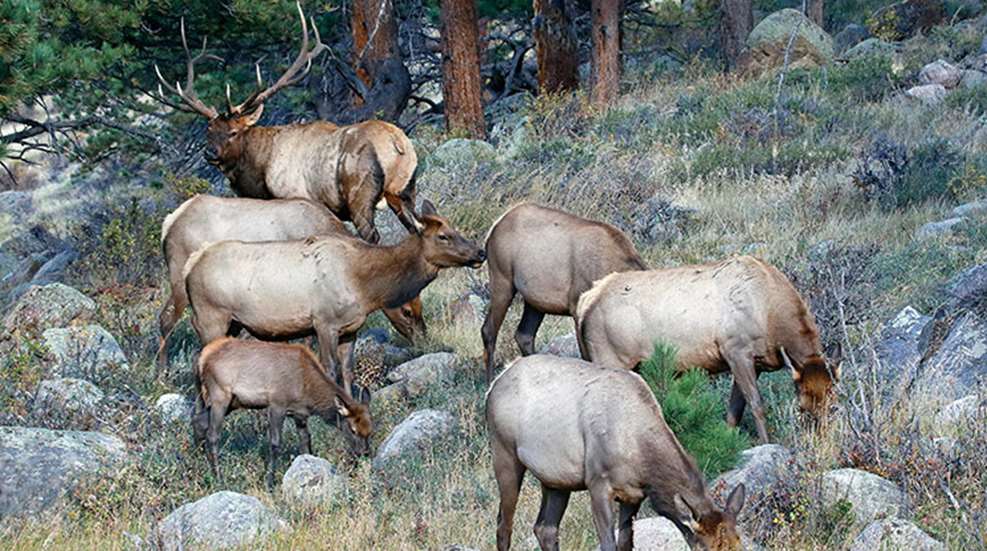
For years the NRA and SCI have pressed the National Park Service (NPS) to allow hunters to assist with culling ungulate overpopulations on national park lands only to have the agency dig in its heels in favor of using contract sharpshooters and federal personnel, partly to avoid battling the antis over allowing "hunting" within park boundaries. The NPS also claimed that using volunteer cullers would be illegal, as well as costly to manage. Under continued pressure by NRA and SCI to use citizen volunteers in culling operations, the NPS decided to conduct a study on the two national parks where citizen volunteers were used to assist in reducing elk populations:Rocky Mountain National Park (RMNP) in Colorado and Theodore Roosevelt National Park (TRNP) in North Dakota.So imagine the two groups’ pleasant surprise in March when the study report found that the use of hunter volunteers in culling operations on NPS units is legal, cost effective and a great idea.
"I started championing the use of hunters in national parks 10 or more years ago, if not longer," said NRA's Susan Recce, director of NRA-ILA's Conservation, Wildlife and Natural Resources, in addressing the NPS’ recent about-face. "I was delighted when Anna Seidman, director of litigation with SCI, and I joined forces. We have worked together in drafting joint as well as separate comments on a number of management plans addressing elk and whitetail deer overpopulations in national parks."
Getting the Ball Rolling
NRA’s Recce and SCI’s Seidman attended numerous meetings with the NPS director and other officials to argue for hunters-as-volunteers programs. Additionally, SCI submitted legal briefs supporting the program's legality and refuted arguments about the strategy's alleged problems. Thanks to their persistence, in the mid 2000s then Department of the Interior Secretary Dirk Kempthorne directed that NPS consider using hunters to control elk overpopulation in the RMNP.When the final plan was released announcing the option of using volunteer hunters for the culling operation, the NPS was sued by environmental and anti-hunting groups claiming that the agency instead should have considered the reintroduction of wolves and that using volunteers in culling operations was in essence hunting, which is prohibited in the national park. SCI joined the case as an intervenor to defend the use of hunters as agents. The district court rejected the challenge, and the Tenth Circuit Court of Appeals affirmed that using hunters did not qualify as hunting and did not violate the RMNP’s enabling law or the National Park Service Organic Act.
Given the successful implementation of the elk management plan in the RMNP, the NPS repeated the use of hunter volunteers in the elk management plan for the TRNP, also with great success. However, that is where the NPS drew the line. In spite of the comments that Recce and Seidman submitted recommending the use of volunteers to reduce burgeoning deer populations on national parks in the eastern United States, such as in Civil War National Battlefield Parks, the NPS rejected the idea claiming that because of smaller acreage and denser human populations, it was not safe to use citizen volunteers. In addition, staff members of NPS were suggesting loudly behind the scenes that using volunteers was more expensive than using NPS personnel or contractors.
Partnering Pays Off
Despite the NPS' long-standing position against using volunteers, the March 2016 report on the RMNP and TRNP elk reductions lauds the use of volunteers as “cost effective” and “potentially applicable to other overabundant ungulate situations within the National Park System,” including for eastern whitetail deer reduction. In addition to the economic benefits, the report says that despite initial reservations, both parks’ personnel considered the volunteers as valuable assets, ultimately finding they were their most vocal supporters. They provided positive feedback to the media regarding the professionalism of both operations while providing valuable labor and a positive alternative to traditional hunting.
As noted in the report, one NPS staff member dubbed the volunteers “park ambassadors” while others commented on the many positive aspects of using “citizen wildlife managers. “At RMNP, many of the participants now volunteer for park projects other than culling operations.
Comments from SCI on the report state, "So, Dear NPS, we hate to say we told you so. . . . Oh wait--No, we don’t! Dear NPS: SCI and NRA told you so--and now you finally get it. Hunters are and will continue to be a valuable resource for wildlife management and conservation on and off National Park Service lands." It goes without saying that American hunters would not have this report--or its findings--without the NRA's involvement and leadership alongside SCI.
Looking to the Future
In further support of using hunters to manage national park game populations, on Mar. 22 Recce submitted comments on NPS' initial phase of development regarding a similar plan for bison management in the Grand Canyon National Park where the herd must be reduced. Of course, her comments focus on the NPS report and recommend that NPS use citizen volunteers. NPS still does not call them hunter volunteers, Recce explained, to avoid any accusation in regard to allowing traditional hunting in a national park. As with the elk culling operations, any citizen volunteers would not need to buy a hunting license or other permit as the program would not be a traditional hunting operation.
It goes without saying that American hunters would not have this report--or its findings--without the NRA's involvement and leadership alongside SCI.