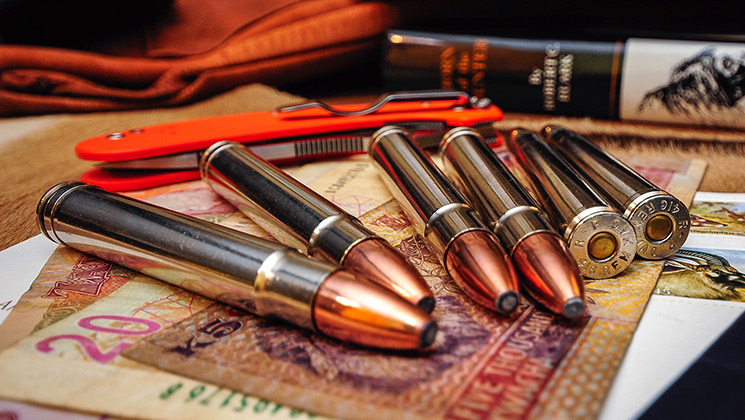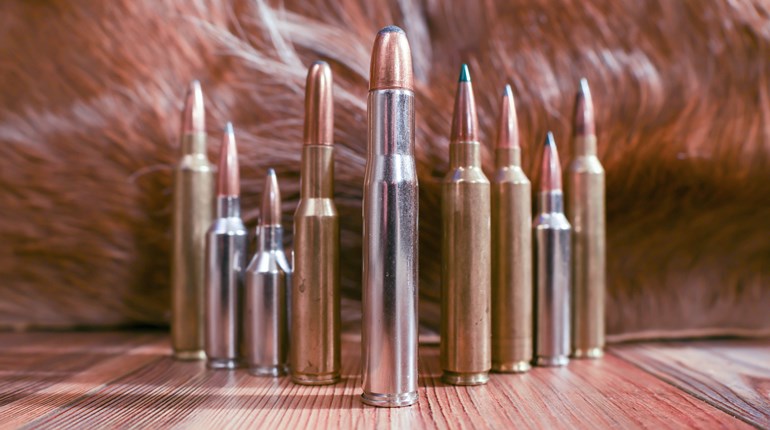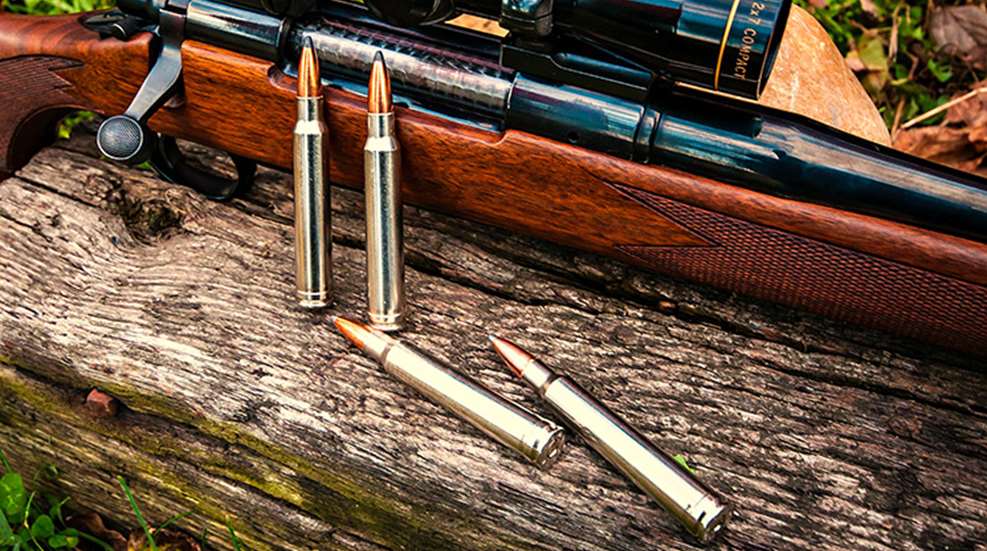
The word "Magnum," when used to describe a cartridge, is an oft-overused and misleading term, which can be confusing to a shooter or hunter when he or she is cartridge shopping. Magnum is a Latin word, meaning "a thing of a type, which is larger than normal." In our world of cartridges, it has come to mean a cartridge that exceeds the velocities of a previously accepted "standard" cartridge. For example, the .30-’06 Springfield quickly set the benchmark for .30 caliber cartridges in 1906, but when Holland & Holland developed its "Super .30" in 1925, it bettered the velocities of ’06 by 100-150 fps, and therefore was justifiably called the .300 Holland & Holland Magnum. The same can be said for the .375 Holland & Holland Belted Rimless Magnum, released in 1912. It improved on the velocities of the .400/.375 Nitro Express, and in that case the Magnum moniker was applicable. There have been many different rifle cartridges that have carried the Magnum title, some warranted, some not, and there are some cartridges that don’t have the word Magnum in their description, and really should, i.e. the .338 Lapua, .416 Rigby and .30 Nosler.
The name-game aside, there are some interesting points we should touch on, regarding magnum rifle cartridges, which might help you make a better-informed decision. I know some shooters who are immediately intimidated by a magnum cartridge, and shouldn’t be. Many of them are very user-friendly, if the level of recoil can be managed. The question, I suppose, is whether or not a magnum is needed for your style of hunting or shooting.
Let me start this off by saying that I use magnum cartridges as often as not, and I appreciate all of the aspects of both magnum and standard cartridges, and find each has its place. I also want to make clear that I’m not preaching in any way, just noting the differences, good and bad.
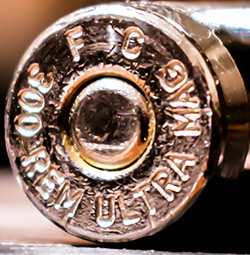 The decision to "go magnum" is a personal one; it depends on where and what you’re hunting. Let’s use .30-caliber as an example. I’d be willing to wager that three of the most popular .30-caliber hunting cartridges are the .308 Win., .30-’06 Sprg. and .300 Win. Mag. Personally, I love all three, and have used each of them all over the world, for a wide variety of game species. Let’s use the 180-grain bullet—popular for big game hunting—as our comparison bullet. Average velocities generated from the .308 Win. case is about 2,550 fps, while the ’06 will push it to 2,700 fps or so—perhaps a bit hotter in the high-performance loads. The .300 Win. Mag. standard 180-grain load runs at 2,950 fps; and that’s an impressive increase over either cartridge. Speaking in terms of trajectory and striking power, I’d like to use a 200-yard zero, and compare what’s going on at the muzzle and at the 300-yard mark. I’d also like to use a 180-grain bullet with a B.C. of 0.507 for demonstrative purposes. The .308 Win. produces just about 2,600 ft.-lbs of energy at the muzzle, and keeps 1,750 ft.-lbs at 300 yards, still moving at 2,100 fps or so, for 9.2” of drop from the 200-yard zero. The .30-’06 Sprg. gives 3,022 ft.-lbs. at the muzzle and hangs onto just about 2,000 ft.-lbs at the 300 yard mark, cruising at 2,236 fps, dropping 8” or so. The bigger .300 Win. Mag. gives a muzzle energy of 3,477 ft.-lbs, delivering 2,328 of them at 300 yards, while moving at 2,413 fps and dropping only 6.7”; you can easily see that it shows the advantages of higher muzzle velocity. At the 400-yard mark things change more radically. The .308 drops 26.3”, the ’06 drops 23.4”, but the .300 Win. Mag. only drops 18.9”; I realize the difference may seem minimal, but when you compound trajectory and wind drift, you'll see that the additional muzzle velocity comes in very handy.
But, at what cost? Surely, the piper must be paid, but in what form? The answer, foremost, is recoil. There is a definite increase in recoil between a .308 Win. and a .300 Win. Mag., and for some of us it may take some range work to tame the beast. In addition to this concept, there are other .300 Magnums that will push that same bullet as fast as 3,350 fps—a full 400 fps more than the .300 Win.—and will develop recoil much more severe than the .300 Win. Of course, on the up-side, the energy figures increase while the trajectories flatten out.
This is just an example, and you can draw the same correlation for 7mm caliber, as well as .338 and so on and so forth. The question remains: do you need a magnum-class cartridge, or will a standard cartridge suffice? I think it should be determined by the type of hunt you’re embarking on. If you hunt the draws and canyons of West Texas, or the open Kalahari of South Africa and Namibia, perhaps you'll enjoy the benefits of the faster cartridges. If—like Yours Truly—you spend most of your time within 200 yards of your target, you can see why a standard cartridge would serve you well. That said, I've used standard cartridges out to 400 yards, and I’ve used magnum cartridges at 50 yards. I love the .308 Win. for my local deer and bear hunting, and I also love the additional horsepower and flatter trajectory of my .300 Win. when hunting moose or caribou, where the shots get long.
I like to look at it this way: a magnum cartridge will work well—especially with a good, stiff premium bullet to fight premature bullet breakup –at close range, but if the shooting gets long, I personally prefer the added velocity. Additionally, when I know I’m hunting the local forests, where the shots don’t (usually) get out past 200 yards, I like the lesser recoil of the standard cartridges within a given caliber. I can—more often than not—see the impact of the bullet with a standard caliber, and they can easily be described as ‘sweet shooting.’ Like any self-respecting rifleman, I do firmly believe there is good cause to own both types of cartridge (please inform the wife/husband/significant-other that I said it’s okay to make the purchase), but were I forced to own just one, I’d ultimately opt for the rifle cartridge that was a combination of these two factors: the one that produced the highest velocity, and that which I could shoot accurately and confidently, without causing a flinch. It doesn’t matter how many ft.-lbs. of energy are generated or how well a cartridge bucks the crosswinds; if the shooter can’t place the shots accurately, it is all for naught.
With dangerous game on the menu, I see no issue with using a magnum cartridge, to deliver as much energy as you can to quickly and safely dispatch the animal. There are some dangerous game cartridges, like the .378 and .460 Wby., which may not make the list of "shooter-friendly" cartridges, but there are magnum choices with less recoil, like the good old .375 H&H Mag. and .416 Rem. Mag.
Take a good, long look at the trajectory, wind drift and energy charts for the different cartridges within the caliber you’re interested in, and see what works for you. If you can, see if you can wrangle an opportunity to shoot the larger cartridges before you buy one, to ensure the recoil isn’t beyond your personal limit. You may be surprised what you end up with in your hands.