Chronic wasting disease (CWD) awareness has spread across the nation causing most to be cognitive of its destructive nature to members of the deer family. CWD kills 100 percent of infected whitetails, mule deer, elk and moose. That noted, according to the CDC, there still are no connections between CWD and human infections. Whether you fear the CWD domino effect, state and provincial regulations are increasingly becoming more restrictive on traveling with portions of big game, including a rack attached to a skull or skull plate. That is unwelcome news for the cross-country hunter.
Everything hazardous about CWD rests in the brain, spinal cord, eyes, spleen, tonsils and lymph nodes. Fortunately, scientific research to date reports no cases of CWD infection in people. That noted, some primate-based research suggests that CWD poses a risk when those animals ate meat from CWD-infected animals or came in contact with brain or body fluids. Do not freak out yet, as more than 10 million hunters pursue deer annually with no connection to a human infection. That is a huge annual test group.
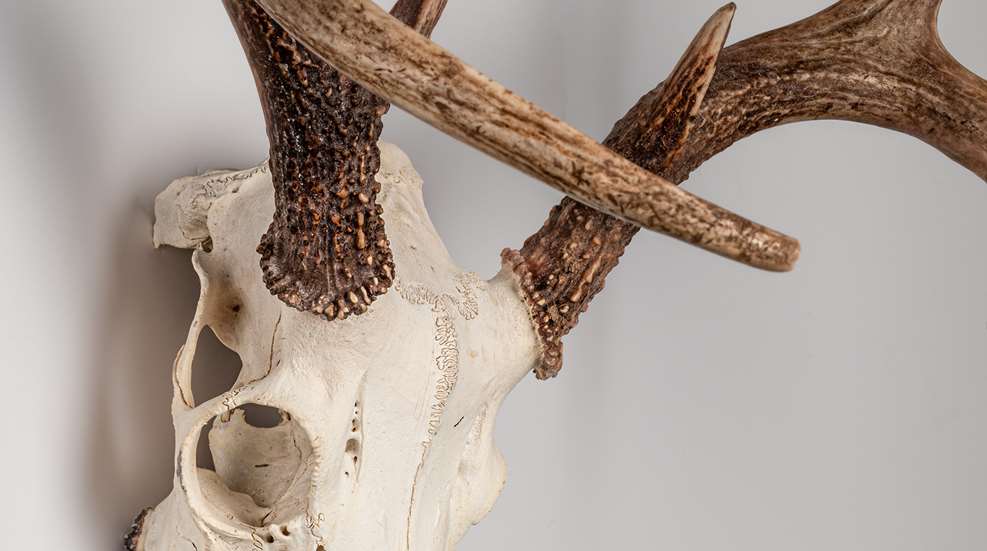
Scary news aside, take precautions and do a flawless job on your trophy before transportation. The skull or skull plate must be cleaned of all meat and brain tissue. It needs to look taxidermy quality clean or you could forfeit the trophy at a game check station. Study all rules and regulations for not only the area you are hunting, but also transportation directives for your destination. Be aware of where you can clean a skull and how to dispose of any additional meat byproducts of your work.
Possible, But Unlikely Options
Cleaning a skull or skull plate can be a horrendous job without insight and proper equipment. You have an easy out, but it will cost you. Drop it off at a taxidermist. That equals a bill totaling upwards of $200, or more, plus hassles of shipping. If you are a do-it-yourself type on a budget, then you must come up with a different plan. And since most hunters shoot an animal and begin thinking of departing soon after, the plan requires a hurried finale.
Efficiency conjures the use of dermestid beetles, a fan favorite of skull cleaner professionals near and far. Unfortunately, a colony of thousands of beetles is required to devour the meat from a deer skull. On average, it takes them approximately five days to complete the chore. Traveling with a beetle circus is impractical, and even if you do have an extra five days, you’ll need to find a beetle wrangler near your hunting camp.
Beetles aside, you do have two viable options. You can boil your skull and scrape off the softened meat, or you can use a pressure washer to blast the meat from the skull. One stinks and the other splatters, but both are easily completed in an afternoon of work, setting you soon on the homeward trail.
Skull Soup on the Menu
Boiling a skull is mistakenly describing the chore. Instead, you should simmer the skull since intense boiling could make a lighter-boned skull, like pronghorn or whitetail, fall apart. You will want to do this job outside or in a shop. Handling the task in a home could leave a retched smell and lead to never being invited back to hunt, or if at home, half of your belongings leaving in a U-Haul (that’s a joke).
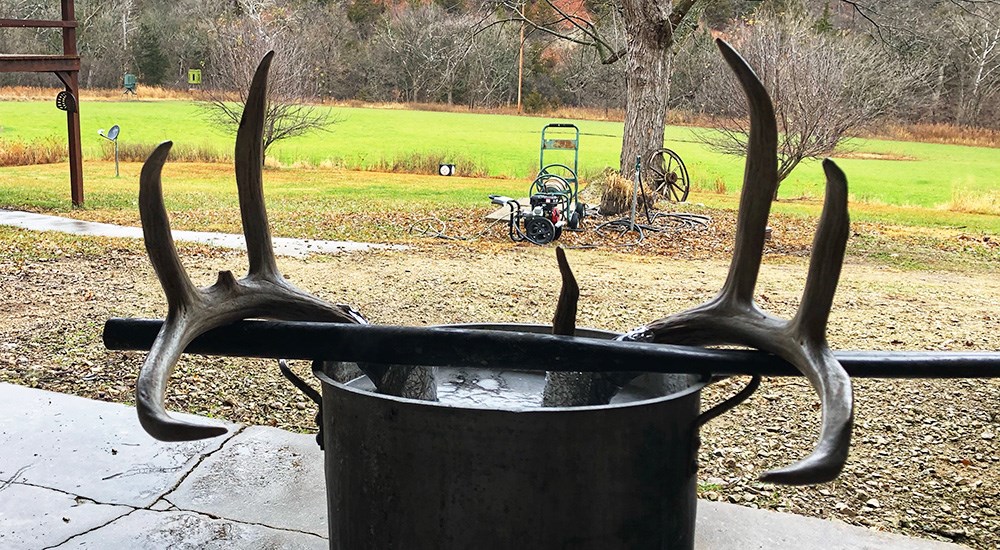
Find a large canning pot to hold your skull. The bottom third of a cut-off 55-gallon drum works to hold elk skulls. Bring it along. You may find an old stove available outside, but a propane heating element of your turkey fryer performs perfectly as a portable simmering heat source. Prior to simmering, don latex gloves and filet off all meat possible. Remove the eyeballs and jaw. Dispose of scraps as directed by officials.
Now fill the receptacle with just enough water to submerge the head and hardly any antler. Some add a splash of Dawn dish detergent as a degreasing agent. To protect the small portion of submerged antlers from losing color, wrap with clear plastic wrap or aluminum foil secured with packing, or duct tape.
Begin to simmer. Depending on the skull’s condition, the chore may take several hours. Occasionally remove the skull to flake meat away and scrape out any stubborn brain material. A sharp knife helps slice stubborn skin from below the antler burr and around the vertebrae connection area. After completion, the skull is ready for transport. You may wish to whiten, but that is easily completed at home.
Power-Wash Your Prize
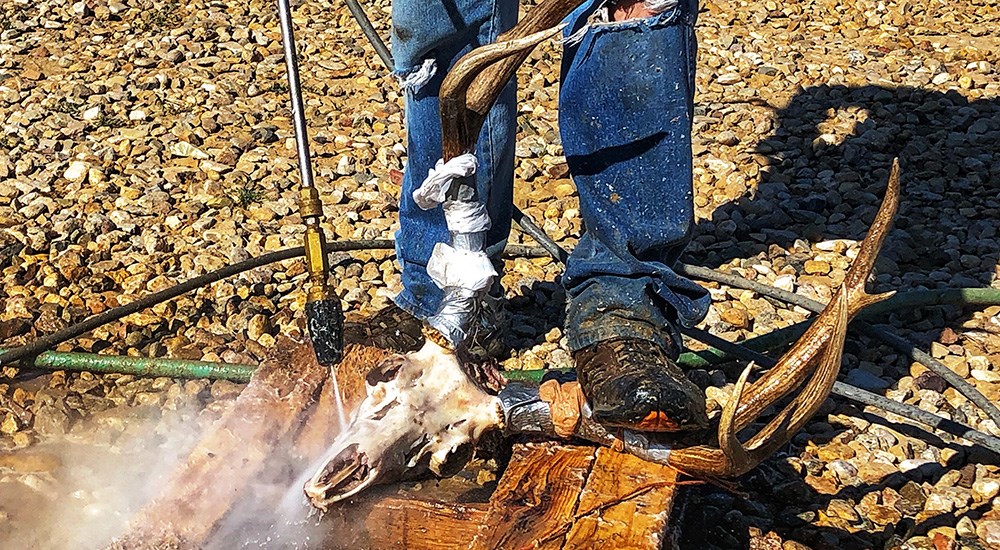
My preferred method of cleaning skulls for a decade utilizes a pressure washer. Save your debate breath. I am sold on the forceful power of the pulsating water that strips meat from a skull rapidly and efficiently. Machines rated for 3,000 psi or higher are best. Again, be cautious with more powerful models as they could blast through a pronghorn or whitetail skull. Test slowly and then increase the torrent.
Although a standard nozzle tip will work, a rotating pressure washer nozzle speeds the meat-stripping process exponentially. For even more efficiency, set up your simmering kitchen as outlined previously and protectively wrap the antler bases. Typically, an initial pressure washer treatment will remove 80 to 90 percent of meat. Letting the skull simmer in hot water splashed with Dawn detergent for an hour loosens any stubborn parts. Afterwards, a final blast of water will leave you with a glistening, clean skull.
As a note of caution, do not wear your pricey camouflage duds while meat blasting. Don old clothes, obsolete rain gear, rubber boots, latex gloves and eye protection to protect you from obvious splash-back. Keep the skull secure during the process by wiring it to a board or a fence. I set my skulls on an old pallet and the slats hold it in place as I rotate it occasionally to reach all sides.
The old days of tossing a deer, pronghorn or elk (I would like to see that) into a truck and heading for home are distant memories. Even so, with planning foresight, you can still achieve success and be homeward bound after a successful hunt with a few extra hours of game preparation.