Many American hunters firmly believe European optics are the finest in the world. Whether this is true can be debated, but a few years ago Cabela’s recognized this widespread notion by introducing its 10x42 Euro binocular, made in the Czech Republic by Meopta, a company not as well-known as some other European optics firms but with a long and successful history.
Meopta began in 1933 as Optikotechna in a town named Prerov in what was then Czechoslovakia.
At first Optikotechna specialized in photographic enlargers, but soon started making optical equipment for the Czechoslovakian military. During German occupation the firm was forced to make optics for the German army, and after the war changed its name to Meopta, branching out in many directions, including top-grade cameras and film projectors, as well as establishing the Institute for Development of Optics and Precision Mechanics. In the 1970s Meopta made military optics for Warsaw Pact countries, and as the Cold War wound down started producing riflescopes for the civilian hunting market. Eventually it also supplied parts and complete optics for other firms, including some better-known than Meopta.
In 2005 Cabela’s approached Meopta about producing a high-grade binocular, and the Cabela’s Euro 10x42 quickly gained a reputation for both optical quality and ruggedness. I’ve hunted with a Euro for years now, and it’s not only still in perfect collimation despite being bounced around various parts of the world’s landscape, but has served as a control glass for many tests of other binoculars: If any binocular is better than my Euro, then it’s pretty darn good.
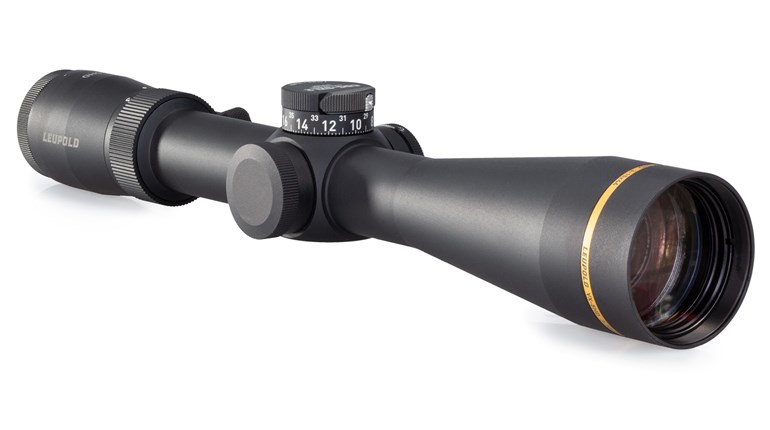
The binocular sold so well that in 2009 Cabela’s approached Meopta about making an American-style riflescope. Cabela’s had already entered the scope market with various lower-priced models, but wanted some top-end scopes as well. Meopta’s own scopes, relatively large and heavy, with 30 mm tubes, were designed for the European market. Instead Cabela’s wanted lighter 1-inch-tubed scopes, and Meopta complied with 3x-9x, 4x-12x and 6x-18x models.
In 2011 Cabela’s requested an upgrade of the Euro binocular with extra-low dispersion (ED) glass. I started field-testing one in September 2012, the beginning of the fall hunting season here in Montana, and found it a definite improvement over the older model, even in full daylight, which reduces apparent differences between binoculars. Not only was the ED version sharper and brighter, but colors also “popped” more.
In fact, in daylight testing I couldn’t see much appreciable difference between the Euro ED and my 10x42 Swarovski EL. The view through both was flat and sharp, with the only slight advantage going to the Swarovski at the very edge of the field. In a twilight test the Euro ED didn’t quite match the Swarovski EL, but the performance is so close the Euro is a real bargain. The Cabela’s price of the Euro ED is $999, $200 more than the still available original model, while the Swarovski 10x42 ED retails for around $2,500.
The Euro ED differs slightly from the original in other ways. The rubber armor is basically the same ergonomic shape, with shallow slots on the underside for your thumbs, but is a forest green rather than olive. The ED model weighs 31 ounces, a couple ounces more than the old. The new model is just as tough.
The first tests of the 3x-9x-42 mm Euro riflescope took place informally on my range in Montana and during a javelina/pig hunt on the King Ranch in South Texas. The scope was mounted on a Cabela’s Super Grade Lightweight Winchester Model 70 .257 Roberts. The very firm quarter-inch clicks did exactly what they were supposed to, making sighting-in easy—and the rifle was still sighted-in after riding on two planes to Texas.
Javelina were abundant, but due to recent heavy rain and the resulting tall grass, pigs were harder to find. I finally took a black boar at 105 yards in what many Texans would call “slap dark,” close to an hour after sunset. With the scope set on 6x there was no difficulty in placing the plex reticle just behind the boar’s shoulder, and the pig dropped right there.
To test recoil resistance I mounted the 3X-9x on my Heym SR-21 .300 Winchester Magnum and shot the square. Once again the adjustments made sighting-in easy, and the square resulted in four groups under .75 inch, right where they were supposed to go. In fact, the adjustments proved as reliable as I’ve found on scopes of any price.
After freezing the scope overnight, I dunked it in a sink full of warm water without the turret caps. It didn’t leak at all, and showed only a brief period of the normal interior fogging. (It’s not possible to keep all moisture out of a riflescope after it leaves the factory, but in a well-sealed scoped it remains minimal.) The advertised eye relief is 3.75 inches. A flashlight test showed relief of exactly that at 3x, 3.5 inches at 6x and 3.2 inches at 9x.
My brightness testing is done at night on a black-and-white chart illuminated from 25 yards by a 100-watt bulb, with all scopes set on 6x. The chart’s top line is 1 inch wide, and the lines become progressively narrower, with a 1/16-inch line at the bottom. So far all scopes have tested between 5 and 8, with the 8’s having retail prices over $1,000. The average score for multi-coated scopes is 6, but the Euro tested 7, as high as any scope in the $500 price range has tested. No wonder it was easy to aim at a black pig in near darkness.
Both the Cabela’s Euro binocular and scope proved to be real bargains in today’s optics market.
10x42 Euro Binocular
Type: roof-prism binocular
Magnification: 10x
Objective Lens Diameter: 42 mm
Focusing Range: 2 meters-infinity
Eye Relief: 3.75 @ 3X; 3.2 @ 9X
Exit Pupil: 4.2 mm
Field of View @ 1,000 yds: 330'
Coatings: fully multi-coated, phase-corrected roof prisms
Dimensions: length 5.5"; weight 31 ozs.
Construction: aluminum alloy, rubber armor
Accessories: wool case, lens covers, neck strap
MSRP: $999