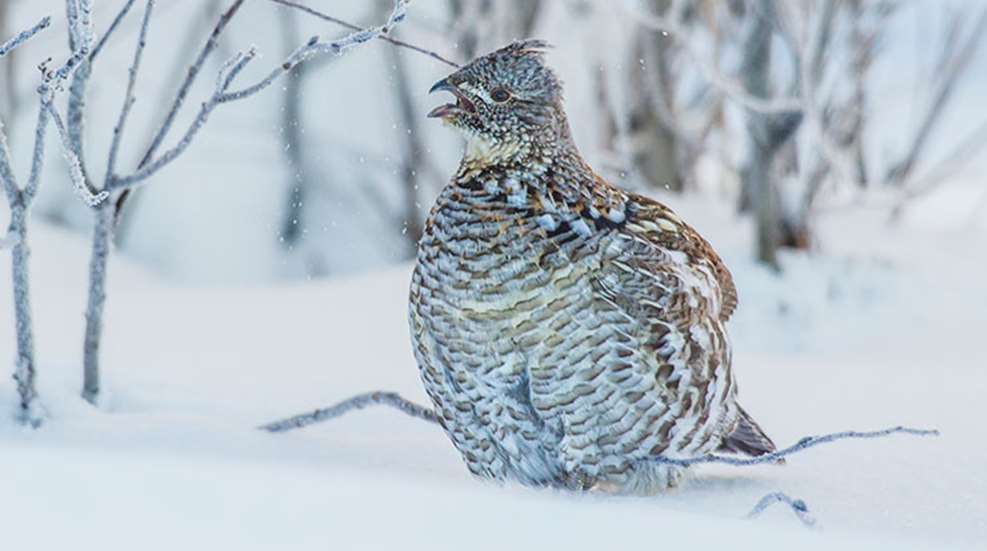
In fresh-fallen snow there is nothing like following, fully expecting an explosion of wings, the little, meandering, chicken-like tracks of a ruffed grouse. You can find them now. By January the amount of cover is substantially reduced, making it easier to see flushes and locate grouse. The downside is many of the young, naïve birds are gone. My method for getting ruffed grouse in winter is quiet and tactical.
Still-Hunt: Typically in the winter, grouse target the dormant buds or catkins of trees such as those on aspens, birches, ironwood, cherries, apples and filberts. As you target these places, the key is to slip up close enough to grouse that they will flush in range. The best time is when you have wet leaves or soft snow. If you have a dog, it needs to stay close even though the cover is often much more open than it was a few months ago.
Push to the Edges: In my region, the Catskills, grouse in winter are often in or near mountain laurel thickets. These can be too thick to wade into hoping for a shot. It is best to move slowly and quietly just inside the edge where you can still see into the open woods to shoot. The grouse will be feeding along the edges, and into the aspen and other trees. You need to flush them in that direction. Ideally, the sun will be behind you. If you have a hunting partner, take turns having someone go in deeper as the other stays closer to the edge of likely cover. This might prevent birds from running into the cover ahead of you.
Get to Know Birds: Ruffed grouse can have surprisingly small home ranges. They will move as cover and food sources change, but in any given period they typically call less than 20 acres home. So mark your flushes and remember the direction the grouse chose to fly. Next time, could you approach from a different direction to make the bird flush in a way that’ll give you a shot? You’ll often find a bird in the same approximate spot two or three times in a row. Each time, you have a chance to improve your odds.