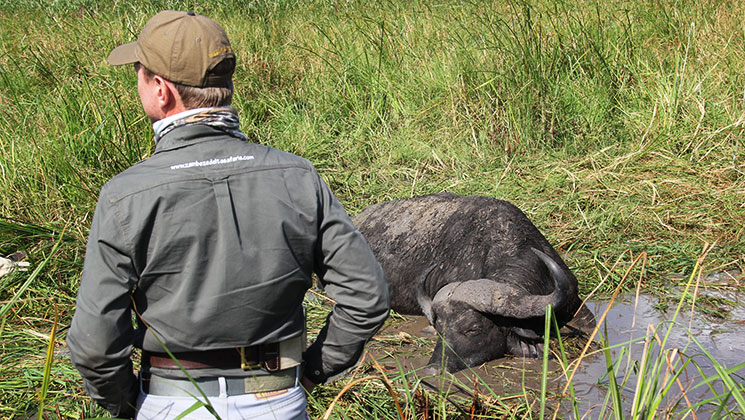
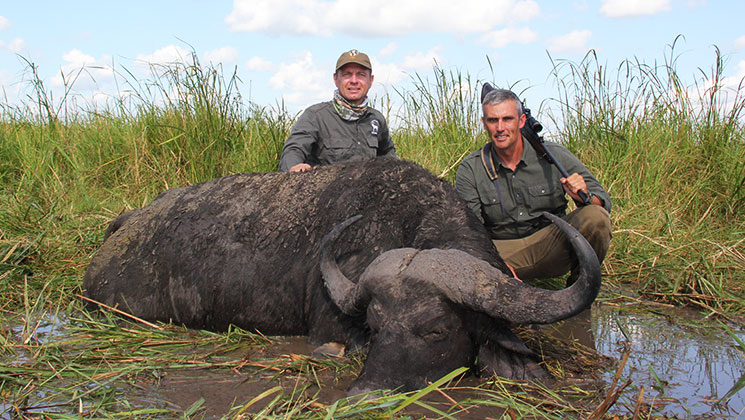
Hunting Cape buffalo in the swamps of Mozambique is a challenge. Visibility is severely limited during the wet season, and early in the year the entire Zambeze Delta is covered in knee-deep water and head-high sawgrass. River channels can be as deep as 10 feet. There’s no solid footing anywhere; hippo, elephant and buffalo tracks make it all but impossible to move quietly through the water, and at times it’s difficult to even remain upright. But the most unnerving thing about hunting buffalo in the swamps is the fact that the terrain demands stalking very close to the animals before having an opportunity to evaluate the buffalo and make a shot. Locating the herds requires listening for the slosh of hooves in water and the grunts and bellows. It’s dangerous game hunting as it was meant to be, and it’s no time to make a mistake.
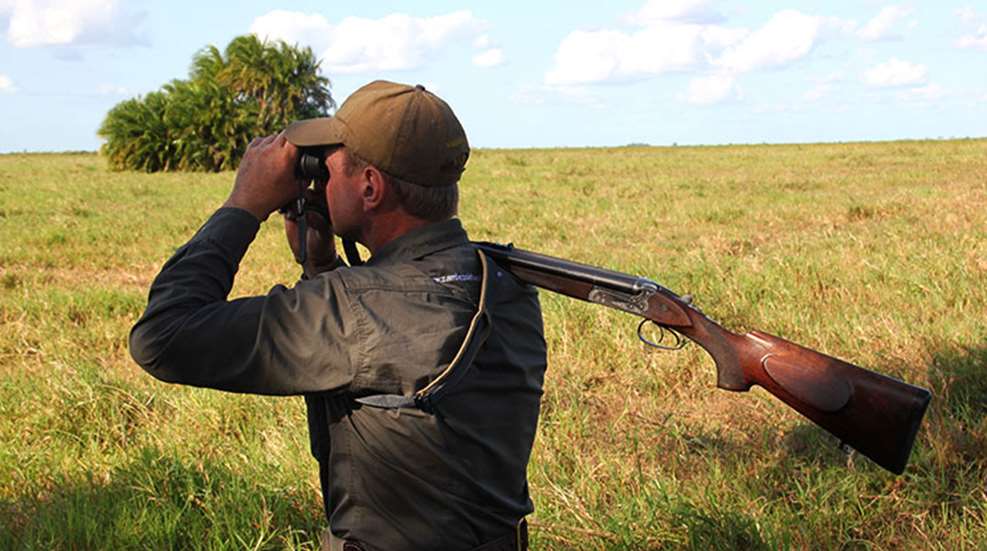
I’d always dreamed of hunting Cape buffalo, and when that dream finally became reality I was very fortunate to be partnered with Julian Moller of Zambeze Delta Safaris. Julian has more than twenty years of experience with dangerous game, much of it with buffalo. The underside of the barrels on his Heym .470 double are worn to a bright silver from the years that rifle has spent perched on Julian’s shoulder while he followed buffalo herds through the delta. It’s impossible for someone who has spent as much time hunting buffalo in thick cover as Julian not to have experienced bad days, but he has never been gored and none of his clients have been hurt. He’ll tell you that long before he brags about stopping charges.
As a client hunter, your primary responsibility is making a good first shot on dangerous game, as the events that follow will be directly impacted by how well you place that bullet. The ultimate goal when hunting dangerous game is the same as when hunting deer or antelope or impala—a clean first shot that kills the animal as quickly as possible. Stories about nerve-wracking follow-ups and dedicated charges are thrilling, but they’re oftentimes (though not always) the result of a failure on the part of the client. Before you leave camp in search of game that can potentially turn the tables, take the time to study the following principles from Moller’s dangerous game playbook. Doing so will ensure that you don’t place your hunting team at unnecessary risk.
1. Understand Your Role
As the client hunter, your job very likely won’t involve stopping a charge. That’s what your PH or guide is there to do. Instead, your task is to pay close attention to your hunting professional and do as they say. Be quiet, stay close and wait for their directive. You may have read everything printed regarding dangerous game hunting, but that doesn’t qualify you to go rogue or ignore directives. In any dangerous game situation, you’ll be hunting as a team, and your primary objective is to make a clean, fatal shot and reduce the potential for a bad outcome.
2. Gun Safety
When the Cape buffalo you’ve dreamed of hunting is standing in the sawgrass 40 yards ahead, your heart—if it hasn’t stopped altogether—will be pounding. That’s no excuse to forget the rules of firearms safety. Don’t get so caught up in the moment that you turn a potentially dangerous situation into an instantly fatal one by losing track of your muzzle direction.
3. Stay Focused
This is a critical and often overlooked element of dangerous game hunting. It’s easy to get distracted when you’re standing in knee-deep water and listening to the rush of a herd of unseen buffalo heading your way, but you need to maintain awareness. Don’t let your thoughts turn to what might happen if you make a bad shot or the tsetse fly that’s gnawing on your wrist, and don’t get discouraged when one, two or ten stalks result in zero opportunities. Things happen quickly when hunting dangerous game.
4. Understand Shot Placement
Don’t wait until you’re returning the gaze of an alert Cape buffalo bull for a back-and-forth tutorial with your PH on proper shot placement. These details need to be ironed out around the campfire or on the drive to the hunting area—well before you are in position to pull the trigger. Know the animal’s anatomy, understand where the bullet needs to be placed and make an accurate shot.
5. Have the Right Gear
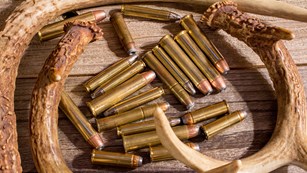
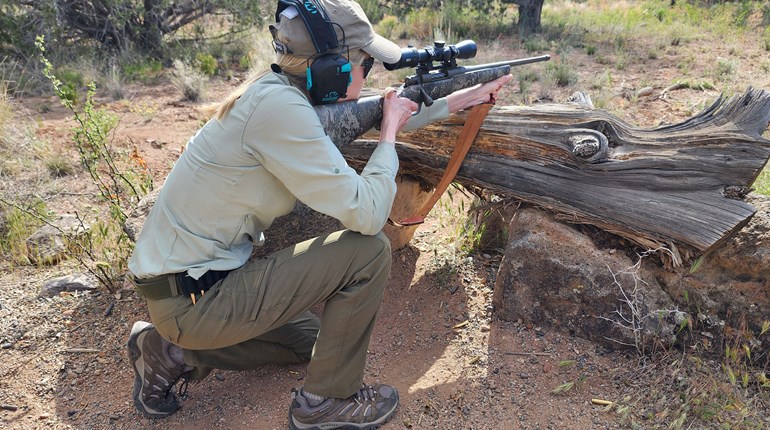
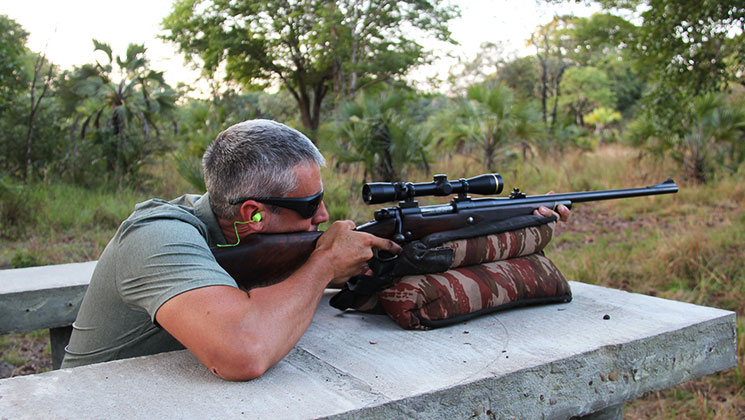
Before you arrive in camp, ask your PH or outfitter what type of boots and clothing you’ll need. As previously stated, staying focused is critical when hunting dangerous game, and if your boots are rubbing blisters on your ankles or you’re sopping wet because you forgot to bring rain gear on your Alaskan hunt, you won’t be able to devote your full attention to the primary task. Likewise, be sure that your gear is up to the task. Rifles should be thoroughly tested and zeroed. Double-check to be certain that your optics are securely mounted and stable before you start hunting. It’s also a good idea to discuss what type of optics you’ll need with your PH prior to your arrival. For my Cape buffalo hunt, a low-power variable was critical since the shot would be close. Also take the time to discuss what type of bullet construction works best for the area you’ll be hunting. I was hunting buffalo at close range in a herd situation, so expanding bullets were essential to eliminate the risk of pass-through. One wounded buffalo is bad news, two wounded buffalo is a nightmare.
6. Don’t Rush
You may not have a lot of time to shoot, but don’t take a marginal shot through thick brush or at an unwounded animal that’s on the move because you’re in a hurry. Wait for the right opportunity and make certain you’re relaxed and confident when you take that first shot.
7. Be Ready for the Follow-Up Shot
If you place a well-constructed bullet from a suitable caliber rifle in the correct spot, even the largest and most dangerous game will expire, but after firing your first shot, cycle the action and be prepared to deliver a second, third or fourth shot. Don’t wait for an invitation from your guide or PH to make yourself ready for a follow-up.