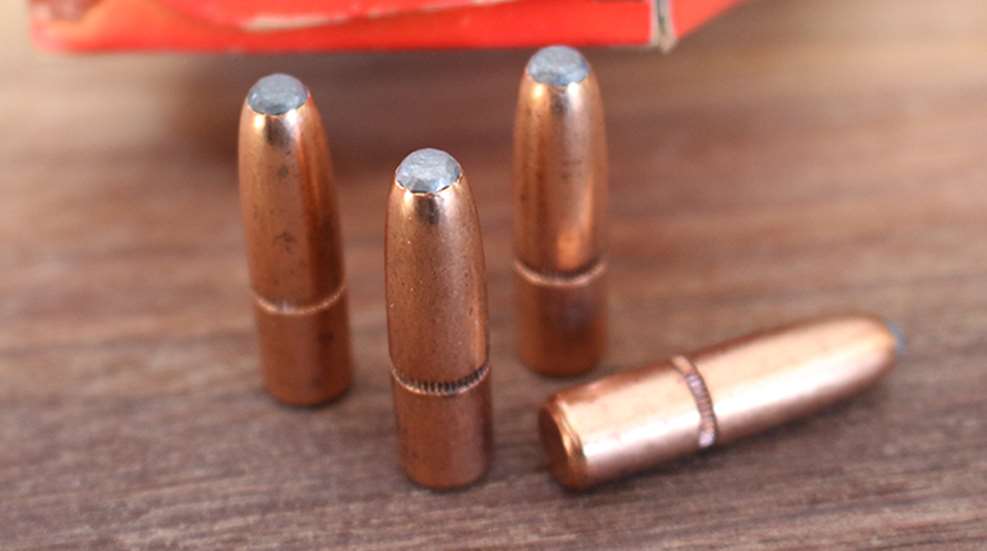
In this age of ballistic superiority, where our projectiles more closely resemble the Apollo-era spacecraft, where the bullet continues to evolve in both shape and method of construction, the round nose projectile is often overlooked as if it were a relic of a bygone era. There seems to be a trend in the hunting industry, where the shots at game keep getting longer, sometimes to the point of being ethically questionable. The spitzer bullet, and even more so the spitzer boat tail bullet, each deliver a very flat trajectory, retain energy downrange very well and deliver great long range accuracy. While these bullets are extremely popular, they truly don’t show their merits until distances exceed 200 yards. The good, old-fashioned round nose bullet, which seems to have been passed over in the history of bullet evolution, is still a viable choice for many hunters. Let’s take a look at some of the reasons.
1. The round nose delivers all kinds of impact energy. Our human desire to quantify all things in ballistics is unending. While our kinetic energy figures are derived from a formula that uses only the bullet’s weight, not its shape, my hunting experiences have shown me that an animal hit with a round nose bullet in the heart/lung area tends to ‘shudder’ upon impact. There is a visible difference when compared to a shot with a spitzer, and I especially like that on animals like bears and hogs. The larger surface area (at the bullet’s nose) striking the game animal makes a noticeable difference.
2. They shine in close range situations. Where shots are close—under 200 yards—there is little disadvantage to the round nose bullet. If the muzzle velocities are in the range of at least 2,300 to 2,400 fps, you can still maintain a 200-yard zero with a reasonable 100-yards point of impact. They are also (usually) more than accurate enough for the distances at which it is practical to use them. I know that here in the Northeast, I can use a round nose bullet for 95 percent of my hunting without being handicapped by trajectory; our shots just simply aren’t that far. While the ballistic coefficient figures are less than desirable when compared with a spitzer, I’ve made some rather long shots—out to 400 yards—with a round nose bullet. I like the way a round nose bullet holds together; unlike the spitzer boat tail which is notorious for jacket/core separation, the round nose tends to maintain its shape and retain its weight very well, even in high impact situations.
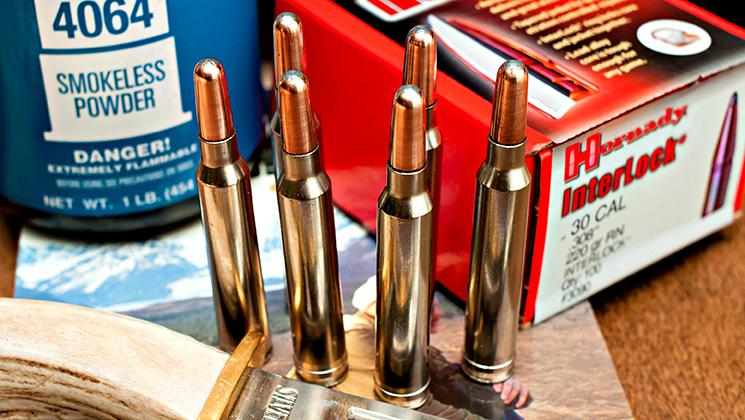
3. Round nose bullets penetrate wonderfully. I had a great conversation with a ballistic engineer at a boutique bullet company, which specializes in round nose and semi-spitzer bullets. He explained the advantage of those configurations like this: “Imagine a bullet that keeps its weight forward is like a front-wheel drive car in the snow; the momentum pulls the bullet through the resistance, whereas a bullet that has most of its weight in the rear portion will tend to kick sideways.” I can see the logic in this theory, and while I can’t say that I’ve proven the hypothesis, I will say that I’ve had very good straight-line penetration form my round nose ammunition.
4. The round nose bullet takes up less room in the cartridge case. If you’re a handloader, I’m sure you’ve come up against a situation where the uber-long spitzer boat tail bullets can cause a compressed powder scenario. In certain cartridges—the .300 Winchester Magnum, .308 Winchester and .350 Remington Magnum come quickly to mind—the longest spitzers can compromise either case capacity, magazine fit, or both. There have been many instances where a round nosed (or semi-spitzer) bullet has made life much easier.
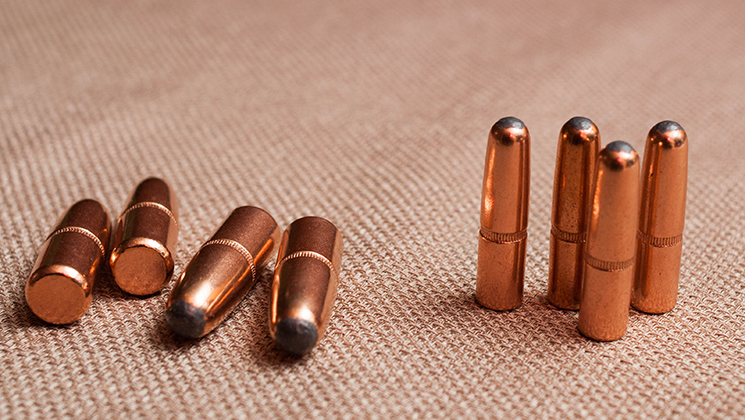
5. They are often easier on the wallet. While I do love the sleek, nasty, sloping point on a good spitzer bullet, they cost more to produce, and therefore to purchase. Generally speaking, round nose bullets and ammunition are a bit more affordable. In component form, they can be conveniently available when most other bullets are sold out.
It’s no coincidence that many of the African Professional Hunters are huge fans of the round nose bullets, especially for the closer shots in bushveld conditions. Many of the classic African cartridges earned their impeccable reputations using heavy-for-caliber, round nosed bullets. Even our most popular hunting cartridges—the .30-06 Springfield, .270 Winchester and 7mm Remington Magnum—can perform very well with a good old round nosed bullet. I use them in my .300 Winchester and 6.5-284 Norma, and probably won’t stop anytime soon.