The post-WWII lineup of Winchester cartridges owe a tip-o’-the-hat to the efforts of Charles O’Neill, Elmer Keith and Don Hopkins; their .333 OKH and .334 OKH cartridges mated the .30-06 case and a shortened .375 H&H case with the bullets of the .333 Jeffery. Winchester obviously picked up on the concept, and after releasing the .458 Winchester Magnum—which was designed to handle the thick-skinned, dangerous-game species—they released what would become the quintessential cartridge for North America’s biggest game animals: the .338 Winchester Magnum.
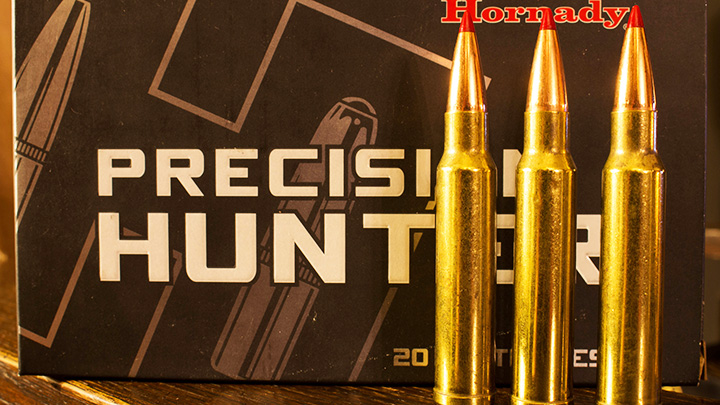
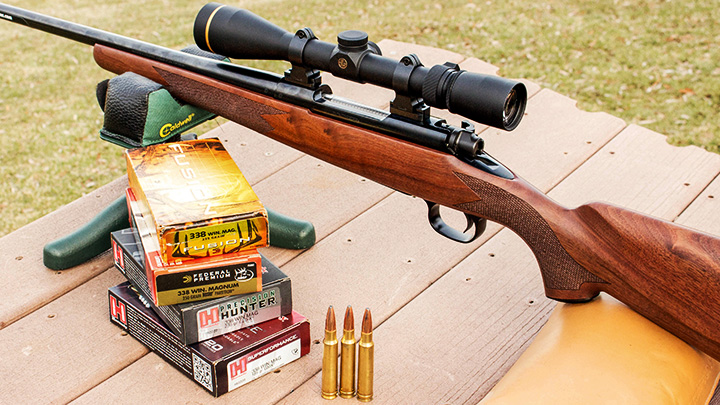
Instead of using the .333-inch-diameter bullets that that Keith & Co. relied on, I presume Winchester used the .338-inch-diameter bullets from the much earlier .33 Winchester cartridge. Using a 2.500-inch case—which retained the belt, in spite of the fact that the case headspaces off the shoulder—the .338 Winchester Magnum was offered with 200-, 250- and 300-grain bullets. The latter, with all sorts of sectional density (SD) was driven at 2450 fps, but didn’t stick around long. Instead, the 250-grain became the darling, as it was certainly ‘enough gun’ for the full-range of North American animals, not to mention any of the African animals shy of the true heavyweights, and even that is debatable. The 200-grain load, cruising at just shy of 3000 fps, can certainly be used on lighter game with good effect, and there are even lighter choices for those who like the one-gun concept. The 250-grain bullets still represent a sound choice for brown bears and other truly big game, as it generates just under 4,000 ft.-lbs. of energy at the muzzle, yet gives a relatively flat trajectory. The .338 Winchester is housed in a standard long-action receiver, so rifles are relatively affordable and available.
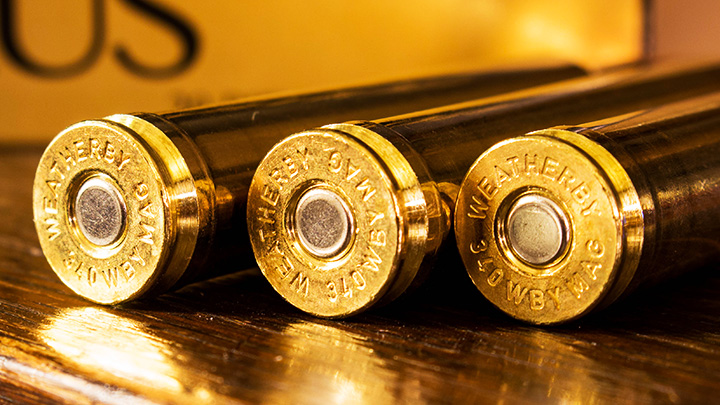
Just four years after the release of the .338 Winchester, Roy Weatherby countered with his own take on the .338-inch-bore diameter: the .340 Weatherby Magnum. Instead of using a 2.50-inch case to take advantage of the .30-06-length receiver, Roy decided a magnum-length case and receiver was warranted. In true Weatherby fashion, the .340 generates velocities almost 300 fps faster than the .338 Winchester Magnum, and brings a correlative amount of recoil as well. Driving a 250-grain bullet to 2940 fps, for over 4,800 ft.-lbs. of energy at the muzzle, the .340 Weatherby is a serious cartridge which will test the mettle of any bullet, as well as test the abilities of any shooter. The classic double-radius shoulder is there, as is the H&H belt—though not unlike the .338 Winchester, the belt is only there for show as the .340 headspaces off the shoulder—and though the .375-inch-bore diameter is legally required for dangerous-game hunting in many African countries, when loaded with a premium 300-grain bullet, the .340 Weatherby Magnum is a serious cartridge.
The .338 bore diameter is, like the .358-inch bore, sort of the ‘middle child’ in that it isn’t and won’t ever be as popular or versatile as the 7mms and .30s, as in a magnum configuration they are a bit too rough on the average shooter’s shoulder, and yet it lacks the diameter and the heavy bullet weight to be legal and sensible for elephant, Cape buffalo and hippo. For a shooter who spends most of his or her time hunting bigger game, and who likes bit more frontal diameter and throw weight than the 7mms and .30s offer, they are a sound choice. I like the .338s more than the .358s, generally speaking, as they share the same bullet weights, and the .338s have a better SD.
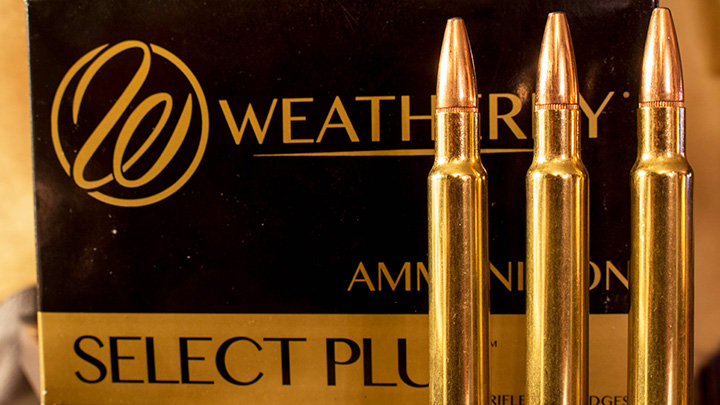
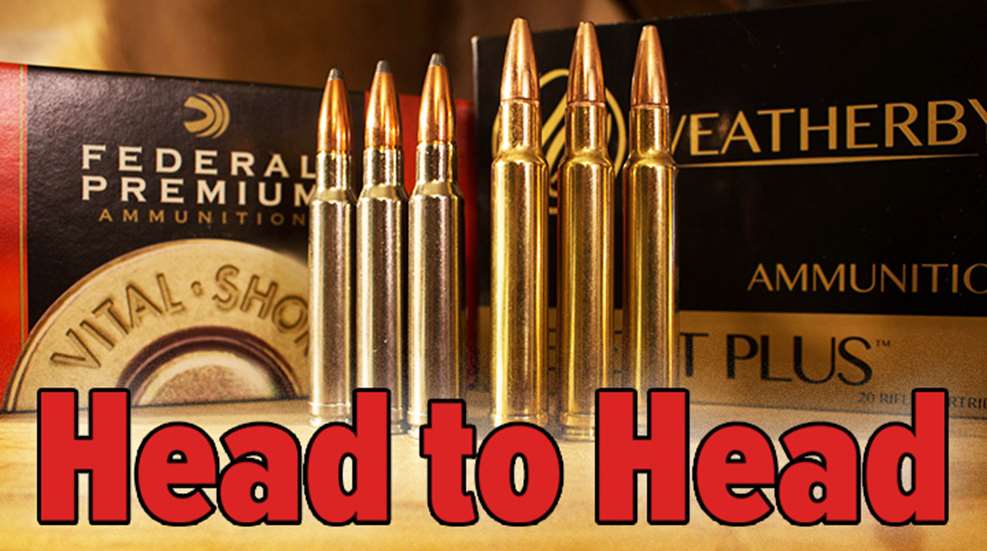
Between the .338 Winchester and the .340 Weatherby, which makes the most sense for the hunter? Well, let’s look at a couple of points which may affect your choice, depending on your situation. Firstly, it’s no secret that the .338 Winchester Magnum is the more popular of the two, and there are more factory loads available for it than there are for the .340 Weatherby. The latter is only available from Weatherby, Nosler and HSM, while nearly every self-respecting manufacturer offers a .338 Winchester load.
Secondly, while I am not particularly recoil-sensitive, the .338 Winchester Magnum—especially in a less-than-perfect-fitting rifle—can be snotty off the bench, and the .340 Weatherby can be downright nasty. I’d much rather put a box of .375 H&H downrange at one sitting than a box of .340 Weatherby. Shooting the big case offhand or off of shooting sticks can be tolerable, but the bench rest position is bad and prone is worse. So, if you are recoil sensitive in the least, the .338 Winchester will prevail (though I personally prefer the .338-06 for its mild recoil over either).
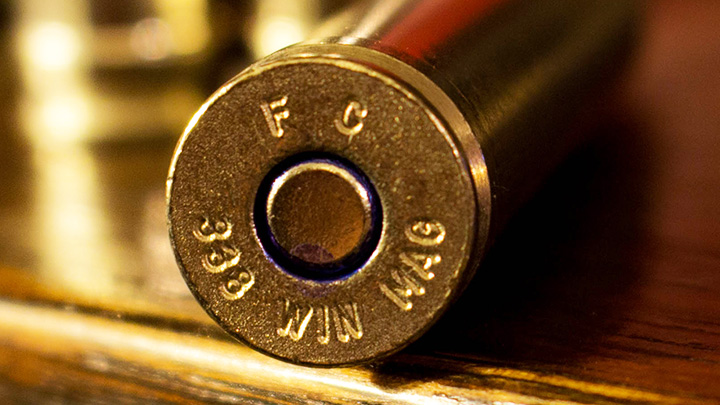
If you enjoy the speed of the Weatherby cartridges, and can handle the recoil of the .340 Weatherby—the larger .338/378 Weatherby is even more ferocious—there is nothing wrong with using it, though I highly recommend the use of premium bullets. But, I feel that the .338 Winchester Magnum is as popular as it is for a reason: it is manageable in a proper-fitting rifle, and it hits like a freight train. The .340 hits harder, but the .338 Winchester hits hard enough. The cartridge has a capacity large enough to push the 250-grain bullets to at least 2600 fps, yet the lighter bullets—like the 185-grain Hornady GMX load at 3050 fps—makes a good long-range load for deer, caribou, elk and more. There are many 225-grain choices for the folks who like to split the difference and choose just one load, and looking up and down the list, you’ll find all sorts of different projectiles, from the sleek 210-grain Swift Scirocco II and 230-grain Hornady ELD-X to the 225-grain Trophy Bonded Bear Claw from Federal and the 250-grain Nosler Partition and Swift A-Frame.
Among the initial trio of Winchester Magnums—the .264, .338 and .458—I feel the .338 Winchester Magnum is where Winchester really got it right; it does everything they asked of it, with no complications. While the .340 Weatherby isn’t a bad design, I feel it’s a bit too much. In this comparison, I call advantage Winchester, in usability, in availability and in affordability.
Looking for previous installments of our "Head to Head" series? We've got you covered.
• .300 RSAUM vs. .300 WSM
• .500 Jeffrey vs. .505 Gibbs
• 7mm RUM vs. .300 RUM
• .308 Winchester vs. 7mm-08 Remington
• 6.5 Creedmoor vs. .260 Remington
• .303 British vs. 8x57 Mauser
• .30-06 Springfield vs. All Other .30s
• .17 HMR vs. .17 WSM
• .450 Nitro Express vs. .470 Nitro Express
• 350 Legend vs. .35 Remington
• .280 Ackley Improved vs. 7mm Rem. Mag.
• .404 Jeffery vs. .416 Rigby
• .243 Winchester vs. 6mm Creedmoor
• .300 PRC vs. .300 Win. Mag.
• .30-06 Springfield vs. .270 Winchester
• 6.5 Creedmoor vs. 7mm-08 Remington
• 8x57 Mauser vs. .318 Westley Richards
• .358 Winchester vs. .350 Remington Magnum
• .22-250 Remington vs. .220 Swift
• .270 Winchester vs. .270 WSM
• .26 Nosler vs. 6.5-300 Weatherby Magnum
• .458 Win. Mag. vs. .458 Lott
• 7mm Rem. Mag. vs. .300 Win. Mag.
• .243 Winchester vs. 6mm Remington
• 7x57mm Mauser vs. 7mm-08 Remington
• .25-06 Remington vs. .257 Weatherby Magnum
• .338 Winchester vs. .375 H&H Magnum
• .30-30 Winchester vs. .35 Remington
• .257 Roberts vs. .250-3000 Savage
• .270 Winchester vs. .280 Remington
• .35 Whelen vs. 9.3x62mm Mauser
• .416 Rigby vs. .416 Remington Magnum
• .308 Winchester vs. .30-06 Springfield
• .22 Nosler vs. .224 Valkyrie
• .300 Win. Mag. vs. .300 WSM
• .223 Remington vs. .22-250 Remington