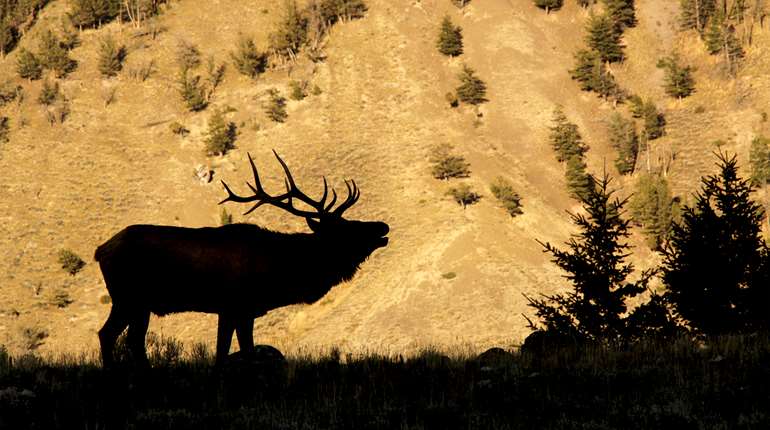
Deer, turkeys, ruffed grouse and other game species face tough odds surviving in the wilds, but those challenges are minor compared to the harrowing tales they endure in rural myths and legends that often sweep across states and entire regions.
Much like their urban counterparts, rural legends are false rumors people accept as truth and instantly share, never thinking to verify the information or question their source. Perhaps the most infamous and long-lived urban legend was that alligators lurk in New York City’s sewer system after being flushed down toilets by owners who picked them up in the gators’ infancy, and then realized they couldn’t care for them as they grew.
Likewise, hunting regularly spawns tall tales that live until a better one replaces them. And if you don’t hear one particular rural myth during its first cycle, be patient. It will return after jumping state borders, circling the region, and then re-entering the state in its next life.
About 25 winters ago, for example, deer across Wisconsin’s farmlands were said to be eating moldy corn and dying in droves from a nasty toxin: “Of course it’s true! He told me so himself!”
Somehow, though, the ailment always struck deer at least 20 miles from wherever you heard the story. Further, no one could provide a name or address for the afflicted farm. The rumor was so convincing that it even fooled a wildlife professor at the University of Wisconsin-Stevens Point. After sounding the alarm, however, the biologist helped squelch the rumor after failing to track down the farmer who reported the mass die-off. It was a fool’s errand, obviously, because no such farmer ever lived.
About a year later, wild turkeys across vast regions of the Great Lakes states began freezing to death on their roosts after a large, nasty January ice storm. The claim seemed plausible because the storm struck at night and ice blanketed the region’s trees and fields. Plus, wild turkeys were relatively new to the region at the time, and some folks considered them vulnerable to the North’s brutal winters.
As usual, folks typically reported a farmer “just outside town” found 20 to 30 wild turkeys frozen solid in roost trees and on the ground below. But when media or wildlife-agency staff requested the farmer’s name and address, no one could deliver the information. When pressed, the rumor-mongers said things like, “The farmer doesn’t want any media or government types snooping around.”
Whitetail deer also suffer phantom mass executions when folks hear about wildlife agencies issuing shooting permits to farmers losing crops to overpopulated deer herds. Next, someone’s brother-in-law—who’s friends with some farmer’s cousin—heard lots of shooting one night on Cousin Smith’s farm: “The next morning he found 19 dead deer scattered around the field!”
Such stories unravel when the rumor-monger can’t answer an obvious question: “Why didn’t the other 18 deer flee when the shooting started?”
Even ruffed grouse have sparked at least one rural legend from the Northwoods. Although it’s more complicated than most rumors of poisonings, shootings or mass-freezings, this multi-step rural legend isn’t hard to grasp.
Most hunters know ruffed grouse populations follow a loose seven-year cycle between peaks and valleys. One possible explanation for those fluctuations is a link to the population cycles of forest tent caterpillars, which feed heavily on aspen leaves, a grouse food source. In turn, when caterpillars are abundant, they provide a great food source for Sarcophaga aldrichi, a gray, red-eyed “flesh fly” that’s slightly larger than houseflies.
Since the 1950s, every time Northwoods residents of Minnesota, Wisconsin, northwestern Ontario or Michigan’s Upper Peninsula see massive numbers of flesh flies, wildlife agencies start fielding phone calls from people accusing the government of releasing the insects from airplanes to prey on tent caterpillars.
Yes, flesh flies are a natural enemy of tent caterpillars, but both lived here long before humans crossed into North America from eastern Siberia 10,000 years ago. Trouble is, these flies don’t bite, sting or spread diseases. They just lay eggs in the cocoons of tent caterpillars.
Further, nature’s slow-motion cycles play out over two to three years. Their maggots eat the cocoon’s pupae and drop to the ground for winter. The next spring, adult flies emerge a few weeks before the caterpillars spin their cocoons, and strike again. All that feasting slashes tent-caterpillar populations the next year. When tent caterpillars decline, fly numbers soon slide, too.
That rumor at least has plausible origins: When the Great Lakes’ northern forests endured infestations of jack-pine budworms in the 1950s, agency foresters sprayed insecticides from airplanes in futile efforts to control the budworms.
When flesh fly numbers started booming about a week later, folks “connected the dots,” and assumed “the government” released them. A half-century later, people still believe the tale, even though no one has ever identified the facility that secretly raises flesh flies by the millions.
Flies aren’t the only suspicious creatures wildlife agencies supposedly drop from airplanes. About 15 years ago, many Wisconsinites accused their Department of Natural Resources of using planes and parachutes to stock massasauga rattlesnakes to control wild turkeys in some locales.
Obviously, that defies logic. Turkeys sometimes eat young rattlesnakes, but no research shows the opposite. Besides, why would a wildlife agency enlist rattlesnakes to kill turkeys when hunters shoot about 50,000 of them annually in spring and autumn hunting seasons?
We’re sorry. It’s impossible to answer such questions, at least with factual, rational answers. That’s probably why rural legends never really die. They just fade into the clouds until parachuting into the next information vacuum