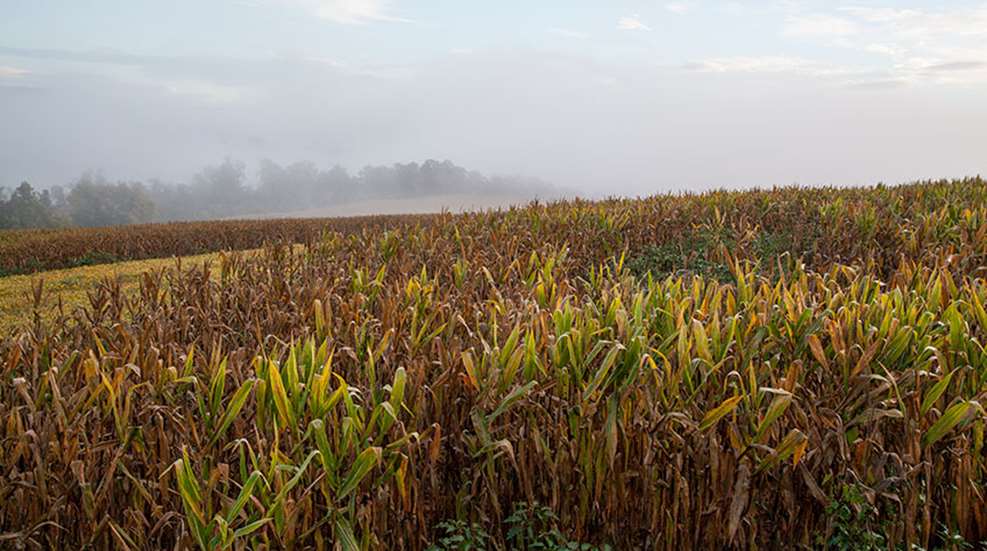
The majority of whitetail landscapes include a common conundrum in early to mid fall: crops. Standing corn, sorghum, sunflowers and other tall varieties toss the proverbial monkey’s wrench into hunting plans. Nationwide, corn alone accounts for more than 90 million acres of whitetail escape cover before it heads to a cereal bowl. Don’t gamble on crops being harvested on a traditional timetable either. Rain, snow, equipment failures and overworked farmers all can lead to crops left in the field through deer season, particularly the early portions of it.
Stand ready for standing crops. It’s not all needle-in-a-haystack hunting. The additional acres of safe haven that unharvested crops provide embolden bucks. Extra cover equals extra movement during shooting light. Unharvested crops also create more edges that beckon whitetail activity. An uncut field may even attract more whitetails to the location if it’s one of the few crops left standing in the county. Think win-win when the harvest stalls.
Hunt an Edge
Whitetails own the title “creature of the edge.” Croplands create edges due to their boxlike nature and how they intertwine with the natural environment. Begin with a satellite overview of the field, preferably one that was taken while the crop was planted. Hunting apps like ScoutLook can be huge aids for this inspection. Note ditches exiting the field, fences, bordering tree lines and other elements that enhance edge quality around the field. These are potential deer activity areas ripe for hunting.
Plan a drive-by. Many farmers cut a crop’s end portions early for cattle silage. This magnifies the edge, plus the cutting spills grain that deer may glean along the field boundary. With the right wind you can hunker in an end row and wait for deer to feed by within bow range. It’s an ideal ground blind without the ground blind.
Go in After Them
If the field layout or corresponding winds don’t cooperate to hunt an outside edge, consider joining deer inside the field. Wet or windy days provide conditions to invade unharvested crops. Most deer vacate the fortress for additional browsing at dark, so slip in well before daylight to set up for their return.
Refer back to your aerial views. Ditches, hidden water sources, shrub lines and even wetlands veiled by crops will invite whitetails. Lowlands in fields create soupy areas too boggy to farm, but they carve out corridors in fields. Some stay hidden while others may course through an entire field and exit. These highways are preferred whitetail routes and access points for you.
If you’re lucky the field will include an isolated group of trees along one of these interior routes or next to a hidden pond for a stand. If not, stake a blind early within range of the feature. Keep in contact with the farmer so he doesn’t gobble it up in his combine. You don’t want to be that hunter.
Call Them Out
If you don’t see an edge opportunity that works, slide into adjacent cover. A wetland corridor that exits into a nearby woodlot tempts traveling deer. Use it for an ambush site while calling deer holed up in the crispy cover. Aggressive rattling combined with a decoy could pull a buck out for a peek, particularly in the lead-up to the rut.
On soggy days you can even slip into row crops like corn and rattle bucks out of their beds into small openings. Be ready! On several occasions I’ve almost been run over by rut-fueled bucks raging through the corn. It’s an exciting way to take advantage of whitetail confidence boosted by the extra cover.