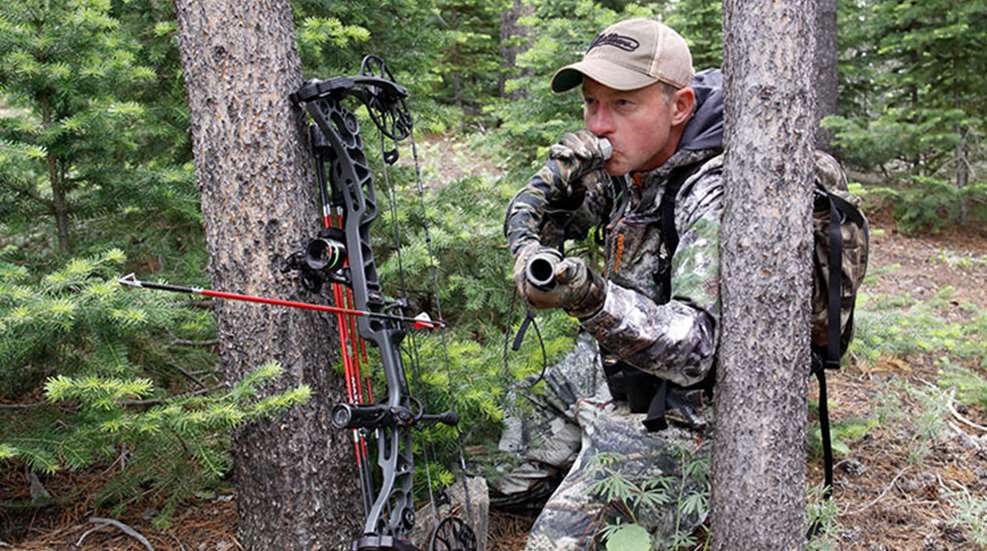
Equally as imperative as identifying when you need to run or walk when hunting elk is recognizing when to call without restrictions or with disciplined reservation. The green light often comes from the herd conversation. Subtle banter can cue you to bugle with a matched exchange. And a woodland uproar grants you permission to use your calls with gusto. Hunting pressure, breeding activity and elk density all drive the discourse of an elk herd. You can’t go wrong if you match what you hear.
Outfitter Parrey Cremeans underscores the need to understand elk conversation. It can pay dividends to distinguish the sounds of bulls responding with a return locator bugle, a resounding challenge bugle or even an acceptance bugle if you’re using estrus whines.
Of course sometimes you’re met with the sounds of silence. Locator calls or cow talk has the power to pull a bugle from afar, but that doesn’t mean the bugling will continue. Once Cremeans instigates a dialogue he isn’t afraid to take it to the next level.
“I’m a bit more unorthodox when it comes to calling elk. I’m more of a pressure guy,” he admits. “For me, elk hunting is about the show. I want them to get wound up so I challenge them assertively. I want them to come in stomping their feet and tearing up trees.”
To do that Cremeans keeps using the calls that got them fired up in the first place and never lets off the pressure. Plus, he isn’t afraid to make the sounds of an entire herd. With two different cow calls he can make the sounds of at least four different cows including estrus whines and calves. He also changes pitch to sound like two different bulls ready to duke it out. His theory is, “Who doesn’t want to come to a fight?” Raking a tree is another sound he includes and believes it belittles or berates an already aggravated bull.
Sometimes the mute button is hit during a shouting match. When that occurs Cremeans goes on alert for a silent bull circling downwind.
“When a bull goes silent—that’s when you have to be careful. If you continue calling a bunch he could be staring right at you when you finally get eyes on him,” Cremeans cautions.
To ensure a better outcome, Cremeans follows the bull’s lead and stops calling. His entire focus settles on downwind shooting lanes even if it requires a quick reposition.
“The way I look at calling, as long as you sound like an elk and do what the elk do, you can’t go wrong,” advises Cremeans. “They might move off, but it’s usually not from your calls. The bull may not want to be pressured by another bull, or they simply smelled you.”
Cremeans recommends elk calls from Rocky Mountain Hunting Calls with selections found at fine sporting goods outlets and here.