Photos Courtesy Mark Moore of Osceola Outdoors
So, you've successfully harvested a wild turkey. The hunt went according to plan. Now it is time to reap the rewards of your harvest, and what better trophy to a turkey hunter than a tender, juicy piece of deep fried turkey breast? There's only one problem: We have to get this big ol' thunder chicken from the field to the frying pan. How do we do that? It's simpler than you may think. Few game animals are easier to get kitchen-ready than the wild turkey.
Here are a few things you’re going to need before we get started:
1. A good sharp knife. Nothing is more dangerous than a dull knife.
2. A clean surface that you can wipe down easily.
3. Water source for washing meat and tools.
4. One package of gallon freezer bags.
5. A garbage bag to discard the remains after we're done.
The first thing I always like to do is remove the beard, tail fan and any other part of the bird I want to keep for trophy purposes or other uses such as wing bone calls or European mounts. I do this first to get them out of the way and to make sure I don’t accidentally break a feather or ruin my trophy in the cleaning process.
Once that's done, we're ready to get started on the actual cleaning and removing of the meat from the turkey. There are many ways to go about this but the easiest and most effective way is to “breast” the turkey. This is a quick, relatively clean, process that in its essence is removing the turkey breast from the bird’s chest by skinning that portion and cutting the meat out.
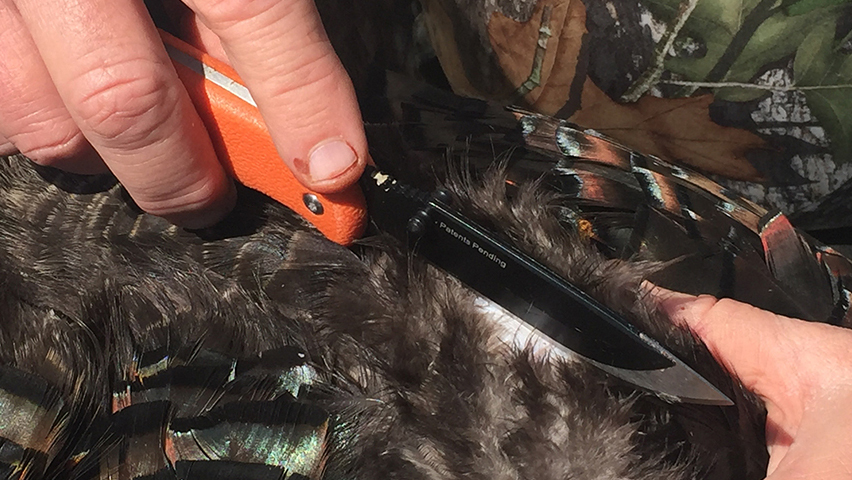
The initial cut needed is a small incision made to the turkeys’ skin at the bottom its breast bone. This can be identified by looking at the chest of the turkey and locating the bottom point of the sternum. Take your fingers and pull outwards on the skin at the “point” of the sternum, making a small incision to access the inside of the turkey. Take your fingers and start to separate the skin from the turkey's breast. You shouldn’t use your knife for this because you're more likely to cut the feathers loose from the skin, which can complicate the washing portion of your task. “Push” the skin back from the breast until you have exposed the whole piece of meat on both sides. Make sure to remove any fatty tissue or loose feathers as you go.
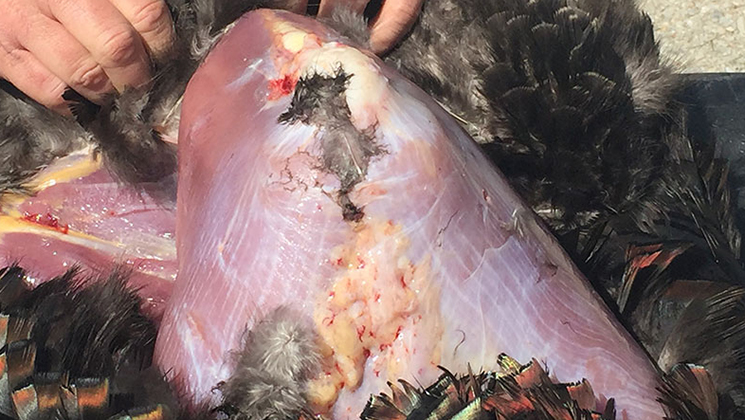
Next you will want to identify and separate the craw from the rest of the bird. The craw is a pouch in the digestive system that is used to store food until digestion can occur. It is in the center/top of the turkey's breast and is secured by a thin wall of tissue. Cutting the edges of the craw loose from the breast and pulling it upward will remove it. Optional: At this point I typically like to examine the contents of the craw to see what kind of food is a staple of my bird's diet. Consider it information gathering that could pay off later.
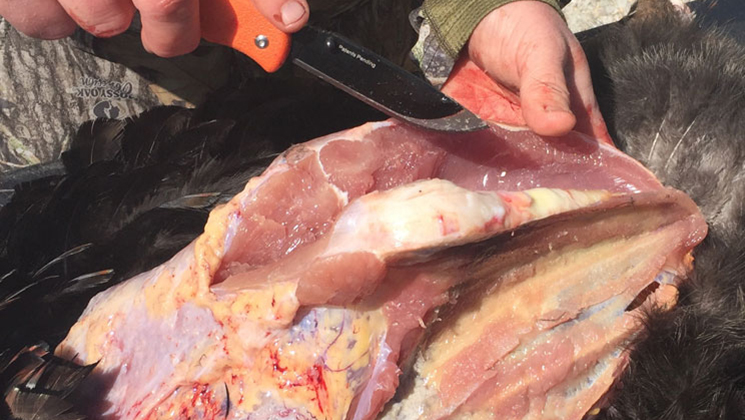
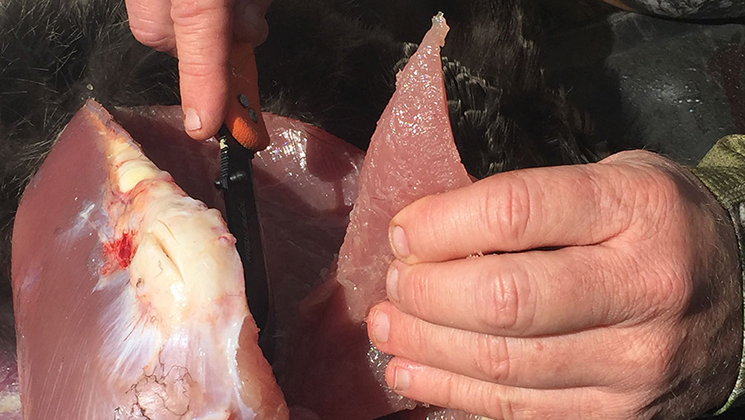
Now we're ready to remove the breast. To do this, take a sharp knife and start by cutting right next to the turkey's breast bone. Keep going until you feel more bone on the backside. Remember to stay as close to the bone as possible while doing this—it'll ensure you harvest the maximum amount of meat. Continue cutting the meat loose from the ribs using a technique similar to filleting a fish. Now's a good time to trim any fatty tissue away. Once you have removed the breast and trimmed it to your standards, place it in a water and salt mixture in your fridge for a day to remove any blood. You will notice an interior section of meat on the backside of the breast. This is the tenderloin or “strip” of the bird. This is widely considered the choice cut of meat from a wild turkey. Make sure to keep it separate.
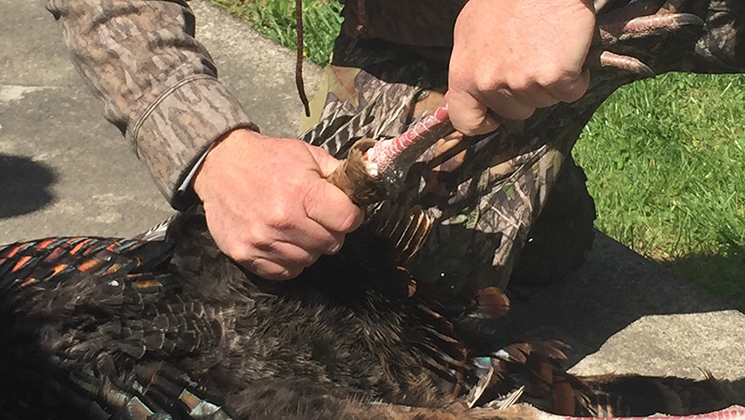
A lot of people stop at this point, but I personally love turkey noodle soup. For that, you'll want the thigh and drumstick. Make a cut down the leg of the turkey and pull the skin back from the meat to remove it—same as you did with the breast. Break the joint of the thigh where the bone and socket join. After soaking the meat overnight you’re free either to prepare it or throw it in a freezer bag for future use. Remember to take extra care and thoroughly wash your hands before and after handling any meat.
Congratulations! Your harvest is complete. Now you're on to the real hard part: settling on a recipe.