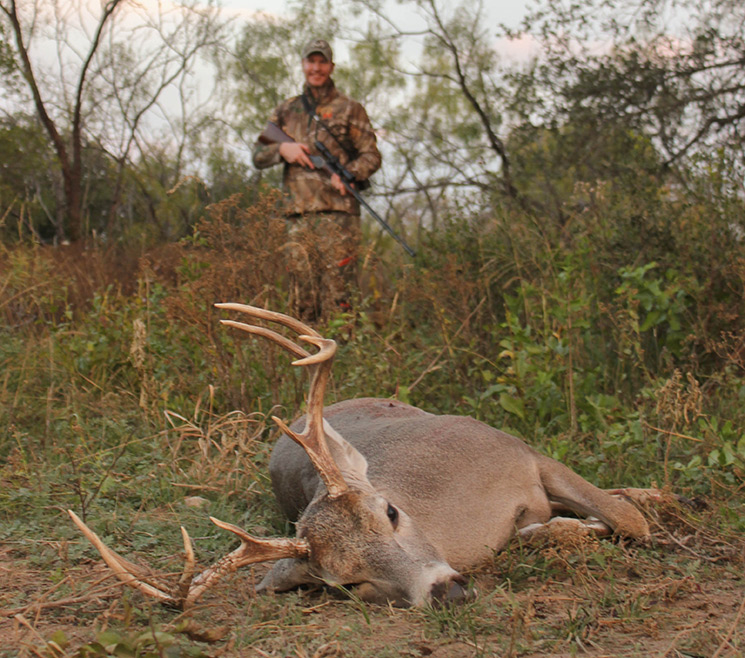
Ideally, the first shot you take at a game animal should be the last. If conditions are right, you know the range, have practiced with your rifle and load and have a clear shot at the animal then delivering a fatal first round should be one of the simplest pieces of the hunting puzzle. But sometimes things go wrong. It might be an unseen branch, jittery nerves or unexpected movement by the animal. No matter the reason, at some point in your hunting career you’re likely to make a bad shot and have to follow-up. In such cases all that stands between you and a long tracking job (and potentially a lost animal) is a difficult shot at moving game.
I’ve had to deliver my share of finishing shots on moving game, unfortunately, but two instances stand out. One was on a bear hunt where I simply didn’t get steady for the first shot. The trigger broke and I knew that I was out of position, calling my shot low. The bear dropped like a stone, which seemed like a good sign, then was up and running at full speed through a chokecherry thicket, which was very bad. I had one window for a follow-up shot and missed entirely. This disastrous scene was immediately followed by one of the longest most grueling tracking jobs of my life. By sheer luck my guide and I were in position on the top of a ridge when the wounded bear happened to walk between two stands of pines several hundred yards away and offered one more shot. It was a small miracle that the bear wasn’t wounded and lost.
The other instance was during a zebra hunt with Cornie Coetzee of Cornie Coetzee Safaris in Namibia. Cornie actually coached me on making a follow-up shot. African game is tough, he said, and he’s seen too many hunters lose animals because they were admiring the first shot and weren’t prepared for the second and perhaps the third. He discussed how to move with sticks, working the bolt, keeping the scope on low power, seeing ahead of the game, and a variety of other factors that, as it turned out, were essential to the success of that hunt. On the first day of the hunt we found a zebra herd high in the Erongo Mountains and I took a shot, hitting the animal but with undetermined effects. I got into proper position for the second shot, moved the rifle’s muzzle with the running zebra, and pressed the trigger. The shot hit home, the animal went down and no tracking job was needed.
The running follow-up is one of the toughest shots you’ll ever have to make, but the ability to do so may mean the difference between recovered and lost game. To make that follow-up copunt you’ll need the right set of skills and plenty of practice. Here are some tips to help you improve your chances of making the second shot the one that matters.
Bolt Manipulation
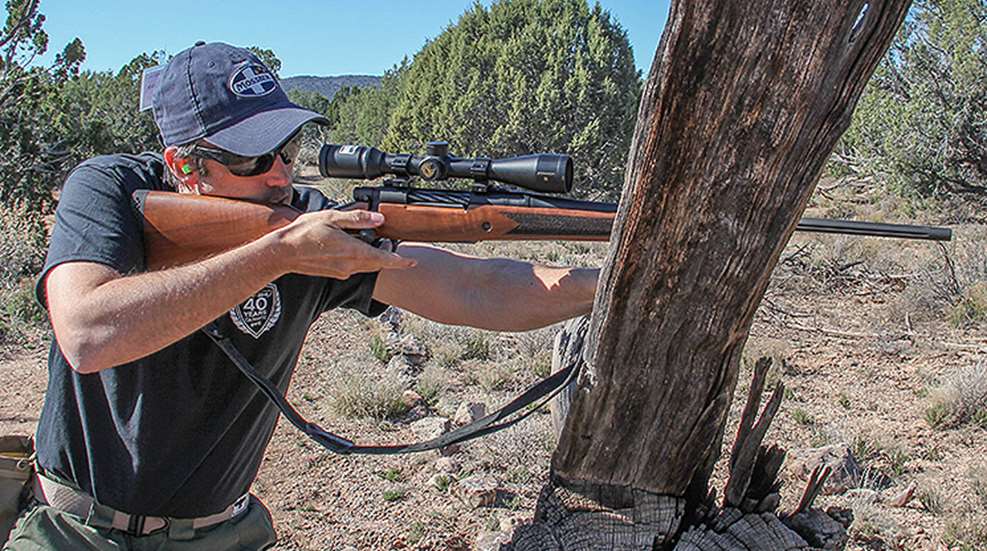
After firing, cycling the bolt should be automatic. But that doesn’t mean yanking the bolt as fast and as hard as you can would be the best method for fast follow-up shots. On the contrary, a steady hand and smooth cycling will actually make that second shot easier and faster. The team of expert shooters at Discover Courage in Oregon preach deliberate, controlled bolt manipulation for faster follow-ups. Seem counterintuitive? It’s not. Minimizing movement helps keep your rifle pointed at the target and reduces the amount of time it takes to get back into a shooting position versus the rip-snorting bolt yank that so many hunters employ. Plus, it’s easier to keep your face on the stock so you won’t have to remount the gun. If you think that this deliberate, controlled bolt manipulation isn’t faster try it for yourself on the range. You’ll produce tighter groups faster without all the drama.
Trigger Control and Muzzle Movement
Rifle shooters should take a lesson from shotgunners with regard to muzzle movement and trigger control. Two of the key elements to successful shotgun shooting are keeping the muzzle moving and pressing the trigger without stopping the firearm, and those same rules apply to shooting game on the run with a rifle. Most shooters have a tendency to jerk the trigger on follow-ups, and this causes a number of problems. First, jerking the trigger freezes the gun’s lateral movement. This, in turn, stops the gun for enough time to allow the animal to get ahead of your line of sight. Odds are this will result in a clean miss behind the animal. Movement should come from the hips; the upper body should stay fixed.
Keep Magnification Low
High magnification scopes are fine for making long shots, but a narrow field of view makes moving shots very difficult. For that reason, it’s best to keep magnification low whenever possible. Most hunters believe that they need more magnification than is truly necessary to make a shot. The majority of shots on big game are taken within 300 yards, and despite what many hunters claim 300 yards near maximum effective range for the average shooter with average equipment under field conditions. At that distance a six or seven magnification scope will work, and it will certainly make follow-ups easier. My personal hunting rifle wears a Leupold VX-3 scope in 3-10x, and I rarely use the high-end magnification. The scope stays set on three power for close range shooting, and if I need a follow-up I’ve got enough field of view to make that possible.
Hard Eyes, Soft Eyes
"Hard eyes" refers to your complete focus on the target. Since the human eye can only focus on one object or location at a time, the rest of your field of view will be out of focus. But that doesn’t mean you can’t see what’s going on. If you’ve ever watched hurdlers run a race pay attention to their eyes; the best athletes don’t look down at the hurdle but rather use peripheral vision to keep track of obstacles while maintaining hard focus on the finish line. Hunters need to take a lesson from this. If game is wounded and moving and you immediately lock into hard eyes you’ll lose track of the surroundings and won’t be able to evaluate the animal’s path of flight or gauge how much time you have to fire. As an animal begins to move following the first shot, take a moment—and it doesn’t have to be long—to use your peripheral vision to set up the shot. A wide scan of the terrain will tell you how long you have to shoot and you can immediately switch to hard focus on the animal. When you fire, relax your vision as you work the bolt and assess the situation. If you missed, try and account for what happened and adjust for the next shot.
Practice
Follow-ups are some of the hardest shots you’ll ever have to make. But very, very hunters ever take the time to practice follow-ups, the idea being that if they work on delivering that first shot precisely there will never need a second shot. Take the time to work on follow-ups at the range. Instead of delivering one slow, precise shot at a time work on hitting your target, working the bolt quickly, and delivering a second aimed shot. Work on adjusting your eye focus from wide field of view to narrow, and practice (always with an unloaded gun, of course!) moving the rifle laterally with both eyes open. It’ll cost you a little extra time and a few extra cartridges, but eliminating the need for a long tracking job and reducing the chances of losing wounded game makes follow-up practice well worth the time and effort.